


Orthosympathetic: TCM Stress Ally
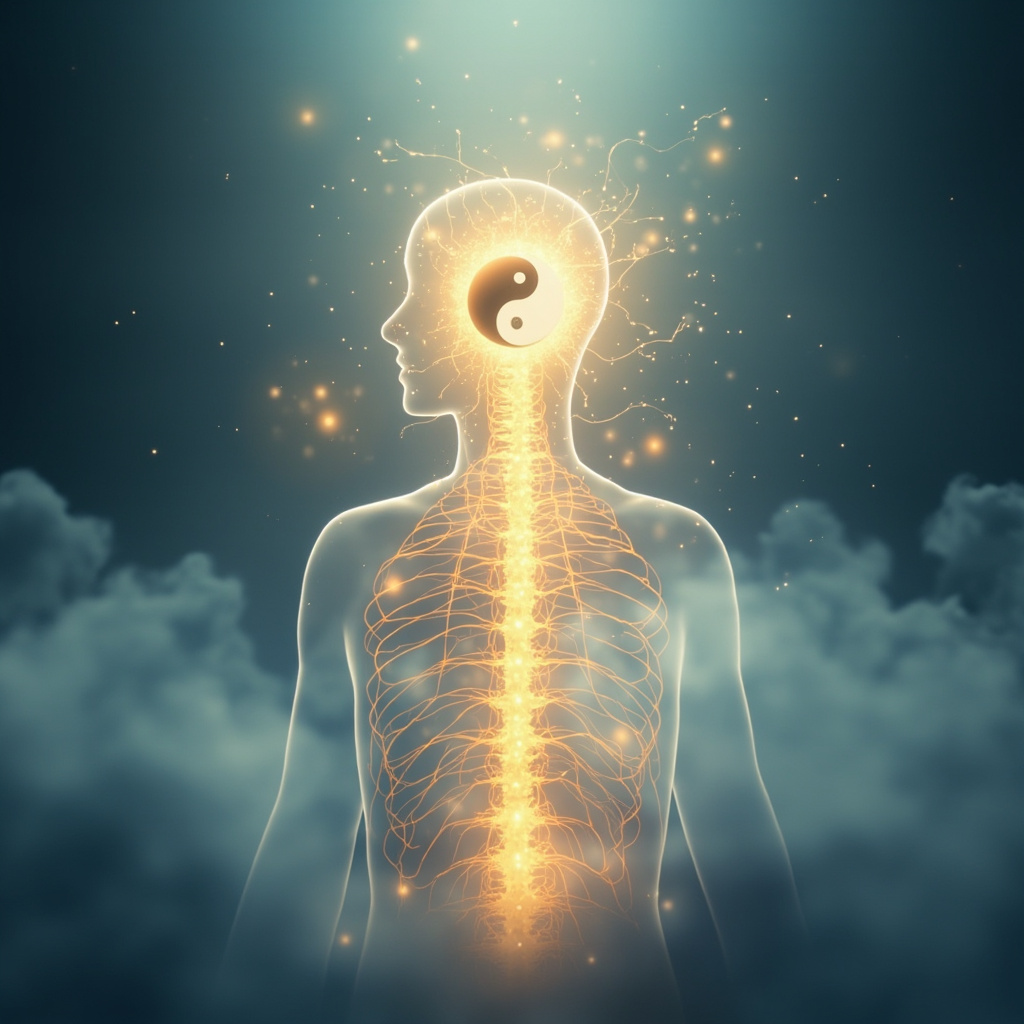
The orthosympathetic nervous system forms a key part of how we respond to the world. It stretches along the spine, from the upper chest down to the lower back area. This network prepares us for quick action. See more in the glossary.
What It Does in Everyday Life
When you face a challenge, the orthosympathetic springs into gear. Your heart beats faster to pump more blood. Airways open wider for deeper breaths. Blood shifts to muscles, away from digestion. This is the classic fight-or-flight response. It helps you run from danger or stand your ground. In balance, it keeps you alert and ready.
A recent article from White Crane Clinic notes how modern life keeps this system in overdrive. Constant stress from work, news, or worries triggers it too often. Over time, this leads to exhaustion.[^1]
Links to Emotions
This system ties closely to feelings like fear, stress, and survival urges. Intense worry or unresolved tension can keep it active. You might feel your heart race without reason. Or notice tight muscles and shallow breath. In TCM, these signal deeper disharmony. Emotions affect qi flow. Fear burdens the kidneys, anxiety stirs the heart, and frustration blocks the liver.
When out of tune, it sparks issues like high blood pressure, rapid pulse, or poor sleep. Chronic activation drains vitality, leaving you tired yet wired.
TCM Lens on Orthosympathetic
Traditional Chinese Medicine sees the body as a web of energies. The orthosympathetic aligns with yang – active, warming, outward force. It supports qi movement along meridians, especially those of the heart, lungs, and kidneys. Yang energy drives protection and adaptation, much like fight-or-flight.
Yet balance needs yin too – the calm, nourishing side. Excess yang from prolonged stress creates heat, stagnation, or deficiency. The five elements come into play: fire (heart, joy turning to mania), water (kidneys, fear weakening will), wood (liver, anger rising).
As a TCM practitioner, I bridge this with modern views. Biomarkers reveal its energy, agitation, qualities, and organ links. High agitation might show blocked qi. Low energy signals depleted reserves.
Signs of Imbalance
- Faster heart rate and high pressure
- Anxiety, restlessness, or panic
- Digestive slowdown or tension
- Fatigue after minor efforts
- Sleep troubles, waking alert
These echo TCM patterns: liver qi stagnation, heart fire, or kidney yin deficiency.
Orthosympathetic as a Resource
When strong, it aids other parts. It ramps up blood flow to stressed organs, sharpens focus, and speeds recovery. Picture it helping the heart during emotional strain or lungs in cold weather. It ensures qi and blood reach where needed most.
In sessions, we call on it as an ally. Guiding words direct attention: 'Feel your inner protector activate with calm strength.' Resonance frequencies match its natural hum to soothe or energize.
Paths to Harmony
TCM offers gentle ways to regulate it:
Acupuncture: Points like PC6 calm the mind, GV20 clears heat, ST36 boosts qi. Studies show it lowers sympathetic activity, raises heart rate variability for resilience.
Herbs: Formulas like Xiao Yao San free liver qi. Gan Mai Da Zao Tang nourishes heart and calms spirit.
Breath and Movement: Deep belly breathing shifts to parasympathetic rest. Tai chi flows qi smoothly.
Lifestyle: Regular sleep, nature walks, and emotional release prevent overload.
Modern tools like biomarker checks guide precise support. Tailor to your pattern – tonify if weak, sedate if hyper.
Building Lasting Balance
Harmony means the orthosympathetic activates when needed, then rests. It guards without exhausting. Pair with parasympathetic for full autonomic poise – yin-yang in action.
Feel the shift: less reactivity, more steady energy. Emotions flow freer, body recovers faster. This is TCM wisdom meeting today's stresses.
Embrace your inner ally. Restore the flow.
- 1. drnicolemitchelson.com
- 2. instagram.com
- 3. whitecraneclinic.com
- 4. mightyriverwellness.com
- 5. joinajenda.com
- 6. herbalreality.com
- 7. uvahealth.com
- 8. pmc.ncbi.nlm.nih.gov
- 9. clinicaltrials.gov
- 10. thrivingwellbeing.com
- 11. clarionledger.com
- 12. tongjumchew.com
- 13. hubermanlab.com
- 14. bostonchineseacupuncture.org
- 15. northjersey.com
- 16. scienceinhealth.com
- 17. pmc.ncbi.nlm.nih.gov
- 18. yourhealingpoint.com
- 19. tpcportland.com
- 20. researchgate.net
- 21. facebook.com
- 22. harmonizedneurology.com
- 23. rootandbones.com
- 24. themassageclinic.ca
- 25. pantheonresearch.com
- 26. vivehealth.ca
- 27. tandfonline.com
- 28. bbc.com
- 29. truenorthdenver.com
- 30. pmc.ncbi.nlm.nih.gov
- 31. acaacupuncture.com
- 32. pmc.ncbi.nlm.nih.gov
- 33. sciencedirect.com
- 34. pmc.ncbi.nlm.nih.gov
- 35. uclahealth.org
- 36. legacyintegrativepain.com
- 37. pmc.ncbi.nlm.nih.gov
- 38. lifebalancemc.com
Related posts
Glossary
- Energy and mind Structures > Focused Coherence; Focus
- Energy and mind Structures > Fire
- Energy and mind Structures > Exhaustion
- Energy and mind Structures > Stagnation
- Energy and mind Structures > Drives
- Energy and mind Structures > Meridians
- Body zones > kidneys
- Body zones > lungs
- Body zones > muscles
- Body zones > orthosympathetic
- Body zones > parasympathetic
- Body zones > chest
- Body zones > face
- Energy and mind Structures > Organs
- Energy and mind Structures > ST36
- Energy and mind Structures > GV20
- TCM Recipes > Stress Relief for High Blood Pressure: A TCM Approach
- TCM Recipes > Calm the Mind: A Remedy for Anxiety and Insomnia
- TCM Recipes > Digestive Relief: A Simple Guide to Ease Bloating & Indigestion
- TCM Recipes > Liver Health: A TCM Recipe for Balance and Calm
- TCM Recipes > Kidney Health: Boost Energy and Relieve Back Pain
- TCM Recipes > Heart Health: Remedies for Anxiety and Palpitations
- TCM Recipes > Boost Your Energy: A TCM Recipe for Fatigue Relief
- Energy and mind Structures > sleep
- Energy and mind Structures > vitality
- Energy and mind Structures > blood pressure
- Energy and mind Structures > movement
- Energy and mind Structures > Digestion
- Energy and mind Structures > VLF; Sympathetic activity
- Energy and mind Structures > Stress
- Stimuli > Moon - Nasal Passage, Breathing, Taste
- Stimuli > AIDS
- Binaural beats > Nervous System: A Program for Emotional Balance and Relaxation
- Stimuli > Blood
see also...
- Energy and mind Structures > HRV
- Energy and mind Structures > Body zones > thoracic
- Energy and mind Structures > TCM Recipes > Tension Headache Relief: A Natural Approach to Ease Stress
- Testimonials > 61% Drop in Nausea and 58% in Headaches from Sound Therapy
- Binaural beats > Stimuli > Variolinum
- Binaural beats > Transmutation: A Sound Journey for Personal Change