


フィショデリアス・エロンガトゥス:深い睡眠への腸の脅威
腸の健康が悪いと、しばしば眠れない夜、低エネルギー、回復不良を意味します。
これを認識し、より良い休息のためにバランスを取るための手順を理解しましょう。
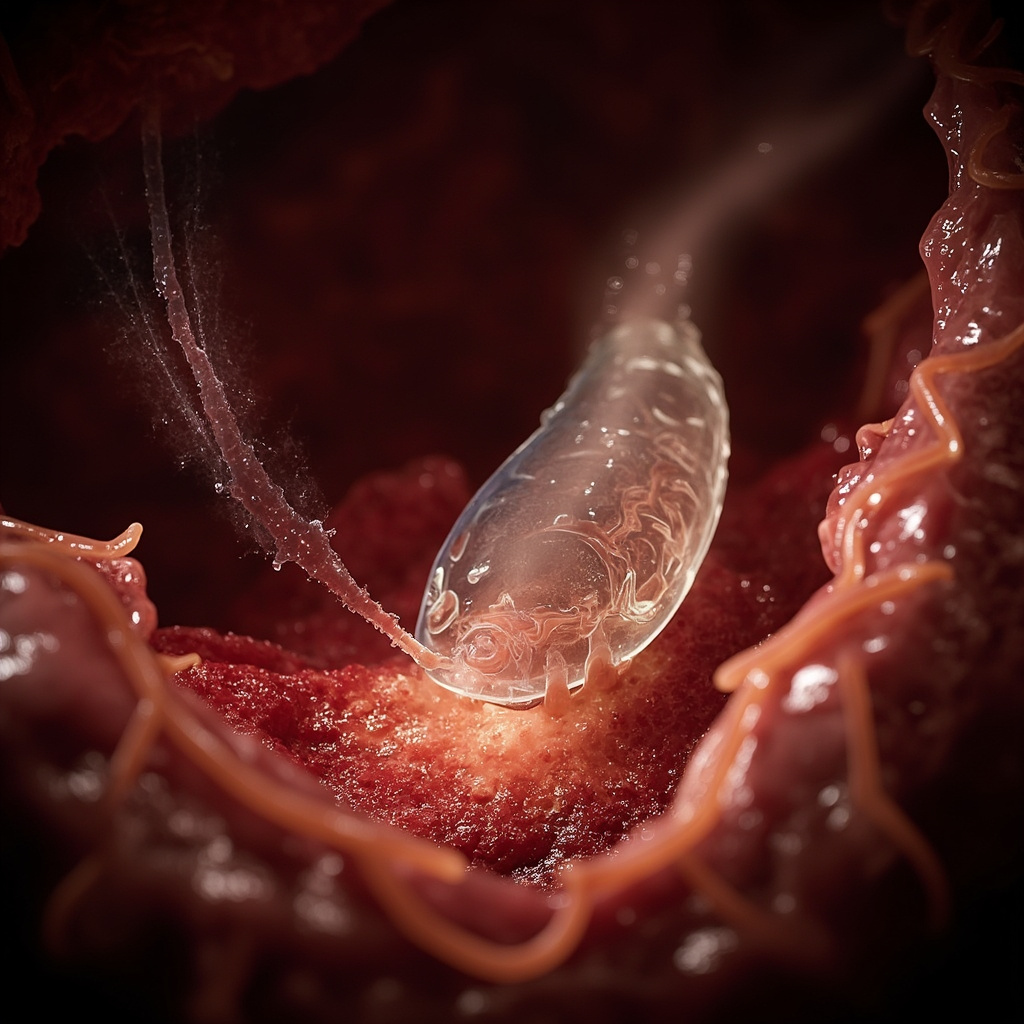
What is Fischoederius elongatus?
Fischoederius elongatus is a microscopic organism that can settle in the gastrointestinal tract. It primarily targets the intestines, where it releases toxins that interfere with normal food processing and nutrient absorption. These toxins create irritation and imbalance in the gut lining, often without obvious early warning signs. Over time, this leads to broader health issues, especially when the body struggles to maintain daily rhythms like sleep.
In assessments of the body's electrical activity, this organism shows up as a specific biomarker. For more details, see the glossary entry. Its presence can indicate low energy in gut-related structures or heightened agitation, signaling a need for attention.
How It Disrupts Digestion
The main problem starts in the intestines. The toxins from Fischoederius elongatus slow down the movement of food through the digestive system. This causes:
- Bloating and discomfort after meals
- Irregular bowel movements, like diarrhea or constipation
- Poor nutrient uptake, leading to ongoing fatigue
These effects create a cycle of inflammation. The gut wall becomes sensitive, and the body responds by ramping up immune activity. While this fights the intruder, it also releases substances that spread beyond the gut, affecting the whole system.
The Gut-Sleep Connection
Your gut and brain are closely linked through what experts call the gut-brain axis. About 95 percent of serotonin, a key chemical for mood and sleep regulation, is made in the gut. When Fischoederius elongatus disrupts digestion, serotonin production falters, throwing off your natural sleep signals.
Inflammation from the gut raises cortisol, the stress hormone. High cortisol at night prevents deep sleep stages, where true recovery happens. It also lowers heart rate variability (HRV), a measure of your body's ability to switch between rest and activity. Low HRV means fragmented sleep, frequent wake-ups, and feeling unrefreshed in the morning.
Circadian rhythms, your internal clock for sleep-wake cycles, suffer too. Gut imbalances can shift melatonin release, the hormone that promotes drowsiness. People with similar gut issues often report waking around 2-4 a.m., when the liver works hardest to detoxify.
Signs It Might Be Impacting Your Sleep
Look for these common patterns:
- Nighttime gut discomfort: Cramping or bloating that pulls you from sleep
- Restless nights: Trouble staying asleep, especially in deep phases
- Daytime fatigue: Low energy despite hours in bed
- Mood swings: Irritability or low mood from poor recovery
- Breathing issues: Subtle irregularities tied to inflammation
If you track sleep with a device, notice dips in HRV or high resting heart rate overnight. These align with stress from hidden gut burdens.
Restoring Balance for Better Sleep
Addressing Fischoederius elongatus focuses on calming gut inflammation and supporting natural rhythms. When balanced, it shifts from a disruptor to a resource, aiding digestive health and smooth energy flow.
Key steps include:
- Diet adjustments: Favor easy-to-digest foods like broths, cooked veggies, and fermented items to rebuild gut lining.
- Stress reduction: Evening routines with deep breathing boost parasympathetic activity, countering cortisol spikes.
- Light management: Dim lights post-sunset to support melatonin and circadian alignment.
- Targeted support: Use resonance frequencies matched to this biomarker in audio sessions. These help structures resonate properly, easing agitation.
In guided practices, specific guidance draws attention to gut balance, fostering inner calm. For on-demand relief, micro-current devices tuned to priorities can soothe inflammation in real time.
Long-Term Benefits
Clearing this gut threat leads to profound sleep improvements. Expect deeper rest, stable HRV, normalized cortisol, and vibrant energy. Many report fewer wake-ups, faster sleep onset, and waking refreshed.
As a sleep coach, I see gut balance as foundational for circadian health. Monitor your biomarkers for early signs, and prioritize digestion to unlock restorative nights.
- 1. hms.harvard.edu
- 2. onlinelibrary.wiley.com
- 3. pdxscholar.library.pdx.edu
- 4. ethesisarchive.library.tu.ac.th
- 5. shutterstock.com
- 6. rupahealth.com
- 7. biotechniques.com
- 8. mendeley.com
- 9. pmc.ncbi.nlm.nih.gov
- 10. cdc.gov
- 11. pmc.ncbi.nlm.nih.gov
- 12. my.clevelandclinic.org
- 13. news-medical.net
- 14. eurekalert.org
- 15. agris.fao.org
- 16. complete.bioone.org
- 17. researchgate.net
- 18. nature.com
- 19. newsweek.com
- 20. pmc.ncbi.nlm.nih.gov
- 21. si.edu
- 22. stripes.com
- 23. semanticscholar.org
- 24. researchgate.net
- 25. semanticscholar.org
- 26. ouci.dntb.gov.ua
- 27. link.springer.com
- 28. istockphoto.com
- 29. omicsdi.org
- 30. bioone.org
- 31. pubmed.ncbi.nlm.nih.gov
- 32. frontiersin.org
- 33. youtube.com
- 34. pmc.ncbi.nlm.nih.gov
- 35. mdpi.com
- 36. researchgate.net
- 37. tm.mahidol.ac.th
- 38. sciencedirect.com
- 39. thesleepdetective.com
- 40. stock.adobe.com
- 41. pmc.ncbi.nlm.nih.gov
- 42. pmc.ncbi.nlm.nih.gov
- 43. facebook.com
- 44. eurekalert.org
- 45. teagasc.ie
- 46. pubmed.ncbi.nlm.nih.gov
- 47. sciencedirect.com
- 48. sleeplikeaboss.com
- 49. asm.org
- 50. kellymurrayadultsleep.com
関連投稿
用語集
- エネルギーと心の構造 > 規制
- エネルギーと心の構造 > 時計
- エネルギーと心の構造 > フィスコエドリウス・エロンガトゥス
- 身体ゾーン > 副交感神経
- 中医学レシピ > 消化の緩和:膨満感と消化不良を和らげるためのシンプルなガイド
- 中医学レシピ > 肝臓の健康:バランスと落ち着きをもたらすTCMレシピ
- 中医学レシピ > 心臓の健康:不安と動悸のための療法
- 中医学レシピ > 脳のブースト:霧を晴らし、集中力と思い出を改善する
- エネルギーと心の構造 > 睡眠
- エネルギーと心の構造 > 毒素
- エネルギーと心の構造 > 動き
- エネルギーと心の構造 > 消化
- エネルギーと心の構造 > ストレス
- 刺激 > コルチゾール
- 刺激 > セロトニン
- 刺激 > 月 - 鼻腔、呼吸、味覚
- バイノーラルビート > 炎症緩和:バイノーラルビートでより早く回復する
- バイノーラルビート > 腸の調和:消化器の健康とバランスを向上させる
- 刺激 > メラトニン