


Fasciolopsis buski: Psyche's Gut Distress Echo
Understanding Fasciolopsis buski
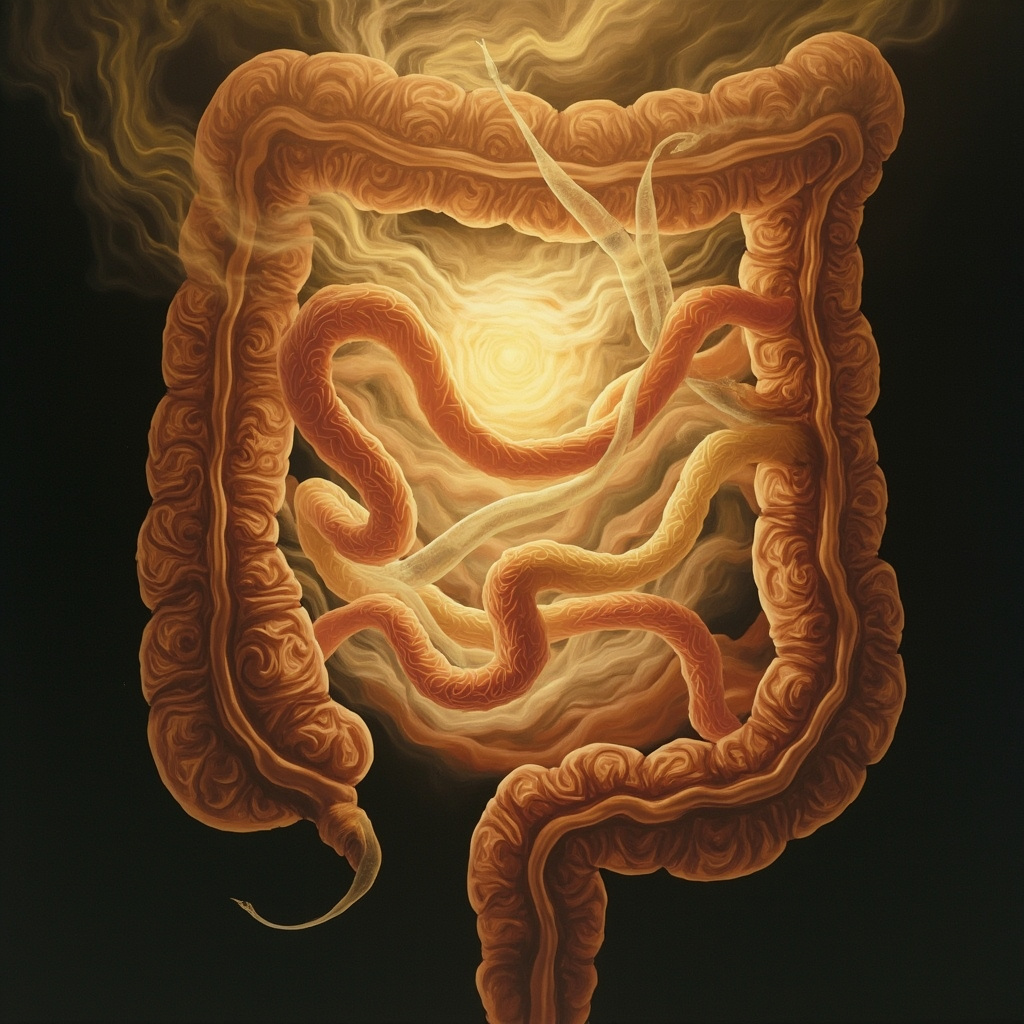
Fasciolopsis buski is a large flatworm-like organism that can reside in the small intestine. Known as the giant intestinal fluke, it attaches to the intestinal wall, feeding on nutrients. This can lead to common physical complaints like abdominal pain, nausea, diarrhea, and in heavier cases, feelings of weakness or malnutrition. Most people experience mild symptoms, but the discomfort it brings often points to more than just the gut.
In the body, it thrives in environments where hygiene and diet play key roles, particularly in regions with close human-animal contact. Yet, beyond the physical, this organism serves as a mirror to the psyche, reflecting unconscious tensions that manifest in our digestive core.
Physical Manifestations
When present, Fasciolopsis buski causes irritation by clinging to the intestinal lining. This leads to:
- Abdominal discomfort: A nagging ache or bloating that disrupts daily life.
- Digestive upset: Loose stools, nausea, or vomiting, especially after meals.
- Nutrient drain: Over time, it absorbs vital substances, contributing to fatigue or poor appetite.
Severe infestations might cause blockages or inflammation, but even lighter ones create a persistent sense of unease. The body responds with inflammation and immune activity, signaling a call for balance.
The Emotional Echo
From a Jungian perspective, the gut is the seat of deep instincts and shadow elements – those repressed feelings we avoid confronting. Fasciolopsis buski echoes anxiety, distress, and vulnerability. The physical churning mirrors inner turmoil:
- Discomfort as metaphor: Just as the worm disrupts nutrient flow, unresolved anxieties block emotional nourishment.
- Anxiety's grip: The nausea and pain evoke a primal fear of invasion, linking to unconscious threats or boundaries violated.
- Vulnerability revealed: Feelings of weakness highlight where the psyche feels exposed, urging us toward integration.
In my work, such biomarkers reveal unconscious conflicts. Clients often report heightened worry or irritability alongside gut issues, as if the body whispers what the mind suppresses. This organism amplifies stress responses, tying physical symptoms to emotional patterns like fear of loss or instability.
Psyche's Mirror: Mind-Body Dialogue
Jung taught that symptoms are not enemies but messengers from the unconscious. Fasciolopsis buski invites shadow work – facing these echoes to reclaim wholeness. Consider:
- Dream connections: Gut distress in dreams might symbolize digesting life's challenges or undigested traumas.
- Active imagination: Visualize the organism as a guardian of hidden boundaries, guiding you to strengthen inner defenses.
- Individuation path: By acknowledging its presence, we move toward emotional resilience, turning distress into insight.
Tracking energy and agitation around this structure shows shifts in inner harmony. High agitation signals active tension; balanced energy indicates integration.
When It Serves as a Resource
Paradoxically, Fasciolopsis buski can become an ally. In harmony with the body, it supports emotional balance by addressing root discomforts. Targeted work alleviates gut woes, fostering:
- Relief and stability: Clearing distress promotes calm and groundedness.
- Inner strength: Overcoming vulnerability builds psyche resilience.
- Holistic healing: It aids in releasing anxiety, allowing nutrients – physical and emotional – to flow freely.
Practices like guided inner journeys direct attention here, using symbolic language to invite balance. Measurable changes in biomarkers reflect deeper transformation, aligning body and unconscious.
Pathways to Integration
To engage this echo:
- Observe symptoms: Note when gut discomfort aligns with emotional states.
- Journal reflections: What vulnerabilities does it highlight?
- Symbolic work: Engage dreams or visualizations for dialogue.
- Monitor progress: Watch for reduced agitation as harmony emerges.
This organism reminds us: true healing bridges body and psyche. By listening to its echo, we uncover paths to individuation and peace.
(Word count: 612)
- 1. cabidigitallibrary.org
- 2. iris.who.int
- 3. outbreaknewstoday.substack.com
- 4. cambridge.org
- 5. academic.oup.com
- 6. pubmed.ncbi.nlm.nih.gov
- 7. journals.lww.com
- 8. irasspublisher.com
- 9. journalajst.com
- 10. sciencedirect.com
- 11. pmc.ncbi.nlm.nih.gov
- 12. ageb.be
- 13. researchgate.net
- 14. pmc.ncbi.nlm.nih.gov
- 15. facebook.com
- 16. patient.info
- 17. distantreader.org
- 18. facebook.com
- 19. accessmedicine.mhmedical.com
- 20. researchgate.net
- 21. idmodules.com
- 22. wwwnc.cdc.gov
- 23. pmc.ncbi.nlm.nih.gov
- 24. vliz.be
- 25. tiktok.com
- 26. mdpi.com
- 27. facebook.com
- 28. yourarticlelibrary.com
- 29. pmc.ncbi.nlm.nih.gov
- 30. journals.lww.com
- 31. accessmedicine.mhmedical.com
- 32. cambridge.org
- 33. researchgate.net
- 34. researchgate.net
- 35. link.springer.com
- 36. link.springer.com
- 37. wwwnc.cdc.gov
- 38. annualreviews.org
- 39. sciencedirect.com
Related posts
Glossary
- Energy and mind Structures > Structure
- Energy and mind Structures > Peace
- Energy and mind Structures > Fasciolopsis buski
- TCM Recipes > Poor Appetite: A TCM Recipe for Digestive Relief
- TCM Recipes > Intestinal Harmony: A TCM Recipe for Digestive Relief
- TCM Recipes > Digestive Relief: A Simple Guide to Ease Bloating & Indigestion
- TCM Recipes > Boost Your Energy: A TCM Recipe for Fatigue Relief
- TCM Recipes > Digestive Relief: Remedies for Abdominal Pain & Nausea
- Stimuli > AIDS
- Stimuli > Pain
- Binaural beats > Inflammation Relief: Heal Faster with Binaural Beats
- Stimuli > Lead
- Stimuli > Harmony
see also...
- Energy and mind Structures > Fasciolopsis buski
- Energy and mind Structures > TCM Recipes > Digestive Relief: Remedies for Abdominal Pain & Nausea
- Testimonials > 61% Drop in Nausea and 58% in Headaches from Sound Therapy
- Binaural beats > Stimuli > Sacral, Zinc Etc
- Binaural beats > Desensitizer: Boost Your Energy and Focus Effectively