


Autonomic Nerves: Psyche's Balance Mirror
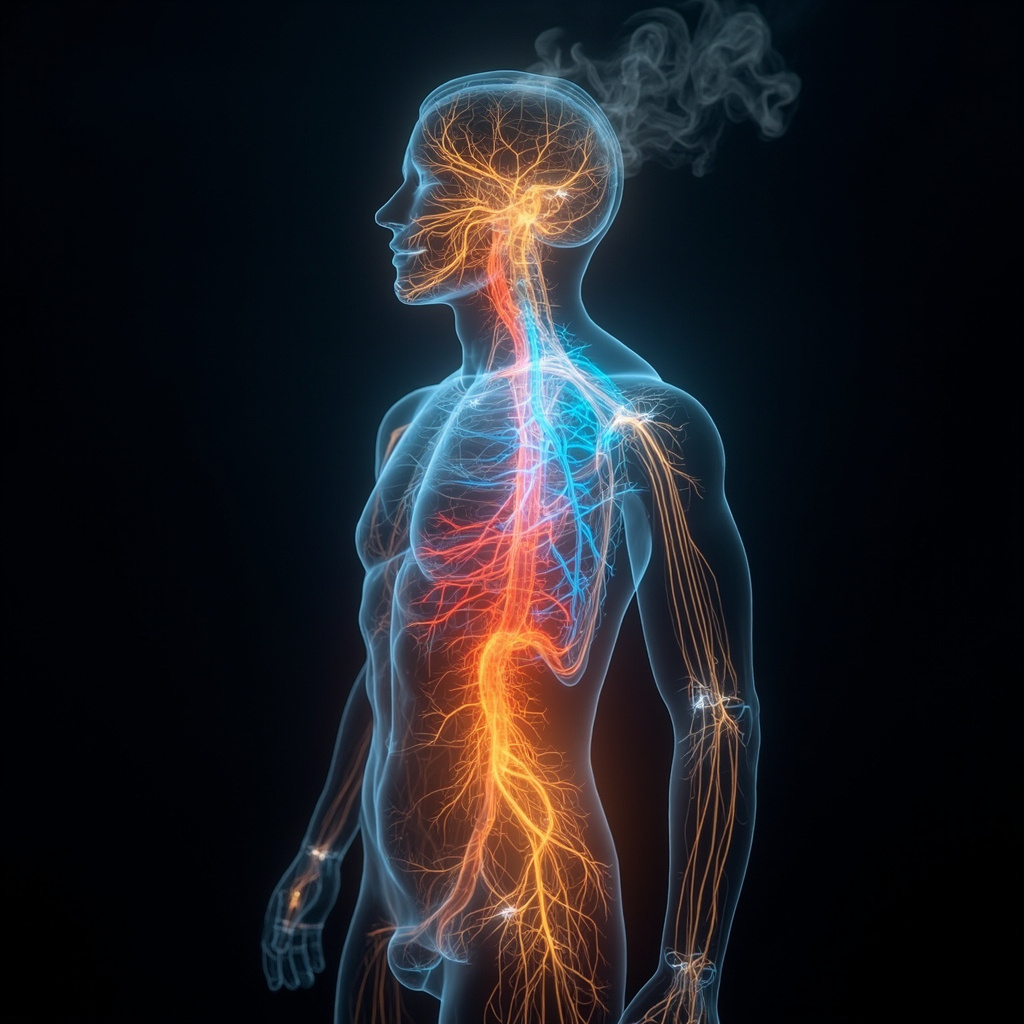
Your Body's Silent Regulator
The autonomic nervous system works behind the scenes, managing essential tasks you never think about. It controls your heart rate, breathing, digestion, and blood pressure. Imagine it as the conductor of an orchestra, ensuring all parts play in sync.
This system has two main branches:
- The sympathetic branch, which kicks in during stress-like speeding up your heart for 'fight or flight'.
- The parasympathetic branch, which promotes 'rest and digest'-slowing things down for recovery and calm.
Together, they maintain homeostasis, your body's natural balance. For a deeper look, see the autonomic glossary.
Echoes from the Unconscious
In my work as a Jungian psychotherapist, I see the autonomic system as a mirror of the psyche. It reflects inner tensions, unresolved fears, or the drive for control. Chronic stress or anxiety can tip the scales toward sympathetic overdrive, leading to exhaustion.
Consider how fear-perhaps from past trauma-lingers unconsciously. It disrupts digestion, raises blood pressure, or causes irregular heartbeats. These physical signs are messages from the deeper self, urging integration.
Jung taught that the body and psyche are one. Imbalances here often signal shadow aspects-repressed emotions seeking light. Biomarkers reveal this through energy levels, agitation, or weakened links to other organs.
Common Signs of Disharmony
When the autonomic system falters, symptoms appear:
- Physical: Fatigue, digestive woes, hypertension, or poor sleep.
- Emotional: Restlessness, overwhelm, or difficulty relaxing.
Conditions like dysautonomia highlight extreme shifts, but milder imbalances affect daily life. They stem from life's pressures-work demands, relationships, or hidden insecurities.
Calling on the Autonomic as a Resource
A healthy autonomic system is a powerful ally. It prioritizes balance, coordinating heart, lungs, and gut for smooth function. Under stress, it adapts wisely, then restores calm.
In therapy, we invoke it directly. Visualize its steady rhythm during dream work or active imagination. This strengthens parasympathetic tones, easing sympathetic grip. Track changes in biomarkers to witness inner shifts toward individuation-Jung's path to wholeness.
Healing Through Mind-Body Dialogue
Practices like deep breathing or meditation activate the parasympathetic branch naturally. They lower heart rate and soothe nerves, fostering emotional clarity.
Recent research supports this. A 2025 Mount Sinai study found that just 10 minutes of loving-kindness meditation alters brain waves in areas tied to emotional regulation and memory. Participants shifted beta and gamma waves in the amygdala-deeply linked to autonomic responses-reporting profound calm.
"These kinds of brain waves are affected in mood disorders like depression and anxiety, so the possibility of being able to willfully control these through meditation is pretty amazing," notes researcher Ignacio Saez, PhD.
Visualization aligns with this: Picture your nerves as a serene river, flowing balanced. Pair it with symbolic work to integrate shadows.
Steps Toward Inner Harmony
- Notice signals: Tune into bodily cues like rapid pulse during worry.
- Breathe deeply: Inhale for 4 counts, exhale for 6 to engage parasympathetic.
- Journal dreams: Link nighttime images to daytime tensions reflected in autonomic patterns.
- Practice presence: Short meditations build resilience.
By honoring this system, you bridge body and psyche. It becomes a guide for self-development, revealing hidden capacities and emotional depths. Balance here ripples outward, enhancing vitality and peace.
- 1. pmc.ncbi.nlm.nih.gov
- 2. nesa.world
- 3. gbhi.org
- 4. link.springer.com
- 5. goodsky.com.au
- 6. cfnmedicine.com
- 7. lifebalancemc.com
- 8. pmc.ncbi.nlm.nih.gov
- 9. thedysautonomiaproject.org
- 10. stargazette.com
- 11. caseintegrativehealth.com
- 12. nature.com
- 13. mountsinai.org
- 14. facebook.com
- 15. texascenterforlifestylemedicine.org
- 16. nypost.com
- 17. pmc.ncbi.nlm.nih.gov
- 18. gordonmedical.com
- 19. facebook.com
- 20. nmn.com
- 21. mindbody7.com
- 22. researchgate.net
- 23. sciencedirect.com
- 24. frontiersin.org
- 25. autism.org
- 26. verywellmind.com
- 27. pmc.ncbi.nlm.nih.gov
- 28. minalvaziranimd.com
- 29. portclintonnewsherald.com
- 30. mdpi.com
- 31. insighttimer.com
- 32. redding.com
- 33. harmonizedneurology.com
- 34. my.clevelandclinic.org
- 35. sciencedirect.com
- 36. pmc.ncbi.nlm.nih.gov
- 37. worthingtonoptimalwellness.com
- 38. mdpi.com
- 39. youtube.com
- 40. nature.com
Related posts
Glossary
- Energy and mind Structures > Beta; 11.29-29.56 Hz. Global mental activity.
- Energy and mind Structures > Peace
- Energy and mind Structures > Drive
- Energy and mind Structures > Exhaustion
- Energy and mind Structures > Memory
- Energy and mind Structures > Gamma; Above 29.56 Hz. Intense mental activity.
- Body zones > lungs
- Body zones > nerves
- Body zones > autonomic
- Body zones > parasympathetic
- Energy and mind Structures > Organs
- TCM Recipes > Digestive Relief: A Simple Guide to Ease Bloating & Indigestion
- TCM Recipes > Hypertension: Remedies for High Blood Pressure Relief
- TCM Recipes > Heart Health: Remedies for Anxiety and Palpitations
- TCM Recipes > Brain Boost: Clear Fog, Improve Focus & Memory
- TCM Recipes > Herbal Relief: A TCM Approach to Lift Your Mood
- TCM Recipes > Boost Your Energy: A TCM Recipe for Fatigue Relief
- Energy and mind Structures > sleep
- Energy and mind Structures > vitality
- Energy and mind Structures > blood pressure
- Energy and mind Structures > Digestion
- Energy and mind Structures > Theta; 4.31-6.97 Hz. Light sleep, meditation.
- Energy and mind Structures > Stress
- Stimuli > Moon - Nasal Passage, Breathing, Taste
- Stimuli > Blood