


Autonomic Nerves: Emotional Balance Hub
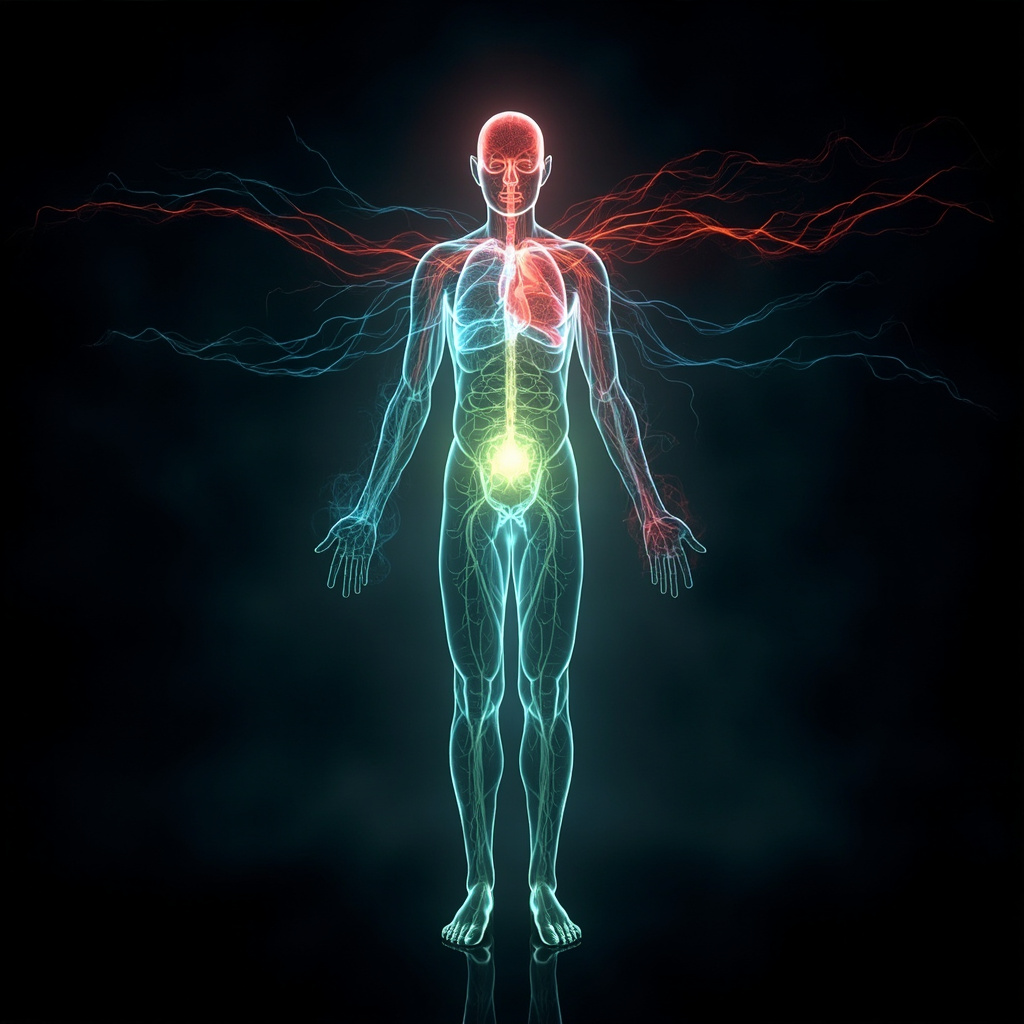
What Is the Autonomic Nervous System?
Your autonomic nervous system acts like an invisible conductor, managing tasks you never think about. It controls your heartbeat, breathing rate, digestion, and blood pressure. These keep your body in harmony, called homeostasis.
This system has two main branches:
- Sympathetic: Triggers fight-or-flight mode during stress. Heart races, muscles tense, energy focuses on survival.
- Parasympathetic: Promotes rest-and-digest. Slows heart rate, aids digestion, supports recovery.
Together, they shift based on needs. A healthy balance means smooth adaptation to daily life. For more details, see the autonomic nerves glossary.
Links to Emotions and Stress
Emotions deeply influence this system. Feelings like fear, insecurity, or the urge for control can tip it toward sympathetic overdrive. Chronic anxiety or unresolved stress keeps you stuck in high alert, draining energy.
Heart rate variability (HRV) offers a window into this. HRV measures tiny changes in heartbeat intervals. High HRV signals flexibility-your system adapts well to stress. Low HRV points to rigidity, often tied to emotional strain.
In my work as a psychologist, I see this often. Clients with high agitation or poor focus show low HRV patterns. These reflect deeper issues like trauma responses or ongoing worry.
Signs of Imbalance
When autonomic nerves falter, physical symptoms appear:
- Rapid heartbeat or hypertension.
- Digestive troubles like bloating or irregularity.
- Breathing issues or shallow breaths.
- Fatigue, even after rest.
Emotionally, it shows as restlessness, irritability, or feeling overwhelmed. Conditions like autonomic neuropathy or dysautonomia highlight extremes, but milder shifts affect daily well-being.
Recent insights confirm this: low HRV links to higher stress, anxiety, and even mental health challenges. Tracking it helps spot patterns early.
Autonomic Nerves as a Resource
View these nerves as an ally. When strong, they regulate other organs. They steady heart rate for calm focus, support digestion for nutrient absorption, and ease breathing for clear thinking.
As a resource, they foster overall homeostasis. This coordinated response builds resilience against life's pressures.
Practical Ways to Support Balance
You can nurture this system through simple habits:
- Deep breathing: Inhale for 4 counts, exhale for 6. Activates parasympathetic calm.
- Mindfulness: Spend 5-10 minutes noticing your breath. Reduces sympathetic dominance.
- Routine movement: Walks or yoga shift gears gently.
- Sleep hygiene: Consistent rest recharges the system.
- Grounding techniques: Name 5 things you see, 4 you touch-anchors you in the present.
For professionals, monitor HRV trends. Pair with therapy like cognitive behavioral techniques. Over time, biomarkers improve, showing real progress.
Why It Matters for You
Balancing autonomic nerves bridges body and mind. It eases stress, boosts emotional regulation, and enhances resilience. In a fast world, this inner stability fuels personal growth.
Small shifts yield big gains. Listen to your body's signals. Support your autonomic nerves, and watch health transform.
- 1. southwestvoices.news
- 2. jewishlink.news
- 3. hastingsjournal.news
- 4. bio.news
- 5. agriwaypartners.com
- 6. instagram.com
- 7. pmc.ncbi.nlm.nih.gov
- 8. cambridge.org
- 9. mdpi.com
- 10. medicalxpress.com
- 11. mdpi.com
- 12. osuhealthplan.com
- 13. nature.com
- 14. academic.oup.com
- 15. concordia.ca
- 16. pmc.ncbi.nlm.nih.gov
- 17. detroitnews.com
- 18. silmachadotherapy.com
- 19. positive.news
- 20. medicalxpress.com
- 21. insightcla.com
- 22. frontiersin.org
- 23. mghpsychnews.org
- 24. instagram.com
- 25. sciencedirect.com
- 26. frontiersin.org
- 27. link.springer.com
- 28. pmc.ncbi.nlm.nih.gov
- 29. favs.news
- 30. pmc.ncbi.nlm.nih.gov
- 31. news-medical.net
- 32. watchers.news
- 33. yourhealthmagazine.net
- 34. holistic.news
- 35. cdnsciencepub.com
- 36. pmc.ncbi.nlm.nih.gov
- 37. neurosciencenews.com
- 38. innsightful.com
- 39. thebrighterside.news
- 40. rooseveltislanddaily.news
Related posts
Glossary
- Energy and mind Structures > Focused Coherence; Focus
- Energy and mind Structures > Regulation
- Energy and mind Structures > Mental
- Energy and mind Structures > Rigidity
- Body zones > muscles
- Body zones > nerves
- Body zones > autonomic
- Body zones > parasympathetic
- Energy and mind Structures > Organs
- TCM Recipes > Digestive Relief: A Simple Guide to Ease Bloating & Indigestion
- TCM Recipes > Heart Health: Remedies for Anxiety and Palpitations
- TCM Recipes > Boost Your Energy: A TCM Recipe for Fatigue Relief
- Energy and mind Structures > blood pressure
- Energy and mind Structures > Digestion
- Energy and mind Structures > Stress
- Stimuli > IGF1, Growth
- Stimuli > Moon - Nasal Passage, Breathing, Taste
- Stimuli > AIDS
- Binaural beats > Trauma Healing: Binaural Beats for Emotional Balance
- Stimuli > Harmony
- Stimuli > Blood
see also...
- Energy and mind Structures > HRV
- Energy and mind Structures > Body zones > plasma
- Energy and mind Structures > TCM Recipes > Tension Headache Relief: A Natural Approach to Ease Stress
- Testimonials > 61% Drop in Nausea and 58% in Headaches from Sound Therapy
- Binaural beats > Stimuli > Variolinum
- Binaural beats > Trauma Healing: Binaural Beats for Emotional Balance