


Mediastinum: TCM's Chest Harmony Core
Understanding the Mediastinum
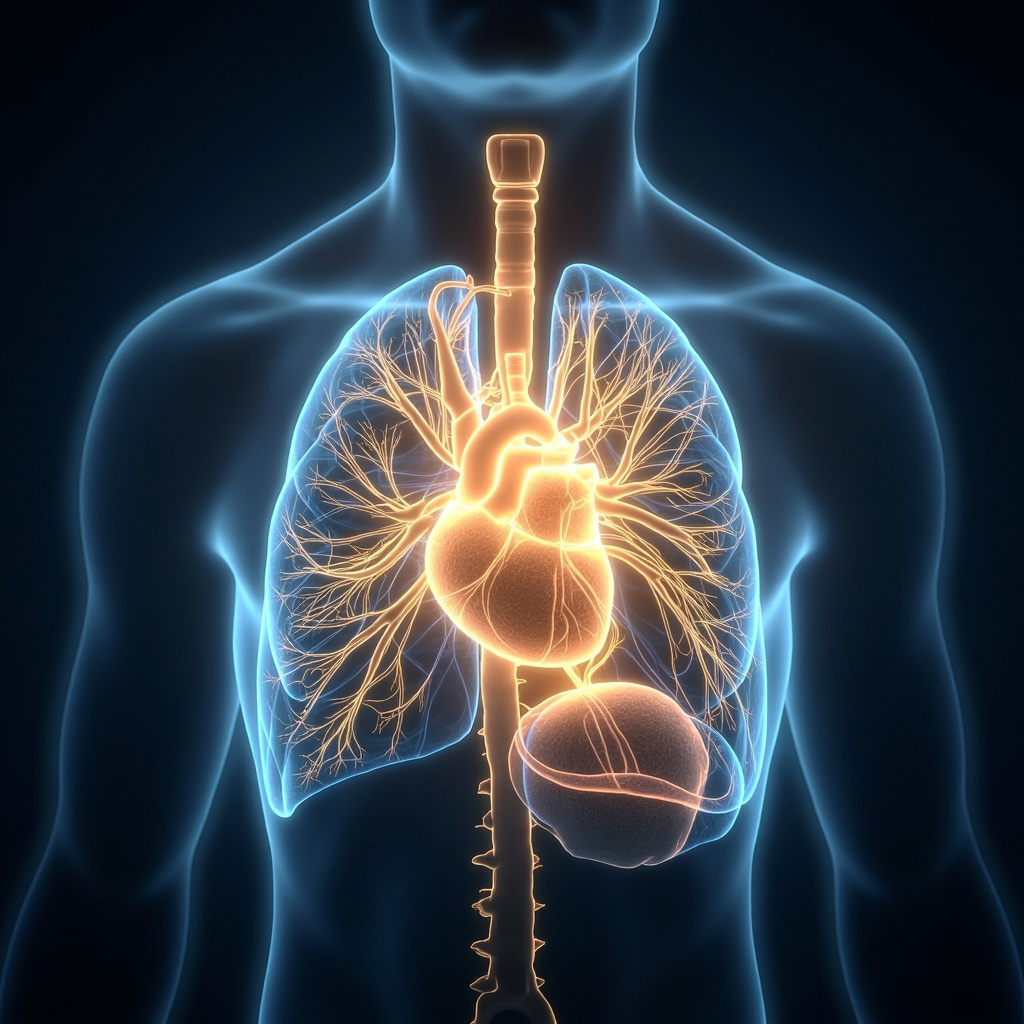
The mediastinum is the central space in your chest, nestled between the two lungs. It houses essential parts of the body: the heart, the trachea (your windpipe), the esophagus (food pipe), and large blood vessels. Think of it as a protective hub that keeps these organs in place and working together smoothly. When all is well, it supports easy breathing, steady blood flow, and smooth swallowing. For more details, see the glossary.
In everyday terms, this area ensures your chest functions as a team. Air moves in and out, blood circulates without strain, and food passes down without issue. Any disruption here, like from swelling, growths, or infections, can make breathing hard, slow circulation, or cause swallowing problems.
Mediastinum in Traditional Chinese Medicine
In Traditional Chinese Medicine (TCM), the mediastinum connects deeply to the lungs, linked to the metal element. The lungs govern qi (vital energy) intake through breath and protect the body from external harms. The mediastinum acts as a bridge, channeling qi between the lungs and heart. The heart, tied to the fire element, rules blood flow and houses the spirit (shen).
This central zone maintains yin-yang balance in the chest. Yin provides cooling moisture for the lungs, while yang fuels warm circulation from the heart. Blockages here disrupt qi flow along meridians, the energy pathways that run through the body. For instance, the lung meridian starts in the chest, flowing past the mediastinum to support breath and skin health.
Modern tools like biomarkers reveal its state through electrical activity patterns. These show energy levels, agitation, and links to other body parts. Low energy might signal stagnation, while high agitation points to excess heat or tension.
Emotional Ties to the Mediastinum
Emotions play a big role in TCM, as feelings affect organs and qi. The mediastinum, close to the lungs, relates to sensations of suffocation, pressure, and feeling overwhelmed. When stressed by heavy responsibilities or trapped situations, you might feel chest tightness or shallow breath-classic signs of emotional qi stagnation.
Unresolved conflicts or a lack of freedom can weaken this area. It's like being squeezed by duties, leaving no room to breathe. The lungs process grief and sadness, but the mediastinum amplifies broader pressures, linking to the heart's joy and spirit. Imbalance here shows as anxiety, restlessness, or a heavy heart.
Signs of Imbalance
Watch for these common clues:
- Shortness of breath or chest discomfort
- Fatigue from poor circulation
- Difficulty swallowing or digestive unease
- Emotional overwhelm, like constant worry
- Frequent infections in the chest area
These often stem from lifestyle factors: prolonged stress, poor posture, or shallow breathing habits. In TCM terms, they indicate qi deficiency in the lungs or heat invading the chest.
The Mediastinum as a Healing Resource
When strong, the mediastinum fosters harmony among chest organs. It ensures clear communication: lungs supply oxygen-rich qi to the heart, which pumps it body-wide. This supports steady breath, vibrant energy, and emotional calm.
Use it to counter overwhelm by promoting space and freedom in your inner world. In practice:
- Breathing exercises: Deep belly breaths to expand qi in the chest.
- Acupressure: Press points along the lung meridian, like on the chest ridge.
- Herbs: Formulas like Bu Fei Tang to tonify lung qi and clear phlegm.
- Lifestyle: Gentle walks in fresh air to nourish metal element.
Biomarkers guide precise support, highlighting needs like calming agitation or boosting energy. This aligns ancient wisdom with today's insights for full-body balance.
Restoring Harmony Step by Step
Start with awareness: Notice chest sensations during stress. Practice daily qi cultivation:
- Sit quietly, hands on chest, breathe deeply for 10 minutes.
- Visualize light flowing through the mediastinum, easing pressure.
- Pair with movement like qigong's chest-opening poses.
Over time, this strengthens the area, lifting emotional weights and enhancing vitality. The mediastinum reminds us: true health flows from inner space and balanced energy.
In TCM, nurturing this core hub transforms chest constraints into free-flowing qi, blending body, breath, and spirit in harmony.
Related posts
Glossary
- Energy and mind Structures > Communication
- Energy and mind Structures > Metal
- Energy and mind Structures > Fire
- Energy and mind Structures > Stagnation
- Body zones > lungs
- Body zones > mediastinum
- Body zones > chest
- Energy and mind Structures > Organs
- TCM Recipes > Skin Health: Remedies for Acne and Eczema
- TCM Recipes > Digestive Relief: A Simple Guide to Ease Bloating & Indigestion
- TCM Recipes > Circulation: Boost Energy and Warm Your Extremities
- TCM Recipes > Heart Health: Remedies for Anxiety and Palpitations
- TCM Recipes > Lung Support: A TCM Recipe for Respiratory Health
- TCM Recipes > Boost Your Energy: A TCM Recipe for Fatigue Relief
- Energy and mind Structures > vitality
- Energy and mind Structures > movement
- Energy and mind Structures > Stress
- Stimuli > Moon - Nasal Passage, Breathing, Taste
- Stimuli > Harmony
- Stimuli > Blood
see also...
- Energy and mind Structures > HRV
- Energy and mind Structures > Body zones > substantia nigra
- Energy and mind Structures > TCM Recipes > Tension Headache Relief: A Natural Approach to Ease Stress
- Testimonials > 61% Drop in Nausea and 58% in Headaches from Sound Therapy
- Binaural beats > Stimuli > Variolinum