


Sympathetic Nerves: Fight-or-Flight Guardian
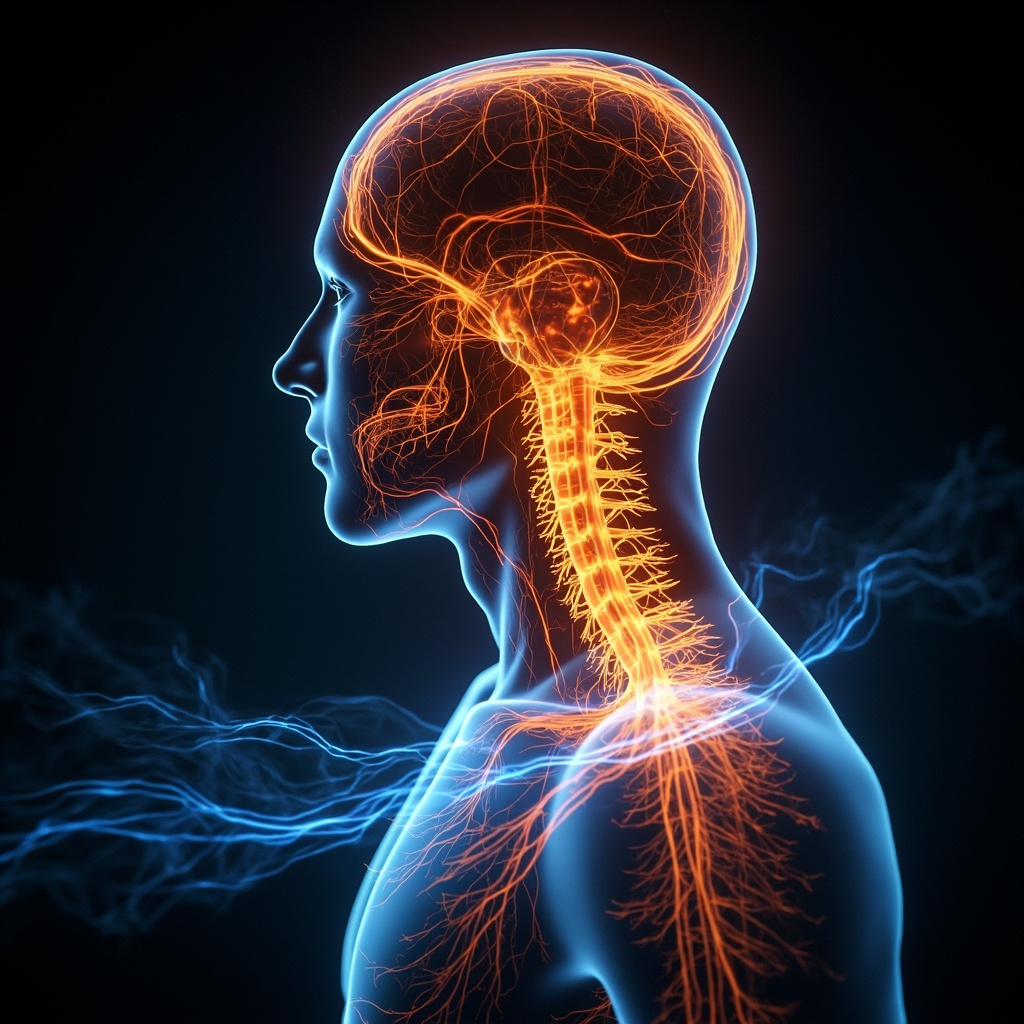
What is the Sympathetic Nervous System?
The sympathetic nervous system is a key part of your body's automatic controls. It runs along the spine, mainly in the chest and lower back areas. This network of nerves helps you respond quickly to challenges. Think of it as your inner alarm system.
When danger or stress hits, it springs into action. It speeds up your heart rate, opens your airways for deeper breaths, and releases stored energy from muscles and liver. Blood flows faster to where it's needed most, like arms and legs. This prepares you to fight or run away – the classic fight-or-flight response.
In everyday life, it keeps you alert during busy days, workouts, or tough talks. A healthy sympathetic system supports quick adaptation without wearing you out.
How It Supports Your Body
As a resource, the sympathetic nervous system strengthens other parts during tough times:
- Boosts heart function for better oxygen delivery.
- Redirects blood flow to vital muscles and brain.
- Mobilizes energy stores for immediate use.
- Coordinates organs to maintain balance under pressure.
This teamwork ensures your body stays steady. It promotes homeostasis, the natural harmony of all systems working together.
Signs of Overactivity or Imbalance
When stuck in high gear, the sympathetic system drains your energy. Common issues include:
- Chronic stress: Constant racing heart or shallow breathing.
- High blood pressure: From ongoing tension.
- Digestive slowdown: Less blood to the gut during alerts.
- Sleep troubles: Hard to wind down at night.
Prolonged activation leads to exhaustion. Your body stays in survival mode, missing chances for rest and repair.
Emotional Ties to Sympathetic Activity
This system links closely to feelings. Fear and anxiety trigger it strongly. A past shock or ongoing worry can keep it revved up. You might feel always on edge, with tense muscles or racing thoughts.
Anger or frustration also calls it forward. Over time, this creates a loop: stress fuels emotions, emotions fuel stress. Breaking it starts with awareness of your inner signals.
Energy Healing Perspective
In energy work, the sympathetic nerves show stress biomarkers. These reveal blockages in your energy flow. Low vitality or emotional ups and downs point to sympathetic overload.
Chakra alignment helps here. The solar plexus chakra, tied to personal power, often needs tuning. Practices like breath focus or gentle touch restore flow. Track changes over time – calmer nerves mean rising resilience.
As an inner energy practitioner, I see it as a gateway to mind-body-spirit unity. Balance sympathetic drive with restful forces for full harmony.
Fresh Insights from Research
New studies highlight ways to calm sympathetic overdrive. One recent trial used low-intensity electric fields at very low frequencies. After 20 minutes, markers of sympathetic activity dropped sharply. Skin conductance fluctuations – signs of arousal – fell from about 3.6 to 1.6 per minute.
This suggests gentle fields promote relaxation without drugs. It echoes ancient energy ideas: subtle vibrations shift the nervous system toward calm. Such findings support tools like frequencies for daily balance.
Steps to Harmonize Your Sympathetic Energy
Build resilience with simple habits:
- Deep breathing: Slow inhales activate calm counterparts.
- Nature walks: Grounding reduces alert states.
- Mindful pauses: Notice tension, then release.
- Energy scans: Feel spine pathways, invite smooth flow.
Consistent practice lowers baseline stress. Your sympathetic guardian stays ready but rests when safe.
For deeper work, explore your unique patterns. Vitality follows balanced energy.
- 1. nature.com
- 2. pubmed.ncbi.nlm.nih.gov
- 3. pubmed.ncbi.nlm.nih.gov
- 4. pmc.ncbi.nlm.nih.gov
- 5. tpcportland.com
- 6. bios.health
- 7. eurekalert.org
- 8. insighttimer.com
- 9. news.ohsu.edu
- 10. youtube.com
- 11. psychiatry.ucsf.edu
- 12. pmc.ncbi.nlm.nih.gov
- 13. pubmed.ncbi.nlm.nih.gov
- 14. pmc.ncbi.nlm.nih.gov
- 15. pubmed.ncbi.nlm.nih.gov
- 16. mindworks.org
- 17. sciencedirect.com
- 18. music.apple.com
- 19. pubmed.ncbi.nlm.nih.gov
- 20. pubmed.ncbi.nlm.nih.gov
- 21. mdpi.com
- 22. music.youtube.com
- 23. health.harvard.edu
- 24. sciencedaily.com
- 25. facebook.com
- 26. youtube.com
- 27. medicine.iu.edu
- 28. sciencedirect.com
- 29. pubmed.ncbi.nlm.nih.gov
- 30. clinicaltrials.gov
- 31. pmc.ncbi.nlm.nih.gov
- 32. businesswire.com
- 33. npr.org
- 34. pubmed.ncbi.nlm.nih.gov
- 35. wjgnet.com
- 36. youtube.com
- 37. healthline.com
- 38. pmc.ncbi.nlm.nih.gov
- 39. nature.com
Related posts
Glossary
- Energy and mind Structures > oxygen
- Energy and mind Structures > Focused Coherence; Focus
- Energy and mind Structures > Drive
- Energy and mind Structures > Exhaustion
- Body zones > muscles
- Body zones > nerves
- Body zones > sympathetic
- Body zones > chest
- Energy and mind Structures > Organs
- TCM Recipes > Skin Health: Remedies for Acne and Eczema
- TCM Recipes > Liver Health: A TCM Recipe for Balance and Calm
- TCM Recipes > Heart Health: Remedies for Anxiety and Palpitations
- TCM Recipes > Brain Boost: Clear Fog, Improve Focus & Memory
- Energy and mind Structures > vitality
- Energy and mind Structures > VLF; Sympathetic activity
- Energy and mind Structures > Stress
- Stimuli > Moon - Nasal Passage, Breathing, Taste
- Stimuli > Shock
- Binaural beats > Nervous System: A Program for Emotional Balance and Relaxation
- Stimuli > Harmony
- Stimuli > Blood
see also...
- Energy and mind Structures > HRV
- Energy and mind Structures > Body zones > substantia nigra
- Energy and mind Structures > TCM Recipes > Boost Energy: A Simple Remedy for Low Energy and Fatigue
- Testimonials > 61% Drop in Nausea and 58% in Headaches from Sound Therapy
- Binaural beats > Stimuli > Variolinum
- Binaural beats > Transmutation: A Sound Journey for Personal Change