


Calcium: Yoga for Bone Strength & Balance
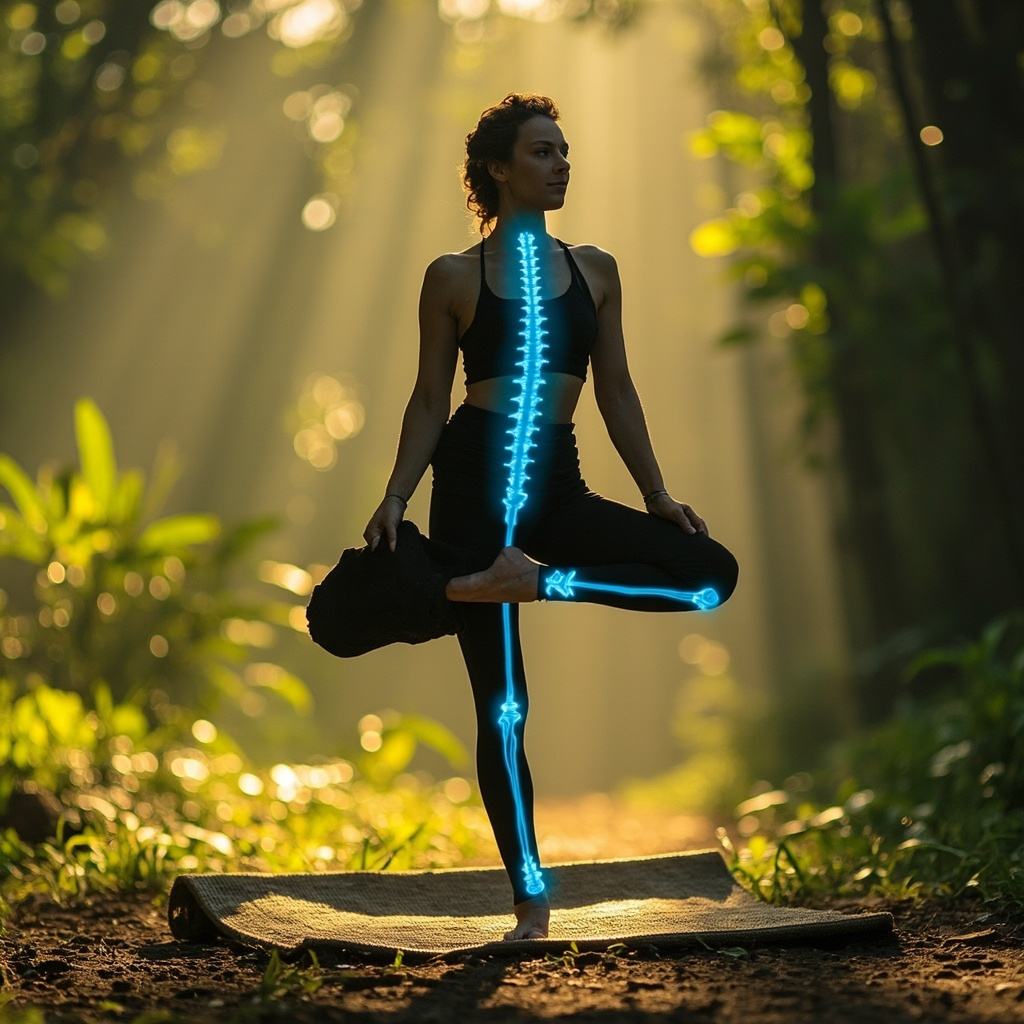
Calcium's Role in Your Body
Calcium is the most abundant mineral in your body, making up about 99% of your bones and teeth. It gives them structural strength to support your frame and withstand daily stresses. Beyond bones, calcium flows in your blood, fuels muscle contractions for movement, enables nerve signal transmission for quick responses, and helps blood clotting to heal wounds.
This mineral acts like a messenger inside cells. It triggers heartbeats, aids digestion, and supports hormone release. For more details, see our glossary on Calcium.
Signs of Calcium Imbalance
Low calcium weakens bones over time, leading to osteoporosis where they become brittle and prone to fractures. Muscles may cramp, nerves misfire causing tingles, and fatigue sets in. High calcium can form kidney stones, harden arteries, or disrupt heart rhythms.
Factors like poor diet, stress, lack of movement, or hormonal shifts affect absorption. Regular activity and mindful practices help maintain balance.
Calcium as a Body Resource
When balanced, calcium fortifies your skeleton for stability, smooths muscle function for effortless action, sharpens nerve signaling for clear focus, and ensures steady clotting for recovery. It links body systems, promoting resilience and energy flow.
Yoga Practices to Support Calcium
Yoga builds bone density through weight-bearing poses that stress bones positively, encouraging calcium deposit. A landmark study found a 12-minute daily routine reversed osteoporotic bone loss in the spine and femur after two years, with no injuries in thousands of practice hours.
Key poses from that research:
- Tree Pose (Vrikshasana): Stand on one leg to challenge balance and load hips/femur. Strengthens legs, core, and spine.
- Warrior II (Virabhadrasana II): Deep lunge opens hips, firms thighs, and stabilizes pelvis for bone-building torque.
- Triangle Pose (Trikonasana): Side stretch compresses spine and ribs, enhancing density while stretching muscles.
- Locust Pose (Salabhasana): Lift chest and legs to fortify back muscles and vertebrae.
- Bridge Pose (Setu Bandhasana): Arch hips upward to strengthen glutes, spine, and improve circulation.
Hold each 30 seconds, repeat 2-3 times. Progress slowly, using props like blocks for support.
Breathing for Muscle and Nerve Harmony
Pair poses with alternate nostril breathing (Nadi Shodhana): Close right nostril, inhale left; close left, exhale right. Repeat 5 cycles. This calms nerves, balances energy, and supports HRV for better calcium regulation under stress.
Twists for Flow and Flexibility
Seated Twist (Ardha Matsyendrasana): Rotate gently to wring spine, aiding nutrient flow to bones and easing muscle tension. Great for digestion too, which aids mineral uptake.
Daily Routine for Lasting Strength
Start with 10-15 minutes: 4-6 poses, breathing, end in Corpse Pose (Savasana) for integration. Practice consistently near bones' peak rebuilding time, like morning. Combine with sunlight for vitamin D synergy in calcium absorption.
Track progress through posture improvements, reduced cramps, and vitality. Consult a teacher for personalization based on your needs.
Yoga not only targets bones but harmonizes muscles and nerves, turning calcium into a true ally for embodied balance.
- 1. pmc.ncbi.nlm.nih.gov
- 2. dermascope.com
- 3. sciencedirect.com
- 4. pmc.ncbi.nlm.nih.gov
- 5. sageofthelakes.com
- 6. hcp.algaecal.com
- 7. neuroscience.ox.ac.uk
- 8. researchgate.net
- 9. researchgate.net
- 10. journals.sagepub.com
- 11. pmc.ncbi.nlm.nih.gov
- 12. sanfordhealth.org
- 13. brainmd.com
- 14. pmc.ncbi.nlm.nih.gov
- 15. mdpi.com
- 16. superpower.com
- 17. arxiv.org
- 18. link.springer.com
- 19. aarp.org
- 20. pmc.ncbi.nlm.nih.gov
- 21. pmc.ncbi.nlm.nih.gov
- 22. pmc.ncbi.nlm.nih.gov
- 23. onlinelibrary.wiley.com
- 24. int.livhospital.com
- 25. qnwellness.com
- 26. dermalbotanicsspa.com
- 27. facebook.com
- 28. evolationyoga.com
- 29. open.spotify.com
- 30. pmc.ncbi.nlm.nih.gov
- 31. icr-heart.com
- 32. silversneakers.com
- 33. ubiquinol.org
- 34. youtube.com
- 35. frontiersin.org
- 36. sciencedirect.com
- 37. ahajournals.org
- 38. realignyourmindcounseling.com
- 39. youtube.com
- 40. healthline.com
- 41. facebook.com
- 42. instagram.com
- 43. healthcare-bulletin.co.uk
- 44. precisionprimarycarewellness.com
- 45. drnick.ca
- 46. balchem.com
- 47. instagram.com
- 48. youtube.com
- 49. debirobinson.com
- 50. medicalnewstoday.com
- 51. aanmc.org
- 52. cnn.com
- 53. psychologytoday.com
- 54. youtube.com
- 55. frontiersin.org
- 56. biorxiv.org
- 57. ahajournals.org
- 58. youtube.com
- 59. uclahealth.org
Related posts
Glossary
- Energy and mind Structures > calcium
- Energy and mind Structures > Focused Coherence; Focus
- Energy and mind Structures > Regulation
- Body zones > hormonal
- Body zones > bones
- Body zones > muscles
- Body zones > nerves
- Body zones > teeth
- Body zones > Arteries
- Body zones > Vertebrae
- Body zones > chest
- TCM Recipes > Circulation: Boost Energy and Warm Your Extremities
- TCM Recipes > Kidney Stones: Relief for Pain and Discomfort
- TCM Recipes > Kidney Health: Boost Energy and Relieve Back Pain
- TCM Recipes > Heart Health: Remedies for Anxiety and Palpitations
- TCM Recipes > Muscle Relief: A Simple Guide to Alleviating Tension
- TCM Recipes > Boost Your Energy: A TCM Recipe for Fatigue Relief
- Energy and mind Structures > vitality
- Energy and mind Structures > movement
- Energy and mind Structures > Digestion
- Energy and mind Structures > Stress
- Stimuli > Moon - Nasal Passage, Breathing, Taste
- Stimuli > AIDS
- Stimuli > Bone
- Stimuli > Blood
- Stimuli > Vitamin D
see also...
- Energy and mind Structures > HRV
- Energy and mind Structures > Body zones > substantia nigra
- Energy and mind Structures > TCM Recipes > Tension Headache Relief: A Natural Approach to Ease Stress
- Testimonials > 61% Drop in Nausea and 58% in Headaches from Sound Therapy
- Binaural beats > Stimuli > Vitamin D