


Yoga for Mid-Back Stability & Calm
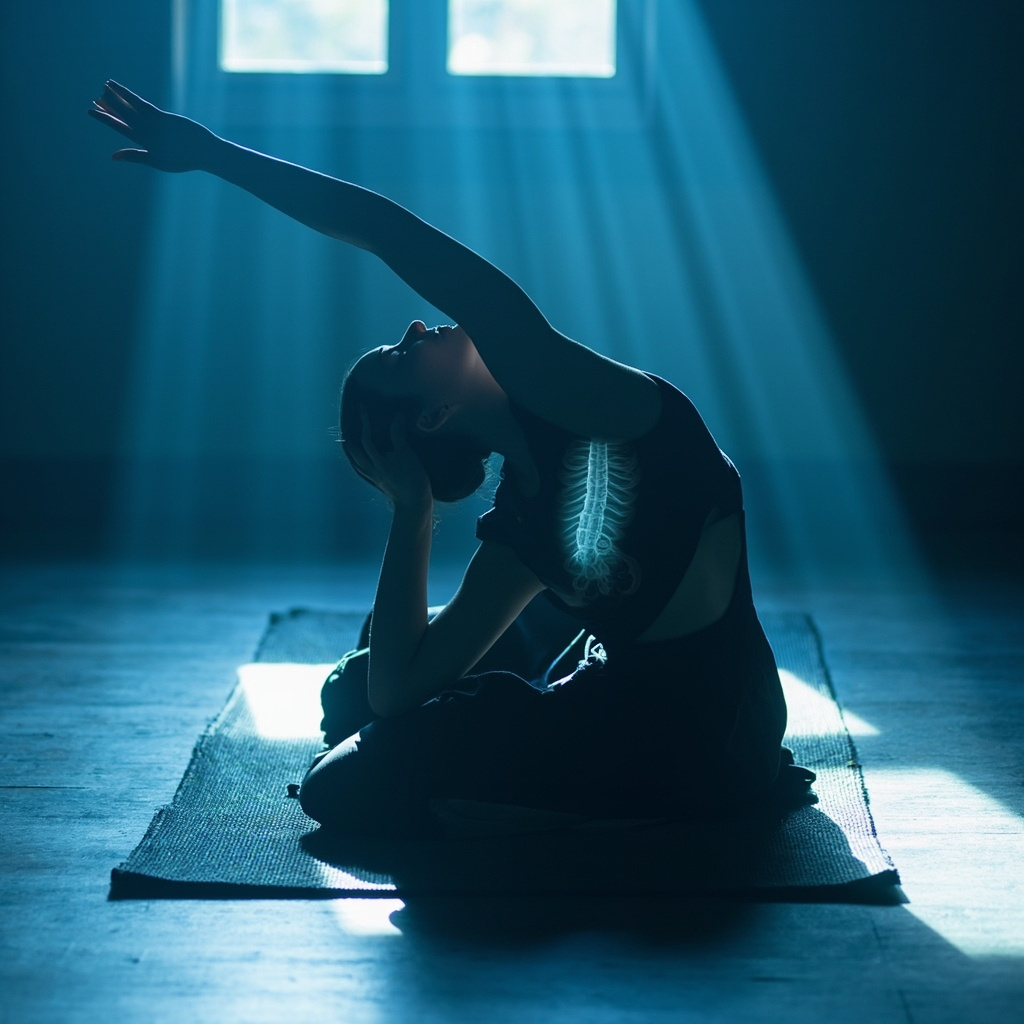
Your mid-back holds a key player in posture and vitality: the T9 vertebra. Nestled in the thoracic spine between T8 and T10, it anchors stability while allowing flexible movement like bending and twisting. When balanced, T9 protects the spinal cord and supports upper body strength. For more details, see the T9 glossary.
Strong T9 function aids daily activities, from sitting tall at a desk to turning smoothly during walks. Imbalances here can bring mid-back stiffness, pain, or reduced mobility, often tied to poor posture or strain.
Emotional Links to T9
Beyond bones, T9 connects to deeper layers. It relates to the adrenal glands and kidneys, centers for handling stress and survival energy. Feelings of overwhelm, fear of not coping, or constant pressure may show up as tension around T9. Unresolved emotional stress can tighten this area, creating a cycle of physical discomfort and mental fatigue.
When T9 acts as a resource, it stabilizes the spine, boosts adrenal and kidney function, and helps manage overwhelm. This fosters resilience, turning challenges into steady ground.
Signs T9 Needs Attention
Watch for:
- Mid-back aches, especially after long sitting or stress.
- Tightness between shoulder blades.
- Fatigue or emotional drain linked to feeling overburdened.
- Reduced twisting ease in daily motions.
These cues invite gentle care through movement and breath.
Yoga Poses to Balance T9
These accessible poses target thoracic mobility, strengthen mid-back muscles, and release held stress. Practice mindfully, using props like blankets or blocks for support. Breathe deeply into the back body.
Thread the Needle
Start on hands and knees. Slide one arm under the opposite side, resting shoulder and head on the floor. Hold 30 seconds to 1 minute per side.
- Benefits: Opens thoracic rotation, eases mid-back knots, calms nerves.
Reclined Twist
Lie on your back, hug one knee across the body, letting it rest on a pillow. Extend the other arm wide. Breathe 1-2 minutes per side.
Locust Pose
Lie face down, lift chest and arms slightly while pressing hips down. Hold a few breaths, repeat 3-5 times.
- Benefits: Builds back strength, improves posture stability around T9.
Child's Pose
Kneel, fold forward with arms extended or by sides. Rest forehead down, breathe for 2 minutes.
- Benefits: Stretches mid-back gently, invites rest for overwhelmed energy.
Supine Twist
On your back, drop both knees to one side while arms stay wide. Hold 1 minute per side.
Flow through these 3-5 times weekly, starting with 10-15 minutes.
Breathing for T9 Support
Pair poses with Nadi Shodhana (alternate nostril breathing): Close right nostril, inhale left; close left, exhale right. Repeat 5-10 rounds.
- Balances nervous system, reduces stress signals to adrenals, enhances T9 resilience.
Building a Personalized Practice
As a yoga coach, I tailor sequences using signs like heart rate variability for stress or posture markers. High tension? Focus on twists and restoratives. Low energy? Add strengthening like Locust.
Track progress: Notice freer movement, less overwhelm. T9 harmony supports whole-body flow.
Start small. Your mid-back-and mind-will thank you with renewed stability and peace.
- 1. science.gov
- 2. medicalnewstoday.com
- 3. yogabymaya.com
- 4. pmc.ncbi.nlm.nih.gov
- 5. pmc.ncbi.nlm.nih.gov
- 6. lispine.com
- 7. yogauonline.com
- 8. researchgate.net
- 9. lemon8-app.com
- 10. personaltrainingmaster.co.uk
- 11. youtube.com
- 12. compspinecare.com
- 13. bioclima.ro
- 14. facebook.com
- 15. yogatherapy.health
- 16. sciencedirect.com
- 17. artoflivingretreatcenter.org
- 18. facebook.com
- 19. youtube.com
- 20. instagram.com
- 21. instagram.com
- 22. healthline.com
- 23. npr.org
- 24. korehab.com
- 25. instagram.com
- 26. yoga15.com
- 27. yogajournal.com
- 28. heart.org
- 29. pmc.ncbi.nlm.nih.gov
- 30. passporthealthusa.com
- 31. yoga15.com
- 32. tandfonline.com
- 33. instagram.com
- 34. tummee.com
- 35. yogauonline.com
- 36. youtube.com
- 37. higherstatesofyoga.com
- 38. lamclinic.com
Related posts
Glossary
- Energy and mind Structures > Focused Coherence; Focus
- Energy and mind Structures > Mental
- Energy and mind Structures > Peace
- Body zones > head
- Body zones > bones
- Body zones > muscles
- Body zones > nerves
- Body zones > T9
- Body zones > chest
- Body zones > face
- TCM Recipes > Kidney Health: Boost Energy and Relieve Back Pain
- TCM Recipes > Heart Health: Remedies for Anxiety and Palpitations
- TCM Recipes > Adrenal Support: Remedies for Fatigue and Stress
- TCM Recipes > Boost Your Energy: A TCM Recipe for Fatigue Relief
- Energy and mind Structures > vitality
- Energy and mind Structures > movement
- Energy and mind Structures > Stress
- Stimuli > Moon - Nasal Passage, Breathing, Taste
- Stimuli > AIDS
- Stimuli > Pain
- Binaural beats > Spinal Cord Support: Enhance Wellness and Emotional Balance
- Binaural beats > Nervous System: A Program for Emotional Balance and Relaxation
- Stimuli > Harmony
see also...
- Energy and mind Structures > HRV
- Energy and mind Structures > Body zones > thoracic
- Energy and mind Structures > TCM Recipes > Tension Headache Relief: A Natural Approach to Ease Stress
- Testimonials > 61% Drop in Nausea and 58% in Headaches from Sound Therapy
- Binaural beats > Stimuli > Sacral, Zinc Etc
- Binaural beats > Transmutation: A Sound Journey for Personal Change