


Brain-Heart-Nerves: Core of Deep Sleep
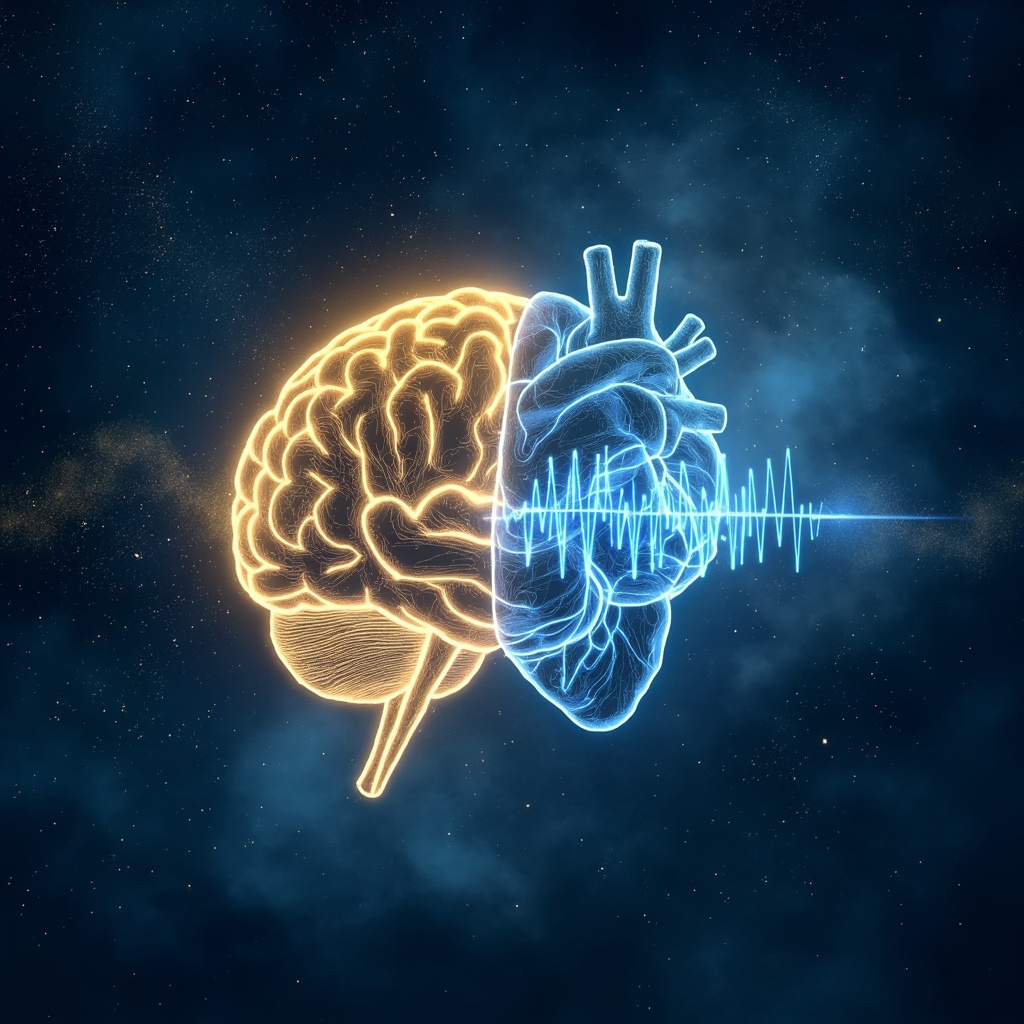
Science Reveals Brain-Heart Sync in Sleep
A 2025 study in Communications Biology uncovers how your brain and heart communicate through the nervous system during sleep. Researchers analyzed brain waves and heart rhythms in healthy people and those with sleep apnea. They found that in deep sleep, slow brain waves align strongly with the calming part of heart rate variability (HRV), driven by the parasympathetic nervous system. This sync promotes true recovery, clearing waste from the brain and restoring energy.
In lighter sleep stages, the active sympathetic nerves take over, preparing shifts between rest and alertness. But when this balance fails, like in apnea, sleep fragments, leaving you tired. Read the study.
The Brain-Heart-Nervous Team
Your brain, heart, and nervous system form a close-knit network. The brain directs thoughts and processes emotions. The heart maintains steady beats, signaling vitality. Nerves carry messages between them, balancing action (sympathetic) and rest (parasympathetic).
This trio governs HRV – natural ups and downs in heartbeat intervals. High HRV means flexibility: quick recovery from stress, deeper sleep. Low HRV signals strain: racing thoughts, shallow rest, fatigue buildup.
In Ayurveda terms, subdoshas here support mental clarity, emotional balance, and smooth nerve function. See the glossary for details.
When Balanced as a Resource
- Boosts clear thinking during the day.
- Steadies emotions for calm nights.
- Strengthens nerve signals for efficient energy flow.
- Aids other body parts via better information sharing.
How Imbalance Affects Your Sleep
Stress hormones like cortisol spike when this link weakens. Nighttime HRV drops, blocking deep sleep stages where growth hormone repairs tissues. Breathing patterns falter – short breaths raise sympathetic activity, mimicking fight-or-flight.
Common signs:
- Waking unrefreshed despite hours in bed.
- Afternoon slumps or evening wired feeling.
- Mood swings tied to poor rest.
- Circadian shifts: late nights, early grogginess.
Studies link low sleep HRV to risks like depression or cognitive fog, as nerves fail to downshift fully.
Building Harmony for Recovery
Support this network daily:
Breathing Practices
Slow breaths (5-6 per minute) raise HRV. Inhale for 5 counts, exhale for 5. This activates parasympathetic nerves, mimicking deep sleep patterns.
Evening Routines
- Dim lights by 8 PM to align circadian rhythm.
- Avoid screens; blue light disrupts brain-heart signals.
- Warm herbal tea (chamomile) eases nerves.
Stress Check
Track subtle cues: tight chest (heart strain), foggy head (brain overload), tingling limbs (nerve alert). Journal to spot patterns.
Meditation Focus
Guide attention to heart rhythm. Feel beats steady, invite brain calm. Short sessions build resilience.
When strong, this resource enhances overall well-being. It powers vitality, turning sleep into true recharge.
Prioritize this harmony. Your nights set the pace for thriving days.
- 1. heartmath.com
- 2. drdovpine.com
- 3. puresmusic.com
- 4. donovanhealth.com
- 5. youtube.com
- 6. cdn.quantumintech.com
- 7. davayurvedaezine.com
- 8. nhlbi.nih.gov
- 9. reports.mountsinai.org
- 10. eurekalert.org
- 11. pmc.ncbi.nlm.nih.gov
- 12. youtube.com
- 13. mountsinai.org
- 14. scientificamerican.com
- 15. lifespa.com
- 16. sciencedirect.com
- 17. healthline.com
- 18. sciencedirect.com
- 19. banyanbotanicals.com
- 20. kottakkal.shop
- 21. dovepress.com
- 22. pmc.ncbi.nlm.nih.gov
- 23. hotelcaesiusterme.com
- 24. neuronewsinternational.com
- 25. pmc.ncbi.nlm.nih.gov
- 26. frontiersin.org
- 27. midus.wisc.edu
- 28. pmc.ncbi.nlm.nih.gov
- 29. arhantayoga.org
- 30. sciencedirect.com
- 31. vjneurology.com
- 32. facebook.com
- 33. facebook.com
- 34. insighttimer.com
- 35. journals.sagepub.com
- 36. drdovpine.com
- 37. youtube.com
- 38. youtube.com
- 39. scholars.mssm.edu
- 40. artoflivingretreatcenter.org
- 41. maharishiayurvedaindia.com
- 42. instagram.com
- 43. youtube.com
- 44. healthline.com
- 45. nature.com
- 46. ahajournals.org
- 47. superpower.com
- 48. quantumclinic.com
Related posts
Glossary
- Body zones > head
- Body zones > hormones
- Body zones > nerves
- Body zones > parasympathetic
- Body zones > tissues
- Body zones > chest
- TCM Recipes > Heart Health: Remedies for Anxiety and Palpitations
- TCM Recipes > Brain Boost: Clear Fog, Improve Focus & Memory
- TCM Recipes > Herbal Relief: A TCM Approach to Lift Your Mood
- TCM Recipes > Boost Your Energy: A TCM Recipe for Fatigue Relief
- Energy and mind Structures > sleep
- Energy and mind Structures > vitality
- Energy and mind Structures > Brain, heart, nervous system
- Energy and mind Structures > Limbs, skin
- Energy and mind Structures > Subdoshas
- Energy and mind Structures > Theta; 4.31-6.97 Hz. Light sleep, meditation.
- Energy and mind Structures > VLF; Sympathetic activity
- Energy and mind Structures > Stress
- Stimuli > IGF1, Growth
- Stimuli > Cortisol
- Stimuli > Moon - Nasal Passage, Breathing, Taste
- Stimuli > AIDS
- Binaural beats > Nervous System: A Program for Emotional Balance and Relaxation
- Stimuli > Apnea
- Stimuli > Harmony
see also...
- Energy and mind Structures > Body zones > substantia nigra
- Energy and mind Structures > TCM Recipes > Tension Headache Relief: A Natural Approach to Ease Stress
- Energy and mind Structures > HRV
- Testimonials > 61% Drop in Nausea and 58% in Headaches from Sound Therapy
- Binaural beats > Stimuli > Sacral, Zinc Etc
- Binaural beats > Transmutation: A Sound Journey for Personal Change