


Health Anxiety: Sleep's Worry Cycle
Understanding Health Anxiety
Health anxiety, sometimes called hypochondria, is when you worry a lot about having a serious illness, even with little or no signs. You might check your body often, see doctors frequently, or search online for symptoms. This fear can take over daily life, causing real distress. For more details, see the glossary entry.
It shows up as a biomarker in assessments of your body's electrical activity, like from an ECG sensor. We look at its energy levels, agitation, qualities, and connections to other body systems. High agitation here often links to restless nights.
How It Disrupts Deep Sleep
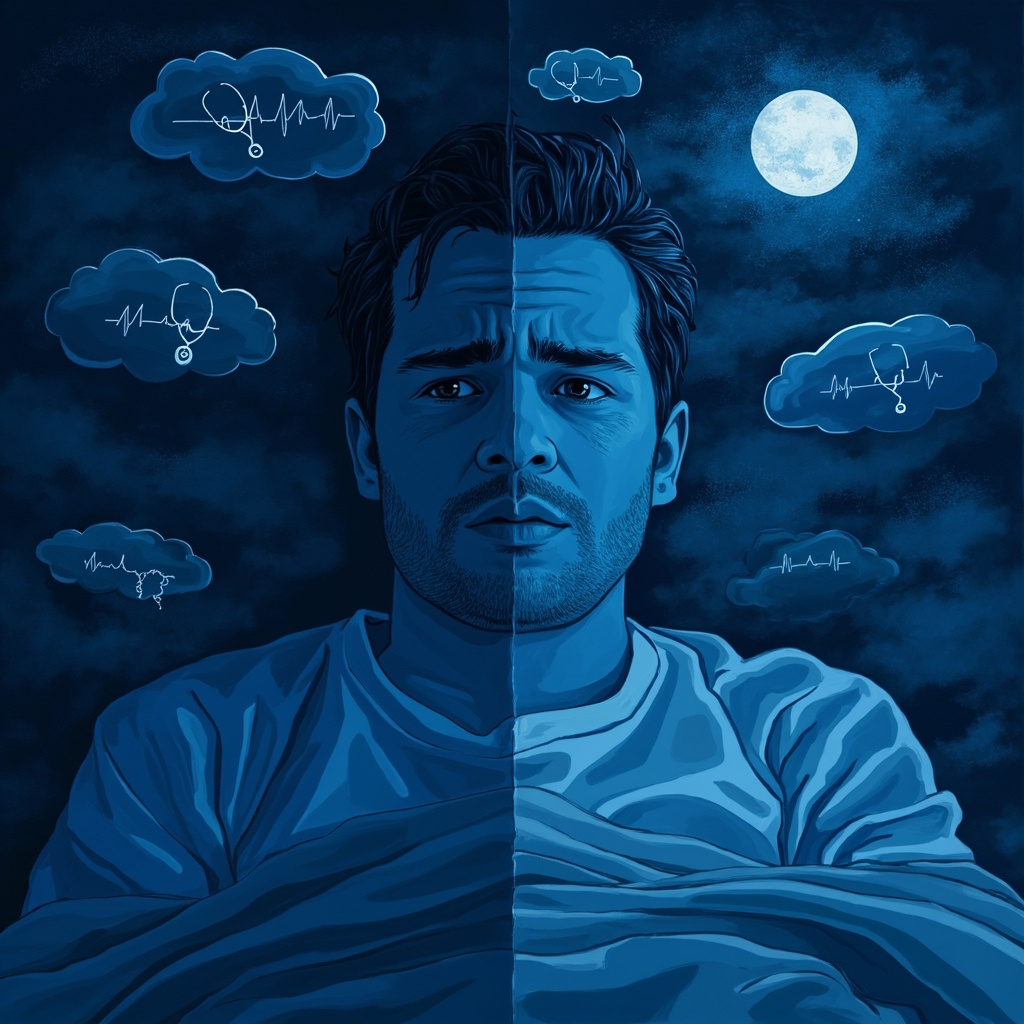
Worry about health fires up your stress response. Cortisol, the main stress hormone, stays high instead of dropping at night. This messes with your circadian rhythm, the body's natural sleep-wake clock. Your heart rate variability (HRV), a sign of recovery, gets low, making rest shallow.
Studies show anxiety hits sleep hard: 68% of Americans lose sleep to it, per a recent American Academy of Sleep Medicine survey. Health anxiety specifically fuels chronic insomnia. Racing thoughts about symptoms keep you awake. Poor sleep then amps up worry, creating a loop. You lie there, heart racing, mind scanning for problems.
In one article, experts note how constant body checks and catastrophic thinking release adrenaline, blocking relaxation. Nighttime becomes a battleground, cutting deep sleep stages where true recovery happens.
Key Effects on Sleep:
- Harder to fall asleep: Pre-bed worries build tension.
- Frequent wake-ups: Minor sensations feel like threats.
- Low energy next day: No recharge means more fatigue and fear.
- Worse HRV: Stress patterns show in heart signals.
Health Anxiety as a Positive Force
This isn't all bad. When balanced, health anxiety acts as a resource. It sharpens your awareness of body signals, pushes proactive habits like better eating or check-ups, and boosts emotional health. It guides you to tune into energy flow, spotting imbalances early.
In assessments, if it's a priority, we direct attention to it. Specific words in guided sessions help calm the mind, like inviting gentle observation of sensations without fear.
Breaking the Cycle for Recovery
Balance comes from addressing the root. Resonance frequencies matching the structure's natural vibrations help settle agitation. Sessions use these in audio tracks or micro-currents to guide calm.
Practical Steps from a Sleep Coach:
- Set a worry window: Dedicate 15 minutes daily to health thoughts, not bedtime.
- Breathing for HRV: Try 4-7-8 breaths-inhale 4 seconds, hold 7, exhale 8. Boosts parasympathetic calm.
- Evening wind-down: Dim lights 2 hours before bed to support melatonin and circadian reset.
- Body scan meditation: Notice sensations neutrally, turning anxiety into awareness.
- Track biomarkers: Use recordings to see shifts in energy and stress markers.
Aim for consistent sleep times. Avoid screens; they spike cortisol. Foods rich in tryptophan, like turkey or bananas, aid mood and rest.
Reclaim Restorative Nights
By working with health anxiety, you build resilience. Balanced, it supports vitality, clear mind, and deep recovery. Many find sleep improves as worry fades, HRV rises, and days feel lighter. Your body knows how to heal-guide it gently.
This post draws from recent insights on anxiety's sleep impact, helping you align biology for better nights.
- 1. blog.accessmedlab.com
- 2. adaa.org
- 3. my.clevelandclinic.org
- 4. pesi.co.uk
- 5. reddit.com
- 6. healthline.com
- 7. goayo.com
- 8. pmc.ncbi.nlm.nih.gov
- 9. physiology.org
- 10. therapyroute.com
- 11. pubmed.ncbi.nlm.nih.gov
- 12. mdpi.com
- 13. mayoclinic.org
- 14. wires.onlinelibrary.wiley.com
- 15. helloklarity.com
- 16. pmc.ncbi.nlm.nih.gov
- 17. apa.org
- 18. lindnercenterofhope.org
- 19. frontiersin.org
- 20. pmc.ncbi.nlm.nih.gov
- 21. pmc.ncbi.nlm.nih.gov
- 22. mental.jmir.org
- 23. link.springer.com
- 24. youtube.com
- 25. facebook.com
- 26. aasm.org
- 27. pearl.plymouth.ac.uk
- 28. globalwellnessinstitute.org
- 29. pmc.ncbi.nlm.nih.gov
- 30. nature.com
- 31. pmc.ncbi.nlm.nih.gov
- 32. royalsocietypublishing.org
- 33. med.stanford.edu
- 34. health.harvard.edu
- 35. pmc.ncbi.nlm.nih.gov
- 36. globalwellnessinstitute.org
- 37. cdc.gov
- 38. document.resmed.com
- 39. sciencedirect.com
- 40. sciencedirect.com
- 41. thensf.org
- 42. sleepcycle.com
- 43. healthline.com
- 44. pmc.ncbi.nlm.nih.gov
- 45. sleepfoundation.org
- 46. researchgate.net
- 47. sensio-ai.in
- 48. healthtechdigital.com
Related posts
Glossary
- Energy and mind Structures > Health anxiety
- Energy and mind Structures > Clock
- Body zones > parasympathetic
- TCM Recipes > Calm the Mind: A Remedy for Anxiety and Insomnia
- TCM Recipes > Heart Health: Remedies for Anxiety and Palpitations
- TCM Recipes > Boost Your Energy: A TCM Recipe for Fatigue Relief
- Energy and mind Structures > sleep
- Energy and mind Structures > vitality
- Energy and mind Structures > Stress
- Stimuli > Cortisol
- Stimuli > Melatonin