


Trachea: Windpipe to Deep Sleep and Calm
Understanding the Trachea
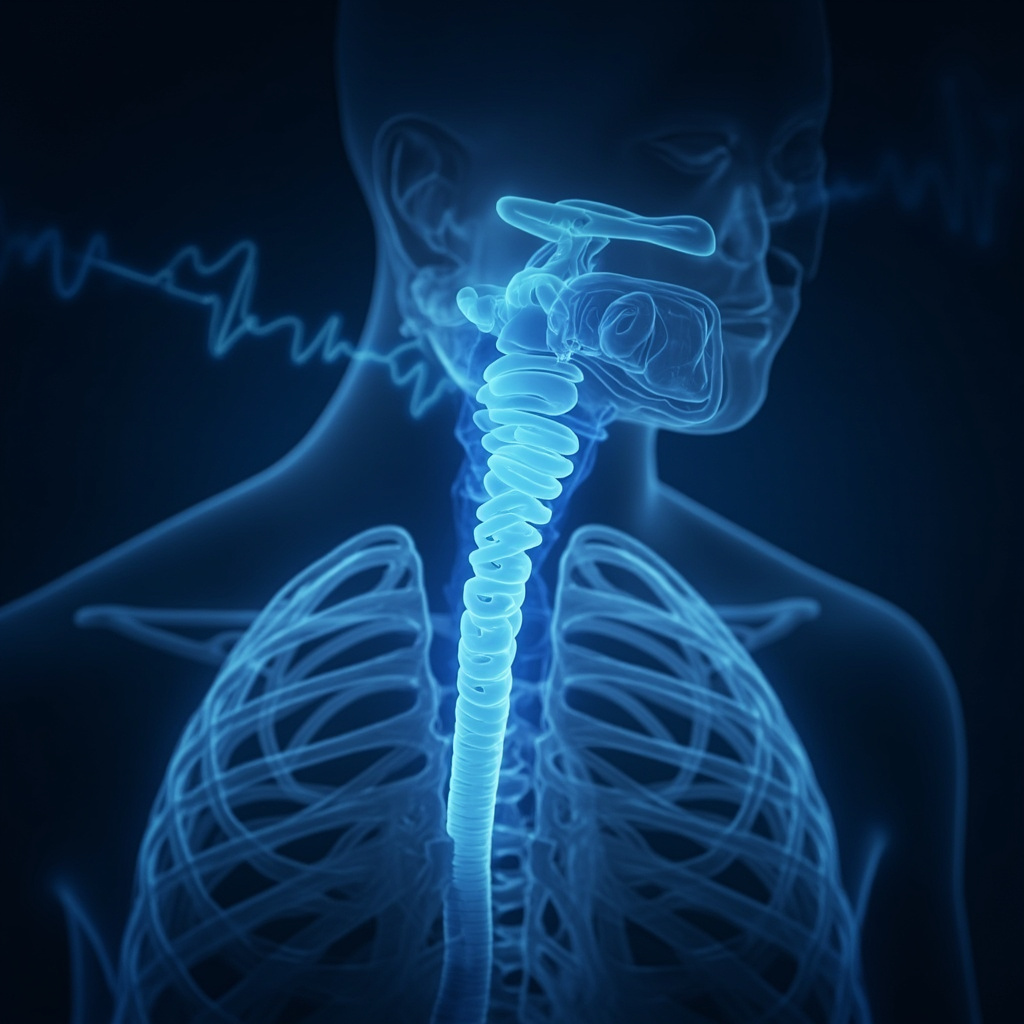
The trachea, often called the windpipe, is a sturdy tube running from your voice box down into your chest. It measures about four to five inches long in adults and acts as the main highway for air traveling to and from your lungs. Picture it as a flexible pipe reinforced with C-shaped cartilage rings that keep it open, lined with tiny hairs called cilia and mucus that trap dust and germs. Every breath you take passes through this vital pathway, making it central to your respiratory health. For more details, see the trachea glossary.
The Trachea's Role in Breathing and Energy
Smooth airflow through the trachea delivers oxygen to your bloodstream, fueling every cell in your body. During sleep, this oxygen supports deep recovery processes, helping repair tissues and restore energy. When you inhale deeply at night, the trachea ensures efficient gas exchange in the lungs, boosting heart rate variability (HRV)-a key sign of your body's relaxation and resilience.
Research shows breathing exercises, like slow diaphragmatic breaths, enhance this process by calming the nervous system and lowering stress hormones such as cortisol. These practices activate the parasympathetic response, promoting slower heart rates and better blood pressure control, all essential for quality sleep.
- Oxygen delivery: Fuels vitality, reduces fatigue upon waking.
- Air conditioning: Warms, moistens, and filters air to protect lungs.
- Nighttime support: Steady flow prevents disruptions like snoring or pauses in breathing.
How Trachea Imbalances Affect Sleep
If the trachea faces irritation or narrowing-due to inflammation, mucus buildup, or structural issues-breathing becomes labored. This leads to coughing, wheezing, or shallow breaths that fragment sleep. In conditions like obstructive sleep apnea, studies reveal greater tracheal movement and reduced diameter during breathing efforts, worsening apnea events and lowering sleep depth.
Common signs include:
- Waking frequently with dry throat or gasping.
- Daytime tiredness despite hours in bed.
- Reduced HRV, signaling stress overload and poor recovery.
These disruptions spike sympathetic activity-the 'fight or flight' mode-elevating cortisol and blocking deep sleep stages where true restoration happens.
Emotional Connections: Fear, Anxiety, and Expression
The trachea sits in the throat area, tied to how we voice our truths. Unresolved fear of speaking up, judgment, or criticism can tighten this pathway, manifesting as physical tension or breathing hitches. Anxiety about communication often shows as shallow chest breathing, which hampers oxygen flow and HRV balance.
When emotions like fear dominate, they trigger muscle spasms or excess mucus, mimicking allergies or infections. This emotional-physical loop perpetuates stress, making bedtime restless. Balancing these feelings opens the trachea for freer breath and calmer nights.
Trachea as a Resource for Recovery
A healthy trachea becomes a powerful ally. It supplies oxygen for cellular repair during sleep, supports circadian rhythm alignment, and eases stress hormones. Strong airflow enhances lung capacity, improving endurance and mood upon rising.
As a resource, it aids other systems:
- Boosts brain oxygenation for clearer thinking and emotional stability.
- Stabilizes HRV for resilient stress response.
- Facilitates deep breathing patterns that signal safety to your body, inviting profound rest.
Recent findings link controlled breathing to parasympathetic dominance, cutting anxiety and fostering sleep onset. In overlap of breathing issues and sleep apnea, better airway dynamics via traction effects even protect collapsibility.
Practical Steps to Support Your Trachea
Support this key structure with simple habits:
- Practice slow breathing: Inhale for 4 counts through nose, exhale for 6 via mouth-targets trachea flow and HRV.
- Humidify air: Dry environments irritate; use a humidifier at night.
- Stay hydrated: Thins mucus for easier passage.
- Manage stress: Journal fears or practice throat-opening stretches like gentle neck rolls.
- Evening wind-down: Avoid irritants like smoke; sip warm herbal tea.
These align with circadian needs, curbing cortisol spikes and enhancing melatonin flow. Track your sleep patterns-noting breath ease-to gauge progress.
By nurturing your trachea, you pave the way for deeper, biologically tuned sleep. Feel the difference in vitality and calm.
- 1. thefiveelements.in
- 2. medwinpublishers.com
- 3. pmc.ncbi.nlm.nih.gov
- 4. kidshealth.org
- 5. youtube.com
- 6. pmc.ncbi.nlm.nih.gov
- 7. trachjournal.scholasticahq.com
- 8. amjmed.com
- 9. mdpi.com
- 10. pubmed.ncbi.nlm.nih.gov
- 11. study.com
- 12. pubmed.ncbi.nlm.nih.gov
- 13. pubmed.ncbi.nlm.nih.gov
- 14. my.clevelandclinic.org
- 15. infinitebeingacademy.com
- 16. pubmed.ncbi.nlm.nih.gov
- 17. pmc.ncbi.nlm.nih.gov
- 18. pubmed.ncbi.nlm.nih.gov
- 19. theseus.fi
- 20. pubmed.ncbi.nlm.nih.gov
- 21. study.com
- 22. yogajournal.com
- 23. physio-pedia.com
- 24. yogaeasy.com
- 25. pubmed.ncbi.nlm.nih.gov
- 26. msjonline.org
- 27. sciencedirect.com
- 28. openaccesspub.org
- 29. kenhub.com
- 30. myyogateacher.com
- 31. medicalnewstoday.com
- 32. medizinonline.com
- 33. facebook.com
- 34. lung.org
- 35. msjonline.org
- 36. pubmed.ncbi.nlm.nih.gov
- 37. sciencedirect.com
- 38. verywellhealth.com
- 39. ncbi.nlm.nih.gov
- 40. arhantayoga.org
- 41. physio-pedia.com
- 42. pubmed.ncbi.nlm.nih.gov
- 43. healthline.com
- 44. researchgate.net
- 45. pubmed.ncbi.nlm.nih.gov
- 46. thejoywithin.org
- 47. barnliferecovery.com
- 48. pubmed.ncbi.nlm.nih.gov
- 49. researchgate.net
- 50. pmc.ncbi.nlm.nih.gov
Related posts
Glossary
- Energy and mind Structures > oxygen
- Energy and mind Structures > Structure
- Energy and mind Structures > Communication
- Body zones > hormones
- Body zones > lungs
- Body zones > nose
- Body zones > parasympathetic
- Body zones > respiratory
- Body zones > throat
- Body zones > tissues
- Body zones > trachea
- Body zones > cellular
- Body zones > chest
- TCM Recipes > Heart Health: Remedies for Anxiety and Palpitations
- TCM Recipes > Lung Support: A TCM Recipe for Respiratory Health
- TCM Recipes > Brain Boost: Clear Fog, Improve Focus & Memory
- TCM Recipes > Boost Your Energy: A TCM Recipe for Fatigue Relief
- Energy and mind Structures > sleep
- Energy and mind Structures > vitality
- Energy and mind Structures > blood pressure
- Energy and mind Structures > movement
- Energy and mind Structures > Stress
- Stimuli > Cortisol
- Stimuli > Moon - Nasal Passage, Breathing, Taste
- Stimuli > AIDS
- Binaural beats > Inflammation Relief: Heal Faster with Binaural Beats
- Binaural beats > Nervous System: A Program for Emotional Balance and Relaxation
- Binaural beats > Cartilage Health: Enhancing Joint Function & Vitality
- Stimuli > Apnea
- Stimuli > Blood
- Stimuli > Melatonin
see also...
- Energy and mind Structures > HRV
- Energy and mind Structures > Body zones > substantia nigra
- Energy and mind Structures > TCM Recipes > Tension Headache Relief: A Natural Approach to Ease Stress
- Testimonials > 61% Drop in Nausea and 58% in Headaches from Sound Therapy
- Binaural beats > Stimuli > Melatonin
- Binaural beats > Cartilage Health: Enhancing Joint Function & Vitality