


Sympathetic Nerves: Gatekeeper of Deep Sleep
What is the Sympathetic Nervous System?
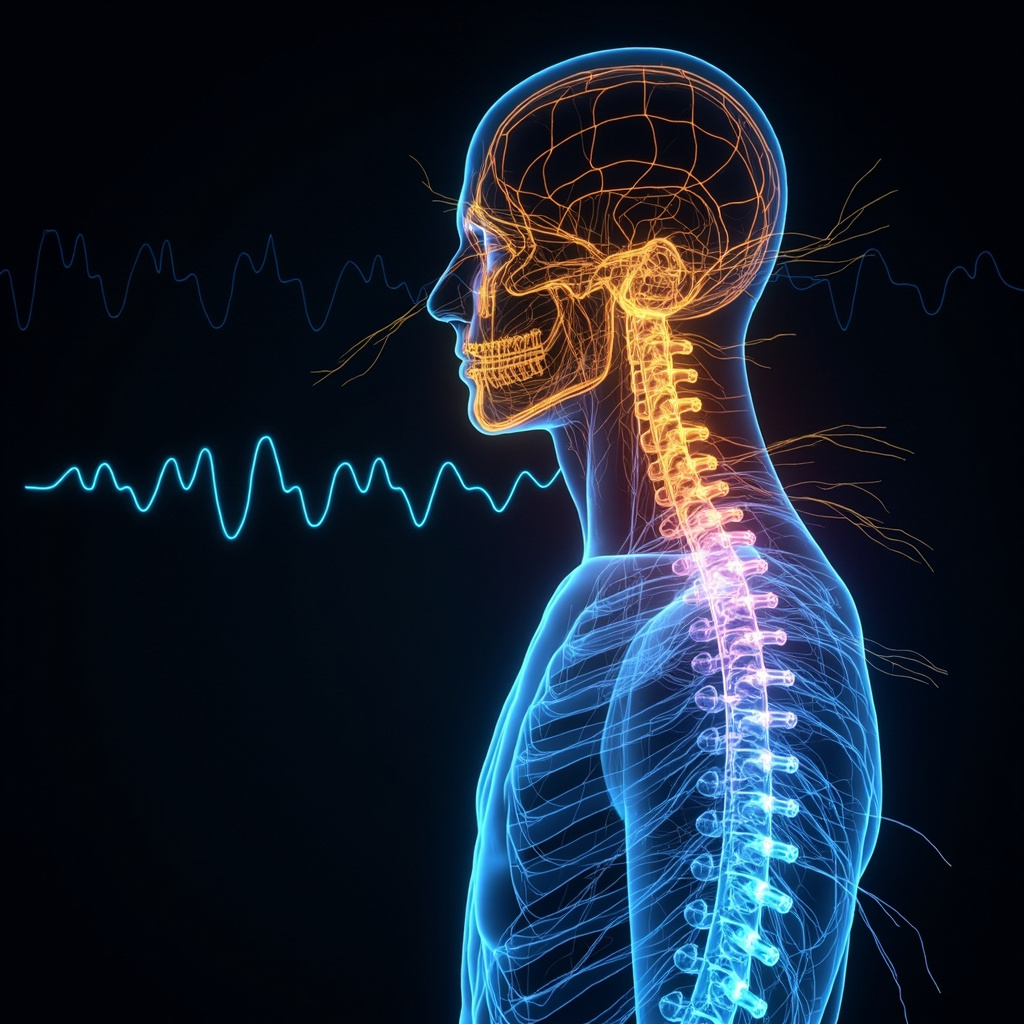
The sympathetic nervous system is a key part of your autonomic nervous system, which runs many body functions automatically. Picture it as your body's alarm system. It runs along the spinal cord, mainly in the chest and lower back areas. When triggered, it ramps up your heart rate, opens your airways for better breathing, and releases quick energy stores. This prepares you for action, like running from danger or facing a challenge.
In everyday life, it helps you respond to stress. A short burst is normal and helpful. But problems arise when it stays too active.
For more details on this structure, see the sympathetic glossary entry.
How It Affects Sleep and Recovery
Sleep is when your body shifts gears. The sympathetic system should dial down, letting its partner, the parasympathetic system, take over for rest and repair. This balance shows in heart rate variability (HRV), a measure of how your heartbeat fluctuates. Good HRV during sleep means flexible autonomic control-high variability signals recovery, while low HRV points to sympathetic dominance.
When sympathetic activity lingers high at night, sleep suffers. You might wake often, struggle to reach deep sleep stages, or feel unrested. This ties to circadian rhythm disruptions and elevated cortisol, the stress hormone. Poor sleep then feeds back, making stress harder to handle the next day.
Recent Research Insight
A 2025 study published in Scientific Reports explored skin sympathetic nerve activity (SKNA), a non-invasive way to track sympathetic signals using ECG electrodes. Researchers found SKNA drops in non-REM sleep (the deep, restorative phase) and rises in wakefulness and REM. Combined with HRV and AI, it detects sleep stages with over 90% accuracy. This highlights how sympathetic tone directly mirrors sleep quality-lower activity means deeper rest.
Signs of Sympathetic Imbalance
Overactive sympathetic nerves often stem from ongoing stress, trauma, or poor habits. Watch for:
- Racing heart or high blood pressure
- Shallow breathing or tension
- Digestive slowdowns
- Trouble falling or staying asleep
Emotionally, it links to anxiety, fear, and a sense of constant alertness. Your body stays in 'go mode,' blocking relaxation.
Using Sympathetic Strength Wisely
A balanced sympathetic system is a resource. It boosts blood flow to muscles, speeds oxygen delivery, and mobilizes energy during real needs. This supports organs under stress, keeping overall balance. In recovery, it ensures your body adapts without overload.
Practical Steps for Balance
To calm sympathetic overdrive and boost sleep:
- Practice deep breathing: Slow inhales (4 counts) and longer exhales (6 counts) activate parasympathetic rest.
- Dim lights early: Cut blue light from screens to align circadian rhythms and lower cortisol.
- Move daily: Moderate exercise uses sympathetic energy without exhausting it.
- Wind down routine: Herbal tea, reading, or gentle stretches signal bedtime.
Track your progress with HRV via wearables. If sympathetic biomarkers show high agitation-like in BioCoherence assessments-targeted relaxation builds resilience.
Restful sleep starts with autonomic harmony. Tune your sympathetic system for nights of true recovery.
- 1. japi.org
- 2. medschool.umaryland.edu
- 3. pnas.org
- 4. nature.com
- 5. cell.com
- 6. frontiersin.org
- 7. pmc.ncbi.nlm.nih.gov
- 8. research.uky.edu
- 9. tandfonline.com
- 10. pubmed.ncbi.nlm.nih.gov
- 11. labfront.com
- 12. newsroom.wakehealth.edu
- 13. mdpi.com
- 14. link.springer.com
- 15. eurekalert.org
- 16. link.springer.com
- 17. pubmed.ncbi.nlm.nih.gov
- 18. sciencedaily.com
- 19. pmc.ncbi.nlm.nih.gov
- 20. med.stanford.edu
- 21. frontiersin.org
- 22. neurology.org
- 23. sciencedirect.com
- 24. sciencedirect.com
- 25. sleepdoctor.com
- 26. nature.com
- 27. sciencedirect.com
- 28. journal.chestnet.org
- 29. pmc.ncbi.nlm.nih.gov
- 30. ovid.com
- 31. ahajournals.org
- 32. ahajournals.org
- 33. journals.physiology.org
- 34. youtube.com
- 35. nature.com
- 36. medlink.com
- 37. pmc.ncbi.nlm.nih.gov
Related posts
Glossary
- Energy and mind Structures > oxygen
- Energy and mind Structures > Structure
- Body zones > muscles
- Body zones > nerves
- Body zones > sympathetic
- Body zones > parasympathetic
- Body zones > chest
- Energy and mind Structures > Organs
- TCM Recipes > Digestive Relief: A Simple Guide to Ease Bloating & Indigestion
- TCM Recipes > Heart Health: Remedies for Anxiety and Palpitations
- Energy and mind Structures > sleep
- Energy and mind Structures > VLF; Sympathetic activity
- Energy and mind Structures > Stress
- Stimuli > Cortisol
- Stimuli > Moon - Nasal Passage, Breathing, Taste
- Binaural beats > Trauma Healing: Binaural Beats for Emotional Balance
- Binaural beats > Spinal Cord Support: Enhance Wellness and Emotional Balance
- Binaural beats > Nervous System: A Program for Emotional Balance and Relaxation
- Stimuli > Harmony
- Stimuli > Blood
see also...
- Energy and mind Structures > HRV
- Energy and mind Structures > Body zones > substantia nigra
- Energy and mind Structures > TCM Recipes > Tension Headache Relief: A Natural Approach to Ease Stress
- Binaural beats > Stimuli > Variolinum
- Binaural beats > Transmutation: A Sound Journey for Personal Change
- Testimonials > 61% Drop in Nausea and 58% in Headaches from Sound Therapy