


Persistent Insomnia: Meditation for Deep Rest
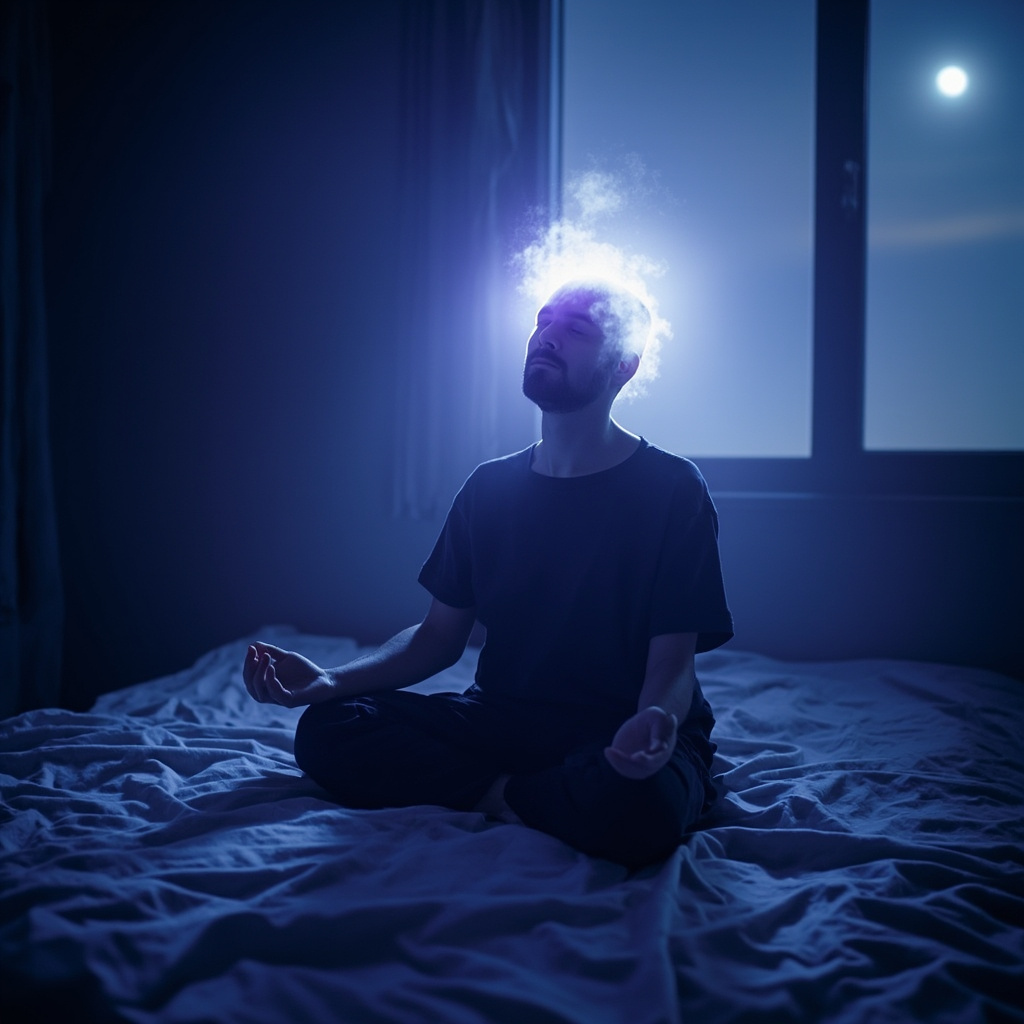
Understanding Persistent Insomnia
Persistent insomnia goes beyond a bad night or two. It means trouble falling asleep, staying asleep, or waking too early, night after night, for weeks or even months. This leaves you dragging through the day with fatigue, foggy thinking, and short fuses. Your body signals this unrest through subtle clues, like a racing mind at bedtime or shallow breathing that keeps rest at bay.
In simple terms, it often stems from an overactive stress response. Your sympathetic nervous system – the one that gears you up for action – stays in overdrive, while the parasympathetic side, which promotes rest and recovery, struggles to take over. A key sign is low heart rate variability (HRV), the natural variation in time between heartbeats. Healthy HRV shows your nervous system can flex between alert and calm; low HRV points to rigidity, fueling sleep woes.
Daily Impacts and Body Signals
The toll adds up quickly:
- Daytime exhaustion: Even after hours in bed, you feel wiped out.
- Mood dips: Irritability, anxiety, or low spirits creep in.
- Focus fades: Concentration slips, making work or hobbies harder.
- Physical strain: Headaches, muscle tension, or weakened immunity follow.
These link back to emotional undercurrents – unresolved worries, daily pressures, or patterns of agitation that biomarkers can reveal through your body's electrical rhythms.
How Meditation Restores Balance
Meditation acts like a gentle reset for your nervous system. By focusing your breath or awareness, you shift into parasympathetic mode, easing the grip of stress. This boosts HRV, calms biomarkers of agitation, and paves the way for deeper sleep.
Practices target the mind's chatter and body's tension directly. They regulate sleep hormones like melatonin naturally, without forcing drowsiness. Over time, your inner calm deepens, turning bedtime into a welcoming ritual rather than a battle.
Proven Techniques to Try Tonight
Start small – even 10 minutes helps.
4-7-8 Breathing for Quick Calm
- Sit or lie comfortably.
- Inhale quietly through your nose for 4 counts.
- Hold for 7 counts.
- Exhale fully through your mouth for 8 counts, making a soft whoosh.
- Repeat 4 cycles.
This slows your heart rate and signals safety to your body.
Bedtime Body Scan
Lie down, eyes closed. Slowly notice sensations from toes to head. If tension arises, breathe into it and let go. This releases stored stress, quieting agitation signals.
Loving-Kindness Visualization
Picture a warm light at your heart. Silently repeat: "May I rest deeply. May I wake refreshed." Extend to loved ones. This soothes emotional roots of insomnia.
Insights from Recent Research
A 2025 pilot study tested bedtime-guided mindfulness meditation via an app for chronic insomnia sufferers. After 4 weeks, participants saw big gains: sleep quality scores dropped by 3.7 points, insomnia severity by 4.5, and pre-sleep arousal eased. They reported fewer racing thoughts, more body awareness, and better routines. Retention was strong, proving it's practical and welcome.
Other trials, like an 8-week mindfulness program, cut nighttime awakenings and boosted efficiency, with effects lasting 6 months. These align with HRV gains from regular practice, showing meditation builds resilience against sleep thieves.
Crafting Your Sleep Sanctuary
Build habits that support your efforts:
- Dim lights an hour before bed.
- Skip screens; opt for gentle reading.
- Journal worries to offload your mind.
- Keep a consistent wind-down time.
- Track your rest loosely – note how meditation shifts your energy.
Persistent insomnia responds to patience and consistency. As a meditation coach, I see clients transform restless nights into renewal. Your body knows rest; meditation simply clears the path.
With regular practice, expect lighter mornings, steadier moods, and vibrant days. Begin tonight – your calmer self awaits.
- 1. pmc.ncbi.nlm.nih.gov
- 2. researchgate.net
- 3. youtube.com
- 4. pubmed.ncbi.nlm.nih.gov
- 5. frontiersin.org
- 6. theacupuncturepractice.com
- 7. themindfulnessapp.com
- 8. sleepdoctor.com
- 9. pmc.ncbi.nlm.nih.gov
- 10. dc-acupuncture.com
- 11. eacuwell.com
- 12. ouraring.com
- 13. youtube.com
- 14. soleilholistic.com
- 15. pmc.ncbi.nlm.nih.gov
- 16. journals.sagepub.com
- 17. open.spotify.com
- 18. thomsonmedical.com
- 19. fitmind.org
- 20. kamwoherbs.com
- 21. youtube.com
- 22. medcraveonline.com
- 23. academic.oup.com
- 24. mountsinai.org
- 25. pmc.ncbi.nlm.nih.gov
- 26. pmc.ncbi.nlm.nih.gov
- 27. sciencedaily.com
- 28. petersheng.com
- 29. youtube.com
- 30. meetreflect.com
- 31. open.spotify.com
- 32. sciencedirect.com
- 33. drkumardiscovery.com
- 34. gavinpublishers.com
- 35. tm.org
- 36. news.vumc.org
- 37. mdpi.com
- 38. ubiehealth.com
- 39. pmc.ncbi.nlm.nih.gov
- 40. sleepfoundation.org
- 41. psycnet.apa.org
- 42. youtube.com
- 43. thejadecentre.co.uk
- 44. convergentpoints.com
- 45. psychologytoday.com
- 46. wellnessacu.ca
- 47. instagram.com
- 48. instagram.com
- 49. theartofsoundhealing.com
- 50. withpower.com
- 51. ndnr.com
- 52. sleepmedres.org
- 53. pmc.ncbi.nlm.nih.gov
- 54. academia.edu
- 55. sleepcentral.org.au
- 56. sciencedirect.com
- 57. clinicaltrials.gov
- 58. sciencedirect.com
- 59. polar.com
Related posts
Glossary
- Energy and mind Structures > Rigidity
- Energy and mind Structures > Concentration
- Energy and mind Structures > Immunity
- Body zones > head
- Body zones > hormones
- Body zones > mouth
- Body zones > nose
- Body zones > parasympathetic
- Body zones > eyes
- TCM Recipes > Persistent Insomnia: Remedies for Restful Sleep
- TCM Recipes > Heart Health: Remedies for Anxiety and Palpitations
- TCM Recipes > Muscle Relief: A Simple Guide to Alleviating Tension
- TCM Recipes > Chronic Insomnia: A TCM Guide to Restful Sleep
- TCM Recipes > Boost Your Energy: A TCM Recipe for Fatigue Relief
- Energy and mind Structures > sleep
- Energy and mind Structures > Theta; 4.31-6.97 Hz. Light sleep, meditation.
- Energy and mind Structures > Stress
- Stimuli > Moon - Nasal Passage, Breathing, Taste
- Binaural beats > Nervous System: A Program for Emotional Balance and Relaxation
- Stimuli > Melatonin
see also...
- Energy and mind Structures > HRV
- Energy and mind Structures > Body zones > eyes
- Energy and mind Structures > TCM Recipes > Tension Headache Relief: A Natural Approach to Ease Stress
- Testimonials > 61% Drop in Nausea and 58% in Headaches from Sound Therapy
- Binaural beats > Stimuli > Melatonin
- Binaural beats > Transmutation: A Sound Journey for Personal Change