


Chest: TCM's Heart-Breath Harmony Hub
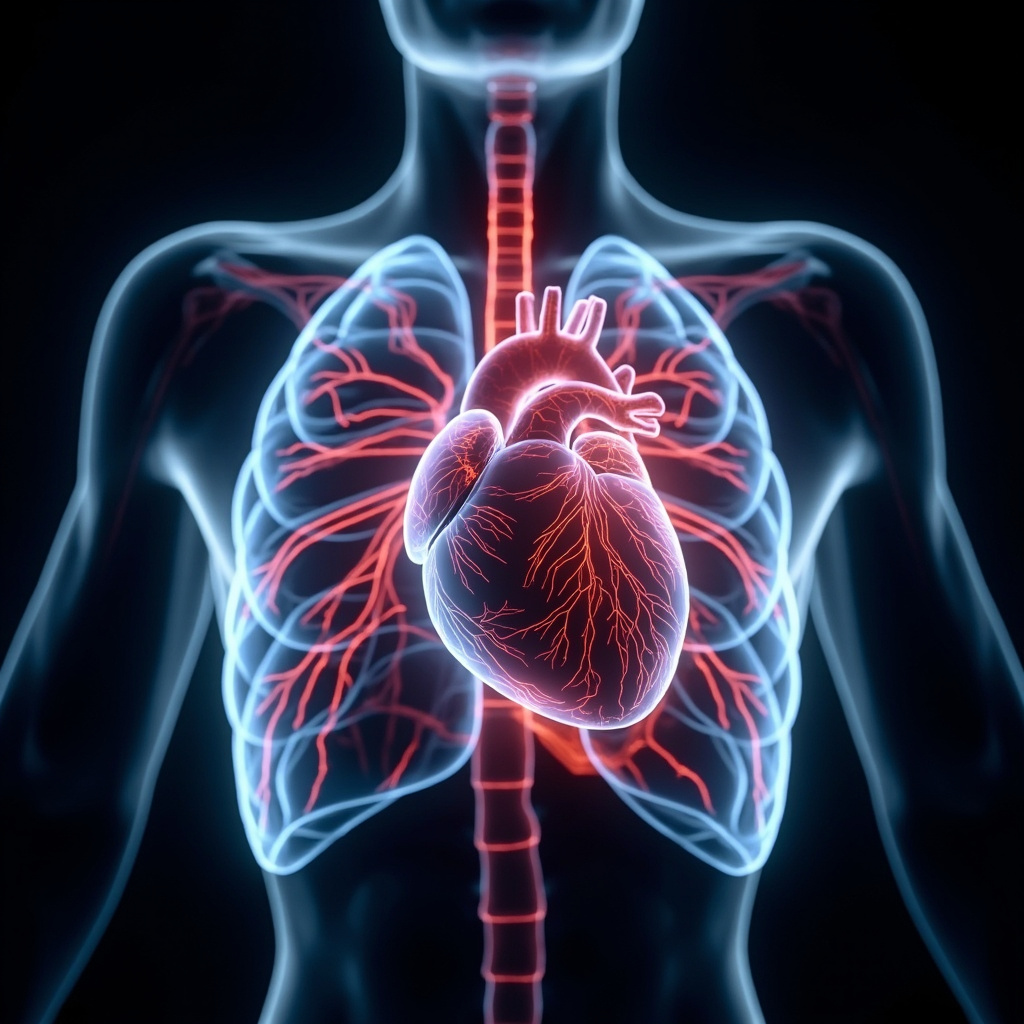
In Traditional Chinese Medicine, the chest stands as a vital guardian between the neck and abdomen. It forms the thoracic cavity and rib cage, sheltering the heart and lungs. When in harmony, it supports smooth breathing, shields these core organs, and aids blood flow. See the full chest glossary for deeper insights.
The Chest's Physical Role
The chest enables deep breaths that fill the lungs with fresh air, oxygenating the blood via the heart. This process fuels every cell in the body. Strong chest function means steady heartbeats and protected organs from daily strains. Imbalances here often show as shortness of breath, chest tightness, or fatigue during activity. These signs point to blocked qi flow or weakened protection.
Qi Flow Through the Chest
TCM views the chest as a hub for qi, the body's life energy. The lungs draw in pure qi with each inhale, descending it to nourish the whole system. The heart spreads qi and blood outward, linking physical vitality to spirit or shen. Key meridians like the Lung, Heart, and Pericardium channels run through the chest, carrying energy and emotions. Blockages here disrupt yin-yang balance, leading to heat, dampness, or stagnation.
Emotions Tied to the Chest
Feelings live deeply in the chest. The lungs connect to grief and letting go-unresolved sadness can tighten breathing. The heart governs joy and love; vulnerability or fear may cause protective guarding. Issues like emotional pain, relationship strains, or self-protection fears often manifest as chest discomfort. Harmonizing the chest eases these, fostering openness and safety.
Spotting Chest Disharmony
Common signals include:
- Shallow or labored breathing
- Palpitations or irregular heartbeat
- Emotional heaviness, like unexplained grief or guardedness
- Vulnerability to colds or fatigue
These reflect low energy, high agitation, or poor links in biomarkers from electrical activity scans. In TCM terms, they signal qi deficiency, excess phlegm, or blood stagnation.
The Chest as a Resource
A strong chest supports the body broadly:
- Delivers oxygen efficiently to organs
- Shields the heart and lungs for peak function
- Promotes emotional flow, aiding love expression and inner safety
It boosts overall vitality, helping other areas like digestion or limbs thrive through better circulation and calm.
Modern Science Meets TCM: Microcurrents for the Heart
Exciting 2025 research validates chest-focused energy work. A pilot study in ESC Heart Failure tested a microcurrent device implanted via small chest surgery on the heart's surface. In seven patients with weak hearts (ejection fraction around 32%), six months of gentle microcurrents led to:
- Heart pumping stronger by 12% (sustained two years later)
- Walking 191 meters farther in six minutes
- Better daily function and quality of life
- No device-related issues
Even after turning off the device, gains held. This mirrors TCM's use of subtle stimuli-like acupuncture or frequencies-to unblock qi and revive organ harmony without side effects. Microcurrents, akin to natural body signals, promote anti-inflammation and remodeling, aligning with five elements theory where metal (lungs) and fire (heart) find balance.
Simple Ways to Support Chest Harmony
Restore balance with:
- Deep belly breathing: Inhale for four counts, exhale for six, focusing on chest expansion.
- Gentle chest massage along sternum to move qi.
- Warming foods like ginger tea to clear dampness.
- Mindfulness on chest sensations during meditation, inviting love and release.
In practice, target Lung 1 or Heart 7 points. For tailored support, biomarker insights guide precise meridian work or herbs like Xiao Yao San for stagnation.
The chest invites us to breathe freely, love openly, and protect wisely. Nurture it for whole-body harmony.
- 1. cardiovascularnews.com
- 2. pmc.ncbi.nlm.nih.gov
- 3. nature.com
- 4. frontiersin.org
- 5. finance.yahoo.com
- 6. journals.sagepub.com
- 7. amazon.com
- 8. onlinelibrary.wiley.com
- 9. dovepress.com
- 10. instagram.com
- 11. pulseacuhealth.com
- 12. instagram.com
- 13. journals.lww.com
- 14. frontiersin.org
- 15. pubmed.ncbi.nlm.nih.gov
- 16. sciencedirect.com
- 17. meditationmusiclibrary.com
- 18. cfnmedicine.com
- 19. linkedin.com
- 20. facebook.com
- 21. pmc.ncbi.nlm.nih.gov
- 22. instagram.com
- 23. liebertpub.com
- 24. lung.org
- 25. facebook.com
- 26. facebook.com
- 27. acaai.org
- 28. dovepress.com
- 29. pmc.ncbi.nlm.nih.gov
- 30. health.harvard.edu
- 31. pmc.ncbi.nlm.nih.gov
- 32. instagram.com
- 33. facebook.com
- 34. cardioaragon.com
- 35. yosan.edu
- 36. healthcentral.com
- 37. apexacu.com
- 38. holisticmedicinedevice.com
- 39. heart.org
- 40. youtube.com
- 41. soundverse.ai
- 42. nytimes.com
Related posts
Glossary
- Energy and mind Structures > oxygen
- Energy and mind Structures > Sadness
- Energy and mind Structures > Love
- Energy and mind Structures > Grief
- Energy and mind Structures > Stagnation
- Energy and mind Structures > Meridians
- Body zones > lungs
- Body zones > pericardium
- Body zones > chest
- Energy and mind Structures > Organs
- TCM Recipes > Circulation: Boost Energy and Warm Your Extremities
- TCM Recipes > Heart Health: Remedies for Anxiety and Palpitations
- TCM Recipes > Lung Support: A TCM Recipe for Respiratory Health
- TCM Recipes > Boost Your Energy: A TCM Recipe for Fatigue Relief
- Energy and mind Structures > vitality
- Energy and mind Structures > Digestion
- Energy and mind Structures > Limbs, skin
- Energy and mind Structures > Theta; 4.31-6.97 Hz. Light sleep, meditation.
- Stimuli > Ginger
- Stimuli > Moon - Nasal Passage, Breathing, Taste
- Stimuli > AIDS
- Stimuli > Pain
- Stimuli > Harmony
- Stimuli > Blood
see also...
- Energy and mind Structures > Theta; 4.31-6.97 Hz. Light sleep, meditation.
- Energy and mind Structures > Body zones > substantia nigra
- Energy and mind Structures > TCM Recipes > Tension Headache Relief: A Natural Approach to Ease Stress
- Testimonials > 61% Drop in Nausea and 58% in Headaches from Sound Therapy
- Binaural beats > Stimuli > Variolinum