


Hindbrain: TCM Survival and Balance Hub
What is the Hindbrain?
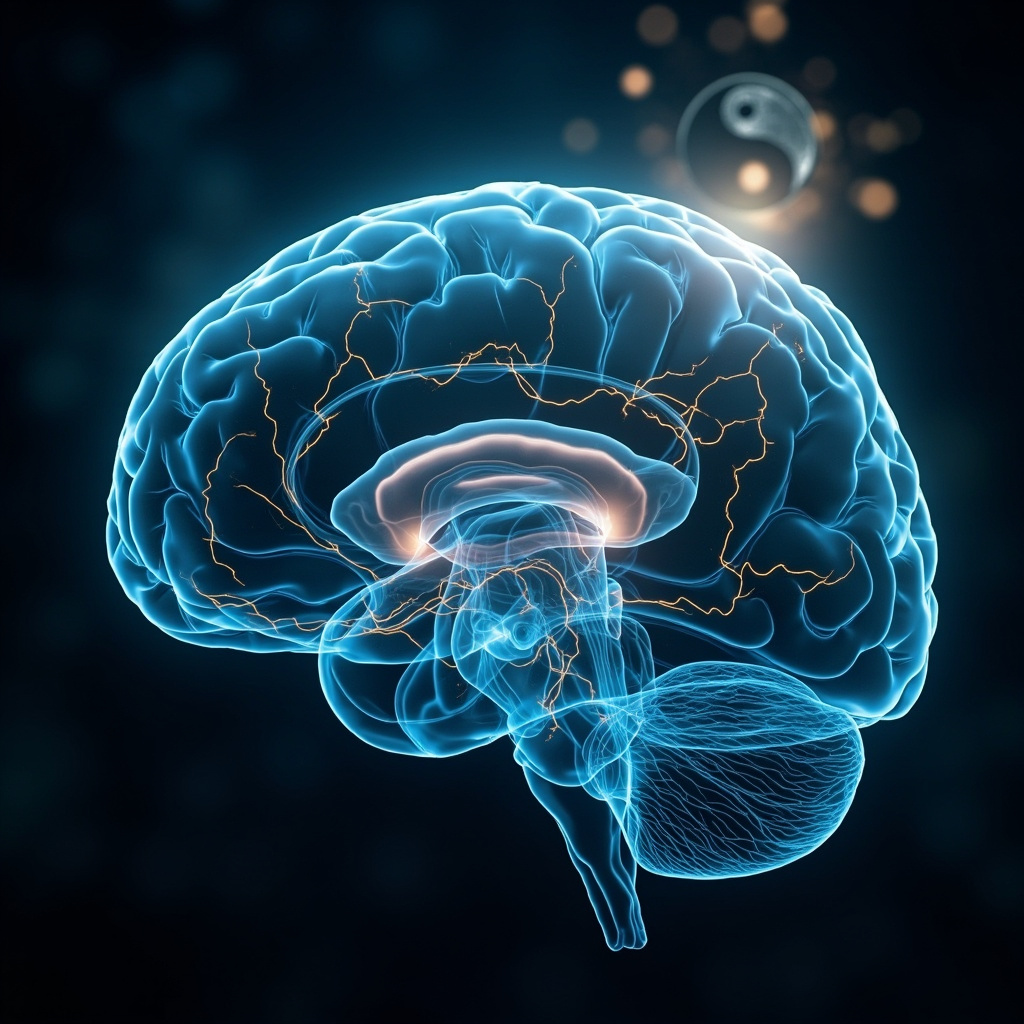
The hindbrain sits at the base of your brain, like a quiet foundation. It includes the medulla oblongata, pons, and cerebellum. This area works behind the scenes to manage essential life processes. Think of it as the body's steady anchor, ensuring everything runs smoothly.
In Traditional Chinese Medicine (TCM), we see the brain's functions spread across organs like the Kidney and Spleen. The hindbrain aligns with core qi flow, supporting vital energy and basic rhythms.
Key Functions for Survival
Your hindbrain controls:
- Heart rate: Keeps blood pumping at the right pace.
- Breathing: Regulates inhales and exhales without thought.
- Movement coordination: Helps with balance and smooth actions, thanks to the cerebellum.
When it functions well, you feel stable and responsive. Daily activities flow effortlessly, from walking to reacting to surprises.
Emotional Ties to the Hindbrain
Survival instincts live here. Feelings of insecurity, fear, or lack of support can disrupt it. In TCM, fear relates to the Water element and Kidney, where weak qi might cause tension.
Recent studies highlight the cerebellum's role in emotions. It guides feelings and social responses, beyond just movement. Stress from modern life-worries about safety or change-can show as physical signs like dizziness or shaky balance.
Addressing these roots through calm practices restores flow. TCM links emotions to organs: unresolved fear blocks meridians, affecting the whole body.
Signs of Hindbrain Imbalance
Watch for:
- Trouble with balance or coordination.
- Shortness of breath or irregular heartbeat.
- Dizziness, especially under stress.
- Fatigue from poor recovery after effort.
These often tie to emotional strain. In TCM, we check qi blockages in meridians like the Du (Governing Vessel), which runs along the spine to the brain base.
Hindbrain as a Resource for Harmony
When strong, the hindbrain supports others:
- Signals steady heart and breath for the Heart and Lungs.
- Aids coordination, helping muscles and nerves.
- Builds resilience to physical and emotional stress.
Call on it during Personal Guide sessions with guiding words: "Feel your hindbrain's steady base, anchoring breath and balance."
TCM Principles for Hindbrain Support
We bridge ancient wisdom with modern insights:
- Qi Flow: Clear blockages with breathwork or gentle movement, like Qigong.
- Yin-Yang Balance: Cool excess heat (agitation) or warm deficiencies (low energy).
- Five Elements: Strengthen Water for fear resilience, nurture Earth (Spleen) for grounding.
- Meridians: Target points near the neck and base of skull.
Herbs like those in formulas for Kidney tonics (e.g., Liu Wei Di Huang Wan) nourish marrow, linked to brain in TCM.
In BioCoherence, hindbrain biomarkers reveal energy levels, agitation, qualities, and links. Balance uses its main resonance frequencies in sessions for natural harmony.Learn more in the glossary.
Practical Steps for Daily Harmony
- Breath Awareness: Slow, deep breaths activate hindbrain rhythms.
- Gentle Movement: Tai Chi sways build coordination and calm fear.
- Emotional Check: Journal survival worries; affirm support.
- Acupressure: Press base of skull (GB20) for meridian flow.
These align body, emotions, and qi. Recent research on cerebellum in emotion regulation echoes TCM: harmony here boosts overall well-being.
Restore your foundation. Feel the hindbrain's quiet strength guide you.
- 1. pmc.ncbi.nlm.nih.gov
- 2. youtube.com
- 3. huggingface.co
- 4. link.springer.com
- 5. sciencedirect.com
- 6. scitechdaily.com
- 7. pmc.ncbi.nlm.nih.gov
- 8. news.mit.edu
- 9. frontiersin.org
- 10. pubmed.ncbi.nlm.nih.gov
- 11. open.spotify.com
- 12. walshmedicalmedia.com
- 13. pmc.ncbi.nlm.nih.gov
- 14. facebook.com
- 15. intechopen.com
- 16. d19878z74qufsh.cloudfront.net
- 17. pmc.ncbi.nlm.nih.gov
- 18. quantamagazine.org
- 19. pubmed.ncbi.nlm.nih.gov
- 20. img1.wsimg.com
- 21. instagram.com
- 22. cambridge.org
- 23. scribd.com
- 24. youtube.com
- 25. youtube.com
- 26. youtube.com
- 27. onlinelibrary.wiley.com
- 28. sciencedirect.com
- 29. researchgate.net
- 30. integrativepractitioner.com
- 31. youtube.com
- 32. web.math.princeton.edu
- 33. mdpi.com
- 34. blog.ultrahuman.com
- 35. frontiersin.org
- 36. pmc.ncbi.nlm.nih.gov
- 37. pdfcoffee.com
- 38. datascience.codata.org
Related posts
Glossary
- Energy and mind Structures > Regulation
- Energy and mind Structures > Earth
- Energy and mind Structures > Water
- Energy and mind Structures > Meridians
- Body zones > lungs
- Body zones > muscles
- Body zones > nerves
- Body zones > hindbrain
- Energy and mind Structures > Organs
- TCM Recipes > Kidney Health: Boost Energy and Relieve Back Pain
- TCM Recipes > Spleen Health: Boost Digestion, Appetite, and Energy
- TCM Recipes > Heart Health: Remedies for Anxiety and Palpitations
- TCM Recipes > Brain Boost: Clear Fog, Improve Focus & Memory
- TCM Recipes > Boost Your Energy: A TCM Recipe for Fatigue Relief
- Energy and mind Structures > movement
- Energy and mind Structures > Stress
- Stimuli > AIDS
- Stimuli > Harmony
- Stimuli > Blood