


The T3 Vertebra: Finding Your Upper Back Stability
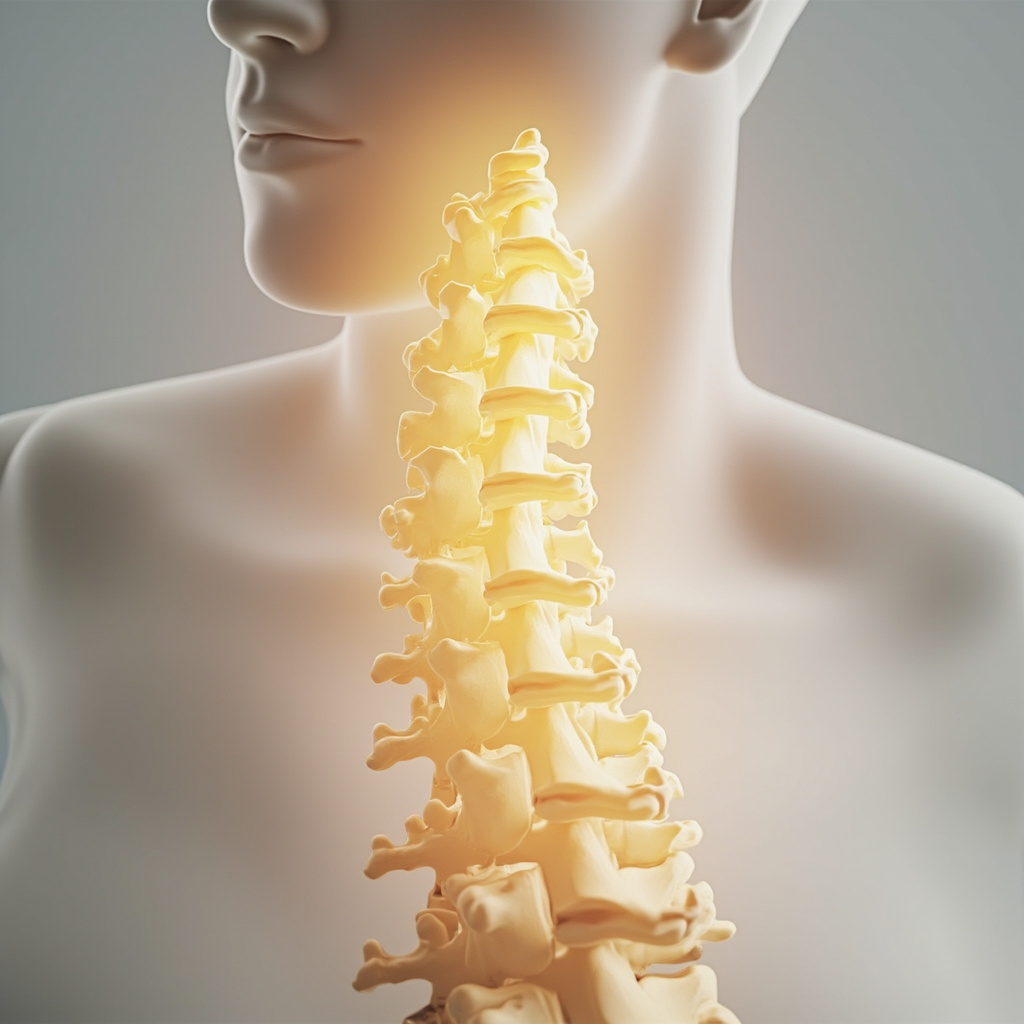
As a fitness coach, I often observe that the physical body tells a much deeper story than what we see on the surface. When we look at movement and posture, we are not just looking at bones and muscles; we are looking at the foundation of how you interact with the world. Today, I want to talk about a specific point in your spine that often holds the key to both physical comfort and emotional resilience: the T3 vertebra.
Understanding Your T3 Vertebra
The T3, or the third thoracic vertebra, is located in the upper-middle portion of your spine. It is a vital junction where your rib cage attaches, providing a protective cage for your heart and lungs. Because of its position, T3 is a central player in how you carry yourself. When this area is balanced, you likely experience a sense of openness in your chest and fluid movement in your upper back.
However, when this area is under stress, it can manifest as stiffness, discomfort, or a feeling of being 'closed off.' In my practice, I often see that when people struggle with their posture, they are also struggling with the energetic state of their T3 vertebra.
The Emotional Connection
Beyond the physical structure, there is a fascinating connection between the upper back and our emotional state. In many traditions and through observing patterns in body language, the area around the T3 is often linked to feelings of empowerment, security, and self-worth.
When we feel unsupported, overwhelmed, or unable to stand our ground in life, we have a tendency to unconsciously hunch or tighten our upper back. This is the body trying to protect itself. Over time, this physical tension can turn into a feedback loop, reinforcing those feelings of insecurity or powerlessness. By focusing on the health and alignment of the T3, we are not just working on a bone; we are working on our ability to stand tall and feel secure in our environment.
How to Support Your T3
Supporting your T3 is about creating both structural stability and a sense of inner safety. Here are a few ways to approach this:
- Mindful Movement: Incorporate gentle thoracic mobility exercises. Simple movements like cat-cow stretches or thoracic rotations can help release tension that accumulates around the T3, allowing the area to move with more ease.
- Breath Awareness: Since the T3 supports the rib cage, deep, intentional breathing is one of the best ways to nourish this area. Try to visualize your breath expanding into the space between your shoulder blades, encouraging that region to soften and open.
- Targeted Frequencies: In my work, I use Harmonic Boosts to help resonate with specific structures. By applying the right frequencies to the T3, we can guide the body to release stored tension and return to a state of balance. This is similar to how a musician tunes an instrument to ensure every part vibrates at its optimal frequency.
- Inner Journey: Sometimes, the best way to support a physical structure is to simply direct your attention toward it. During a Personal Guide session, you can focus your awareness on the T3, using it as a resource for stability. By acknowledging this part of your body, you are essentially telling your nervous system that it is safe to relax and let go of unnecessary tension.
Building Sustainable Resilience
Resilience is not just about being strong; it is about being adaptable. When your T3 is functioning well, your upper body can respond to the stresses of daily life without locking up. You have the flexibility to move and the stability to stay grounded.
If you find yourself feeling consistently tight in the upper back or struggling with a sense of overwhelm, consider that your body might be asking for a little extra attention in this specific area. By addressing the T3 vertebra, you are taking a proactive step toward better posture, improved nerve function, and a stronger, more empowered sense of self. Remember, your body is a system that thrives on balance. When you support the small, foundational parts of that system, the benefits ripple out into your entire life.
Related posts
Glossary
- Energy and mind Structures > Focused Coherence; Focus
- Energy and mind Structures > Structure
- Energy and mind Structures > Relax
- Body zones > bones
- Body zones > lungs
- Body zones > T3
- Body zones > chest
- Energy and mind Structures > movement
- Energy and mind Structures > Stress
- Stimuli > Moon - Nasal Passage, Breathing, Taste
- Binaural beats > Foundation of Security: Enhance Serenity and Well-Being
- Binaural beats > Nervous System: A Program for Emotional Balance and Relaxation
- Stimuli > Heart