


Supporting Your Foundation: The L1 Vertebra
The Anchor of the Spine
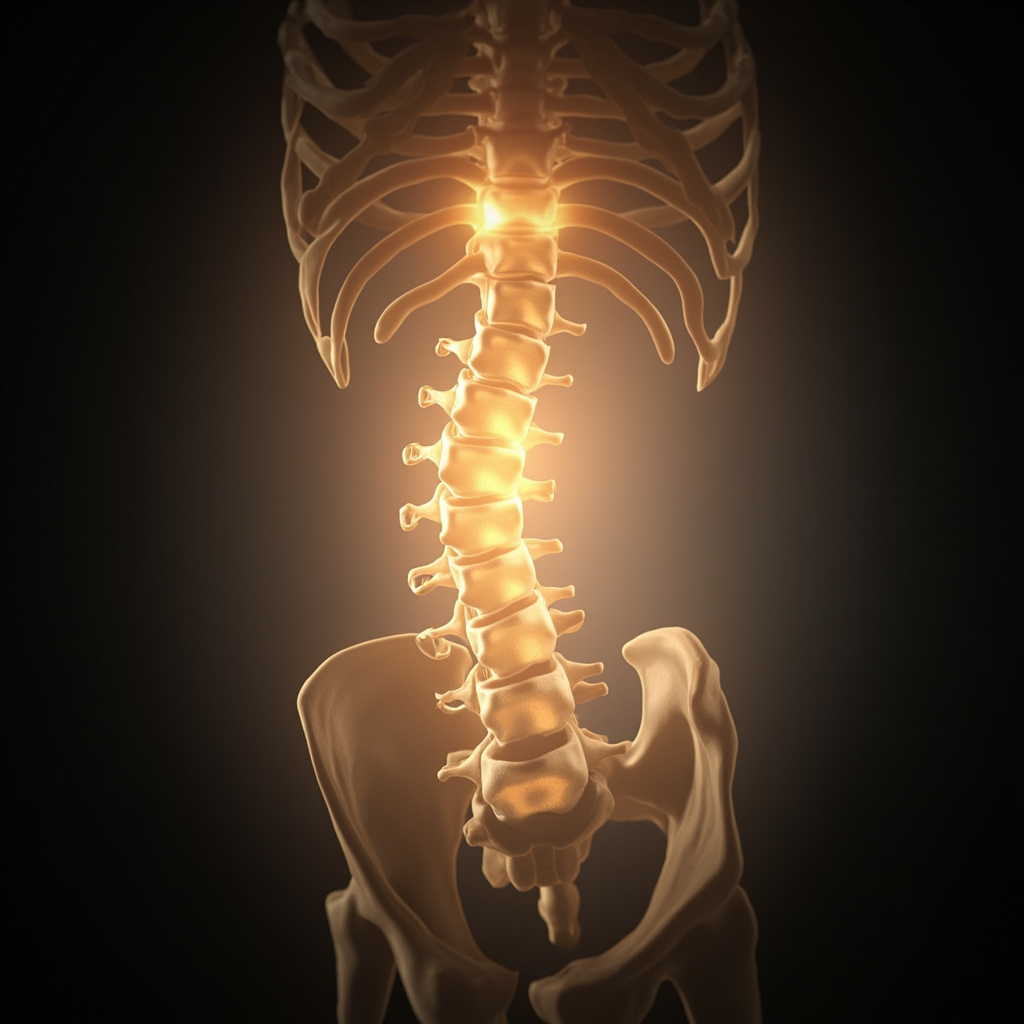
In my work as a fitness coach, I often see people focus on large muscle groups, ignoring the quiet, structural heroes that keep us upright and moving. One of these critical structures is the L1 vertebra, the first bone of your lumbar spine located in your lower back. Think of it as the pivot point where your upper body weight meets your lower body, acting as a crucial junction for both stability and mobility.
When we look at your electrical activity data, the L1 region often tells a story about how you handle the weight of your daily life. It is not just about physical mechanics; it is about how you carry your responsibilities and your movement through the world.
Physical and Emotional Balance
Physically, the L1 is essential for almost every movement involving your torso. If this area is struggling, you might feel stiffness, discomfort, or even a sense of weakness in your legs. Because it sits at a key transition point in your spine, it is highly sensitive to how we hold our bodies during exercise and daily tasks.
Beyond the physical, there is a fascinating connection between this specific vertebra and our emotional state. Many people find that when they feel burdened by responsibilities or are struggling with a sense of lost independence, their lower back carries that tension. This is not just a metaphor. When you feel unsupported, your body may physically react by tightening the muscles around the L1, effectively limiting your flexibility and ease of movement.
Tuning Into Your Center
When we identify the L1 as a priority in your data, we are looking for ways to help you regain your sense of autonomy. By using targeted frequencies, we can help the tissues around this vertebra find a state of balance. This is not about forcing a change, but rather providing your body with the specific information it needs to release unnecessary tension and restore its natural alignment.
If you are feeling restricted, whether by physical pain or a sense of being overwhelmed, focusing on the L1 can be a powerful tool for recovery. Here is how you can start to support this area:
- Mindful Movement: Incorporate gentle twists and cat-cow stretches into your routine to encourage mobility around the lower back without putting undue stress on the spine.
- Breath Awareness: Use your breathing to direct attention to the lower back. As you exhale, visualize the area around your L1 softening and letting go of any held tension.
- Emotional Check-in: Ask yourself if you are feeling burdened by external expectations. Sometimes, simply acknowledging that you need more space or freedom can reduce the physical "load" you are carrying.
Moving Forward
By addressing the L1, we are doing more than just fixing a sore spot; we are reclaiming the foundation of your movement. When your spine is balanced and your energy is flowing freely through this junction, you regain the ability to move with confidence and purpose. Whether you are aiming for peak athletic performance or simply want to move through your day without discomfort, remember that your lower back is the bridge to your personal freedom. Take the time to listen to what it needs, and it will support you in return.
Related posts
Glossary
- Energy and mind Structures > Focused Coherence; Focus
- Energy and mind Structures > Purpose
- Energy and mind Structures > Letting go
- Energy and mind Structures > Performance
- Energy and mind Structures > Confidence
- Body zones > muscles
- Body zones > L1
- Body zones > tissues
- Energy and mind Structures > movement
- Energy and mind Structures > Stress
- Stimuli > Moon - Nasal Passage, Breathing, Taste
- Stimuli > Pain
- Stimuli > Bone