


Finding Stability: The Role of the Left Coccyx
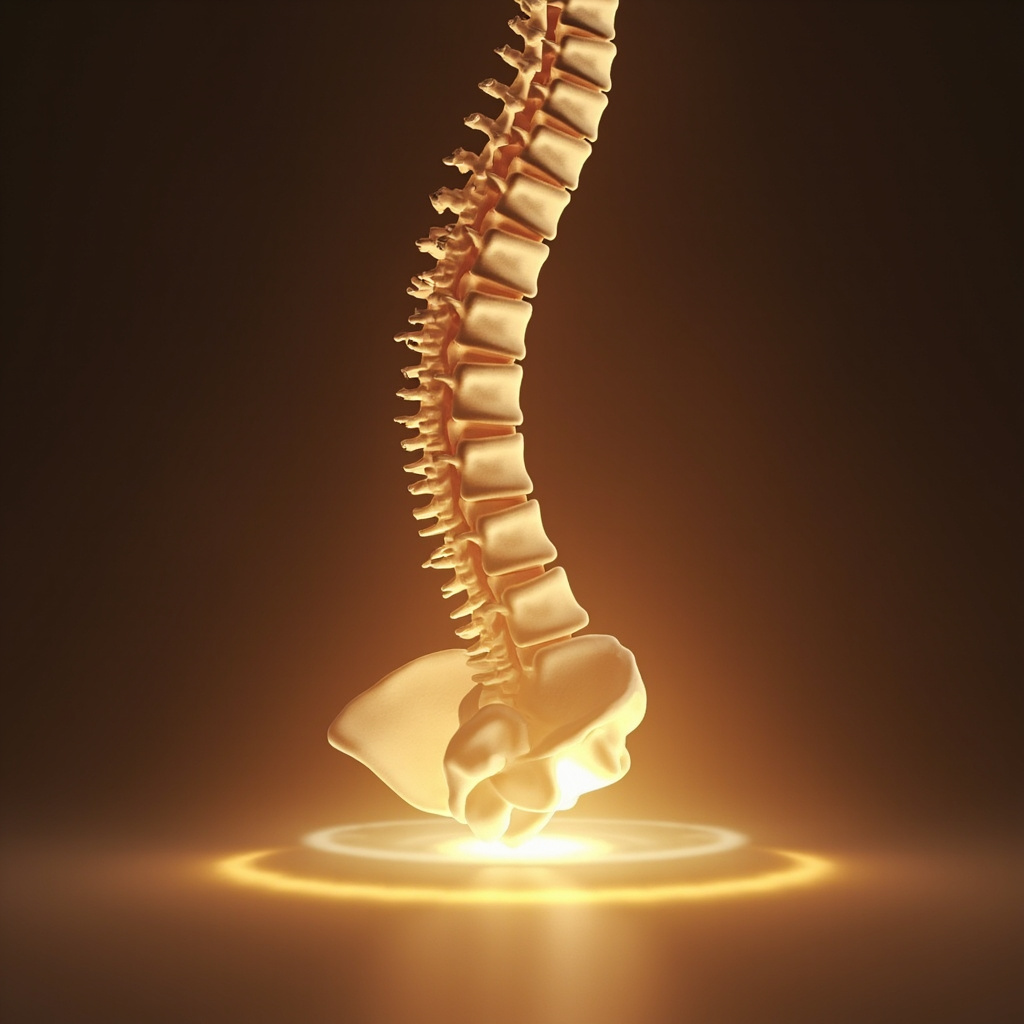
The Foundation of Your Movement
As a fitness coach, I often focus on the big muscle groups-the quads, the back, and the core. However, true strength and stability are not just about the largest muscles; they are about how your body is anchored. One area that is frequently overlooked, yet vital for both physical performance and emotional equilibrium, is the coccyx, specifically the left coccyx.
Located at the very base of your spine, this small structure acts as a critical anchor point. It serves as an attachment site for numerous muscles, tendons, and ligaments that facilitate your movement. When this area is functioning optimally, it helps distribute weight evenly while you sit and provides a stable base for your entire skeletal structure. When it is out of balance, you might notice discomfort while sitting, changes in your posture, or a subtle feeling that your movement is not as fluid as it could be.
More Than Just a Bone
Beyond its physical role, the area around the base of the spine is deeply connected to how we feel in our daily lives. In my work analyzing biomarkers, I have observed that physical tension in this region often mirrors our internal state.
When we talk about the left coccyx in terms of energy and self-development, we are looking at your sense of foundational security. Do you feel supported in your life? Do you have a sense of stability regarding your home, your family, or your most basic needs? When this area is stressed, it can manifest as a persistent feeling of instability or an underlying fear of losing your roots. Just as a building needs a solid foundation to withstand a storm, your body needs this area to be balanced to handle the stresses of intense training and daily life.
Tuning Into Your Stability
When I analyze a client's electrical activity, I look for signals that indicate whether this area is acting as a resource or a point of tension. If the biomarkers suggest that the left coccyx is a priority, it means your system is asking for extra attention there to restore your sense of grounding.
How do we address this? We use specific frequencies that resonate with the structure of the coccyx. By applying these, we aim to encourage the body to release tension and return to its natural, aligned state.
For those who are feeling particularly ungrounded, I often suggest using guided sessions that focus on this area. These sessions do not just work on the physical body; they use specific language to direct your attention toward your base. By consciously focusing on this point, you can:
- Enhance physical balance and improve your posture.
- Promote emotional grounding, helping you feel safer and more secure in your environment.
- Support weight distribution, which is essential for comfort during long periods of sitting or recovery.
Practical Steps for Your Recovery
If you find yourself feeling 'off' or struggling with your posture during workouts, consider that your foundation might need a tune-up. You do not always need to push harder to get better results. Sometimes, the most 'intelligent' move you can make is to support the structures that anchor you.
By ensuring that your base is stable, you allow the rest of your body to move with greater freedom and efficiency. Whether you are aiming for a new personal best in the gym or simply trying to navigate a stressful week, never underestimate the power of feeling firmly planted on the ground. When your foundation is secure, your potential for growth becomes much greater.
Related posts
Glossary
- Energy and mind Structures > Focused Coherence; Focus
- Energy and mind Structures > Structure
- Energy and mind Structures > Performance
- Body zones > left
- Body zones > muscles
- Energy and mind Structures > equilibrium
- Energy and mind Structures > movement
- Stimuli > IGF1, Growth
- Binaural beats > Foundation of Security: Enhance Serenity and Well-Being
- Binaural beats > Tendons: Enhancing Tendon Health and Flexibility
- Binaural beats > Ligament Health: Enhancing Flexibility and Joint Wellness
see also...
- Energy and mind Structures > movement
- Energy and mind Structures > Body zones > cerebrospinal fluid
- Testimonials > 61% Drop in Nausea and 58% in Headaches from Sound Therapy
- Binaural beats > Stimuli > Moon - Nasal Passage, Breathing, Taste
- Binaural beats > Ligament Health: Enhancing Flexibility and Joint Wellness