


The Lumbar Spine: Your Foundation for Stability and Strength
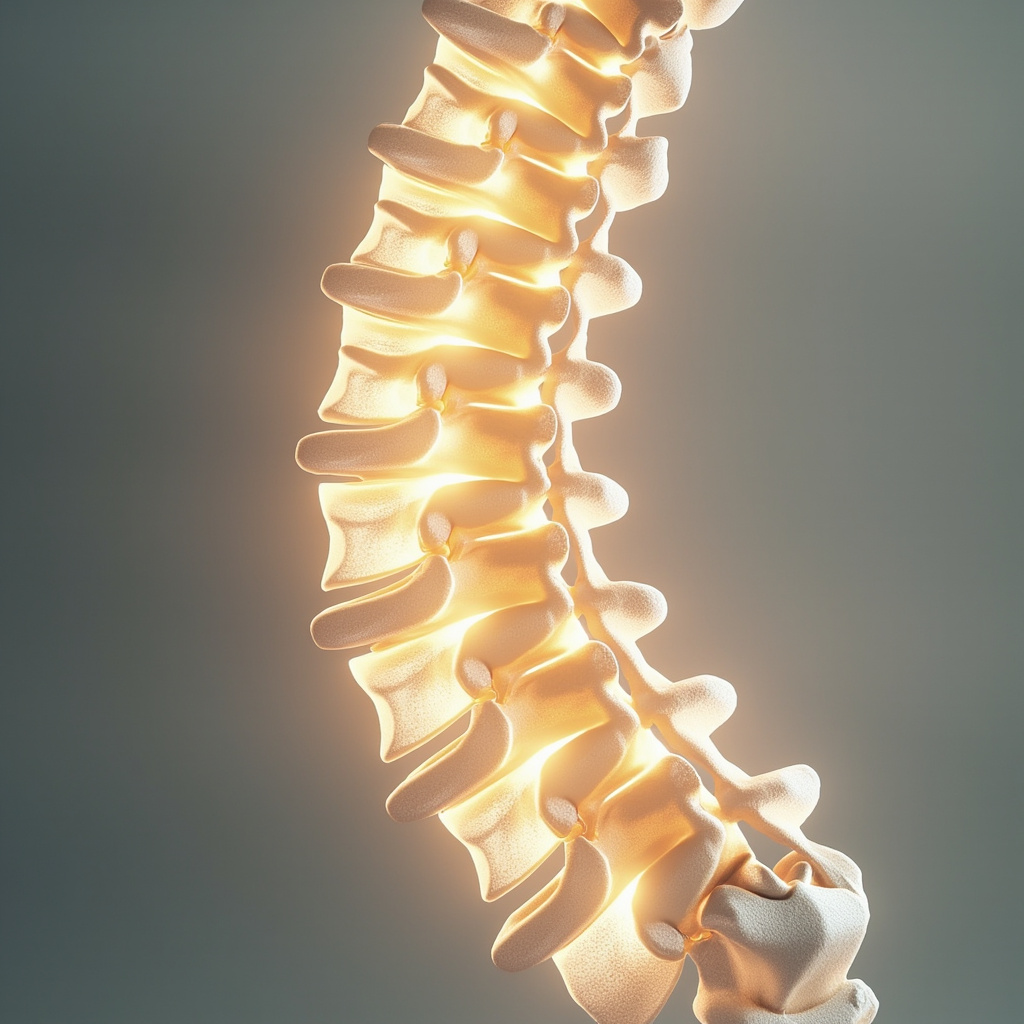
As a fitness coach, I often see how the lumbar region-those five powerful vertebrae at the base of your spine-acts as the true anchor of the body. When we talk about performance, we are not just talking about muscles and sweat; we are talking about the structural foundation that allows you to stand tall, move with purpose, and carry the weight of your daily life.
The Anchor of Your Movement
The lumbar spine is uniquely designed to handle the load of your upper body while providing the flexibility needed for bending, twisting, and reaching. Because it sits between your chest and your pelvis, it serves as the bridge for almost every movement you make. When this area is balanced, you move with grace and power. When it is under strain, you feel it in everything you do, from the moment you get out of bed to the final movements of your training session.
In my work with data and biomarkers, I often observe that tension in the lower back is rarely just a physical issue. It is frequently a signal that the body is struggling to manage its current load. Whether that load is a heavy barbell at the gym or the heavy responsibilities of your personal life, your lumbar spine is often the first place to hold that stress.
The Emotional Weight We Carry
Beyond the physical mechanics, there is a deep connection between the lumbar region and how we feel about our place in the world. It is common to see individuals carrying emotional burdens-fears about the future, financial concerns, or a feeling of being unsupported-manifesting as tightness or discomfort in this exact area.
Think of your lower back as your emotional foundation. When you feel stable, supported, and confident, your lumbar region tends to be more relaxed and fluid. When you feel anxious or unsupported, your body may instinctively tense up, creating a rigid protective shell that restricts your natural range of motion. Recognizing this connection is a massive step toward self-development. By addressing the physical tension, you often find that the emotional weight becomes easier to carry as well.
Reclaiming Your Stability
How do we restore balance when this area feels overworked? It starts with listening to what your body is telling you.
- Mindful Movement: Instead of pushing through sharp pain, focus on movements that encourage length and decompression. Gentle spinal mobility exercises can help release the accumulated tension in the lower back.
- Directed Awareness: Sometimes, simply bringing your focus to your lower back during meditation can help. Visualize this area as a strong, solid pillar. By mentally directing your attention here, you can begin to shift from a state of bracing and tension to a state of stability and support.
- Recovery-Focused Support: Your body needs specific signals to shift from a state of stress into a state of repair. Using personalized frequencies can help calm the nervous system, allowing the muscles surrounding the lumbar vertebrae to finally let go of their constant guard.
Building Sustainable Strength
True fitness is not just about how much weight you can lift; it is about how well you can maintain your internal balance throughout the process. When you use your lumbar region as a resource rather than viewing it as a weak point, you change your entire approach to training. You stop fighting against your body and start working with it.
I encourage you to pay attention to your lower back not just when it hurts, but as a daily check-in. Ask yourself: am I feeling unsupported today? Am I holding onto tension that doesn't belong to me? By acknowledging these signals, you allow your body to release the unnecessary strain and return to its natural state of fluidity. Your foundation is strong, and with the right care, it will support you through every challenge you choose to take on.
Related posts
Glossary
- Energy and mind Structures > Focused Coherence; Focus
- Energy and mind Structures > Purpose
- Energy and mind Structures > Performance
- Body zones > lumbar
- Body zones > muscles
- Body zones > Vertebrae
- Body zones > chest
- Energy and mind Structures > movement
- Energy and mind Structures > Theta; 4.31-6.97 Hz. Light sleep, meditation.
- Energy and mind Structures > Stress
- Stimuli > Pain
- Binaural beats > Range of Motion: Enhance Movement with Binaural Beats
- Binaural beats > Nervous System: A Program for Emotional Balance and Relaxation