


AV Node: Heart Rhythm for Deep Sleep
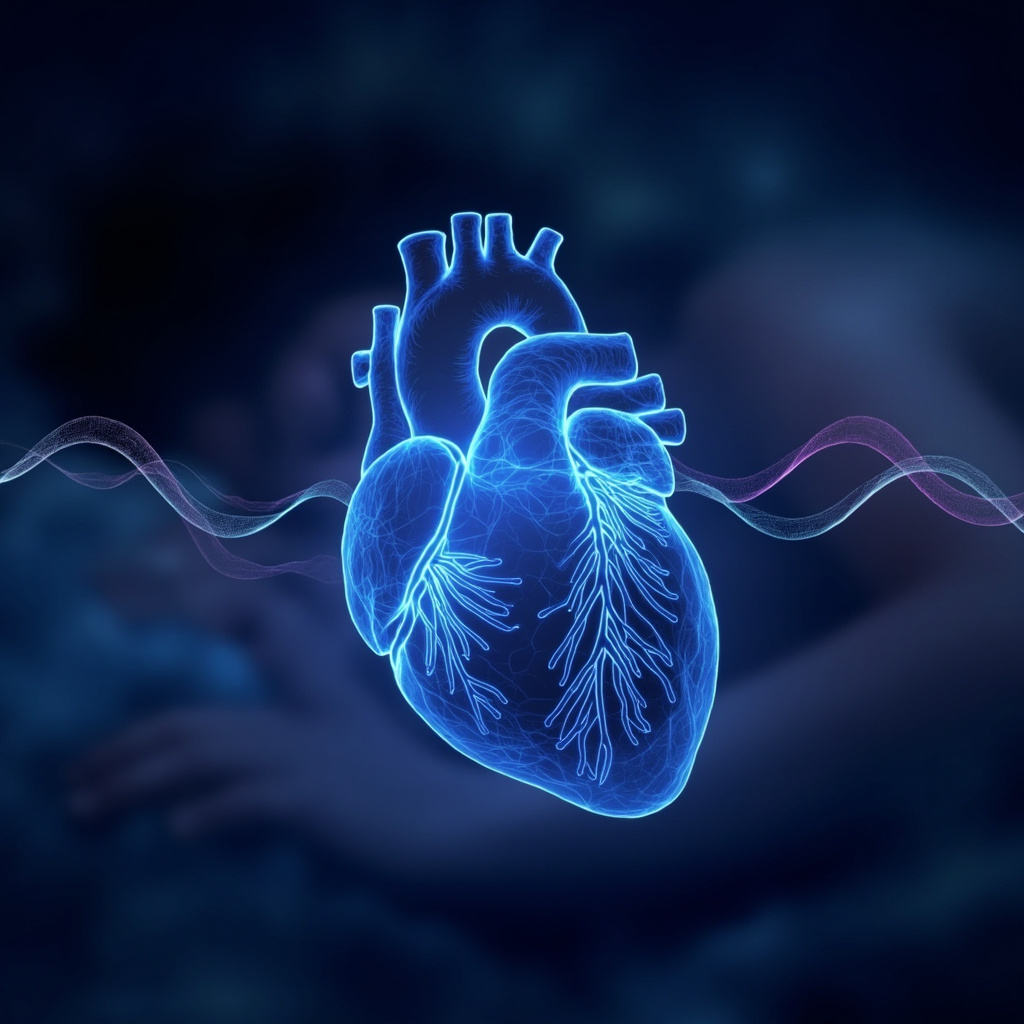
What is the Atrioventricular Node?
The atrioventricular node, often called the AV node, sits in your heart at the meeting point of the upper chambers (atria) and lower chambers (ventricles). Think of it as a gatekeeper. It receives electrical signals from the heart's main pacemaker, the sinoatrial node, and passes them along with a brief delay. This delay ensures the atria contract first, filling the ventricles, before the ventricles pump blood out. The result? Coordinated, efficient heartbeats.
Without this relay working smoothly, heart rhythms can falter, leading to issues like heart block. Symptoms might include dizziness, tiredness, or fatigue-common complaints that disrupt daily life and sleep. For more details, see our glossary entry.
Daily Rhythms in the AV Node
Recent research shows the AV node doesn't work in isolation. It has its own daily cycle, driven by the body's internal clock, or circadian rhythm. Studies reveal that circadian mechanisms in the brain and heart directly influence AV node activity, syncing it with your sleep-wake cycle. For example, one study found distinct patterns in how the AV node conducts signals throughout the day, peaking or slowing in tune with natural light and rest periods.
This rhythm matters because it affects heart rate variability (HRV), a measure of beat-to-beat changes. Healthy HRV reflects your body's ability to switch between rest (parasympathetic) and action (sympathetic) modes. During deep sleep, good AV node function helps maintain stable rhythms, promoting recovery.
Links to Sleep Quality and Recovery
Stable heart rhythms are vital for quality sleep. The AV node helps regulate the timing of ventricular contractions, which supports oxygen flow and energy restoration overnight. Disruptions, like those from high stress or poor circadian alignment, can lower HRV, leading to lighter sleep, frequent awakenings, or circadian misalignment.
In slow-wave sleep-the deepest restorative phase-HRV often increases, signaling recovery. But if the AV node is imbalanced, it might contribute to arrhythmias during sleep, such as brief pauses or blocks often tied to heightened vagal tone (the rest nerve's influence at night). These can fragment sleep, leaving you tired despite hours in bed.
As a sleep coach, I focus on biomarkers like these. Low nighttime HRV often points to cortisol spikes or breathing issues, both fixable with routines like consistent bedtimes and dim evening lights.
Emotional Connections
Beyond the physical, the AV node ties to feelings of security and boundaries. It's linked to stress responses around protection-think conflicts over personal space, fear of intrusion, or unresolved threats to safety. When these emotions linger, they can heighten sympathetic activity, straining the AV node and disrupting heart stability.
Chronic stress withdraws vagal support, reducing HRV and making rest harder. Addressing these feelings through reflection or breathwork can ease the load, fostering emotional calm that mirrors in steadier rhythms.
The AV Node as a Resource
A balanced AV node acts as a stabilizer. It promotes smooth transitions between stress and rest, enhancing circadian balance and deep recovery. When strong, it buffers daily pressures, supports vitality, and aids hormonal harmony-like steady cortisol for wind-down.
To nurture it:
- Align sleep with natural light cycles.
- Practice slow breathing to boost vagal tone and HRV.
- Manage stress with evening walks or journaling on security themes.
Tracking these patterns reveals hidden barriers to rest. Strong AV node function paves the way for biologically aligned sleep, where body and mind recharge fully.
- 1. kardia.com
- 2. insightcla.com
- 3. ajconline.org
- 4. merckmanuals.com
- 5. pmc.ncbi.nlm.nih.gov
- 6. frontiersin.org
- 7. academia.edu
- 8. mayoclinic.org
- 9. washingtonhra.com
- 10. pubmed.ncbi.nlm.nih.gov
- 11. heartandstroke.ca
- 12. ncbi.nlm.nih.gov
- 13. thecardiologyadvisor.com
- 14. missionhealth.org
- 15. aafp.org
- 16. amerisleep.com
- 17. pubmed.ncbi.nlm.nih.gov
- 18. kenhub.com
- 19. washingtonhra.com
- 20. pubmed.ncbi.nlm.nih.gov
- 21. mdsearchlight.com
- 22. my.clevelandclinic.org
- 23. researchgate.net
- 24. pmc.ncbi.nlm.nih.gov
- 25. pubmed.ncbi.nlm.nih.gov
- 26. yalemedicine.org
- 27. my.clevelandclinic.org
- 28. pmc.ncbi.nlm.nih.gov
- 29. my.clevelandclinic.org
- 30. academic.oup.com
- 31. jkms.org
- 32. ahajournals.org
- 33. pmc.ncbi.nlm.nih.gov
- 34. neupsykey.com
- 35. medicalnewstoday.com
- 36. medrxiv.org
- 37. pmc.ncbi.nlm.nih.gov
- 38. sleepclinic.be
- 39. mayoclinic.org
- 40. pmc.ncbi.nlm.nih.gov
- 41. ahajournals.org
- 42. yorkspace.library.yorku.ca
- 43. caringmedical.com
- 44. researchgate.net
- 45. journal.chestnet.org
- 46. thecardiologyadvisor.com
- 47. pubmed.ncbi.nlm.nih.gov
- 48. uofmhealthsparrow.org
- 49. emedicine.medscape.com
- 50. researchgate.net
- 51. surgery.ucsf.edu
- 52. sona.help
- 53. pmc.ncbi.nlm.nih.gov
Related posts
Glossary
- Energy and mind Structures > oxygen
- Energy and mind Structures > Focused Coherence; Focus
- Energy and mind Structures > Security
- Energy and mind Structures > Clock
- Body zones > Atrioventricular node
- Body zones > hormonal
- TCM Recipes > Heart Health: Remedies for Anxiety and Palpitations
- TCM Recipes > Brain Boost: Clear Fog, Improve Focus & Memory
- Energy and mind Structures > sleep
- Energy and mind Structures > vitality
- Energy and mind Structures > VLF; Sympathetic activity
- Energy and mind Structures > Stress
- Stimuli > Cortisol
- Stimuli > Moon - Nasal Passage, Breathing, Taste
- Stimuli > AIDS
- Stimuli > Blood
see also...
- Energy and mind Structures > HRV
- Energy and mind Structures > Body zones > Brain white matter
- Energy and mind Structures > TCM Recipes > Boost Energy: A Simple Remedy for Low Energy and Fatigue
- Binaural beats > Stimuli > Variolinum
- Testimonials > 61% Drop in Nausea and 58% in Headaches from Sound Therapy