


T6 Vertebra: Spine Anchor for Safety and Calm
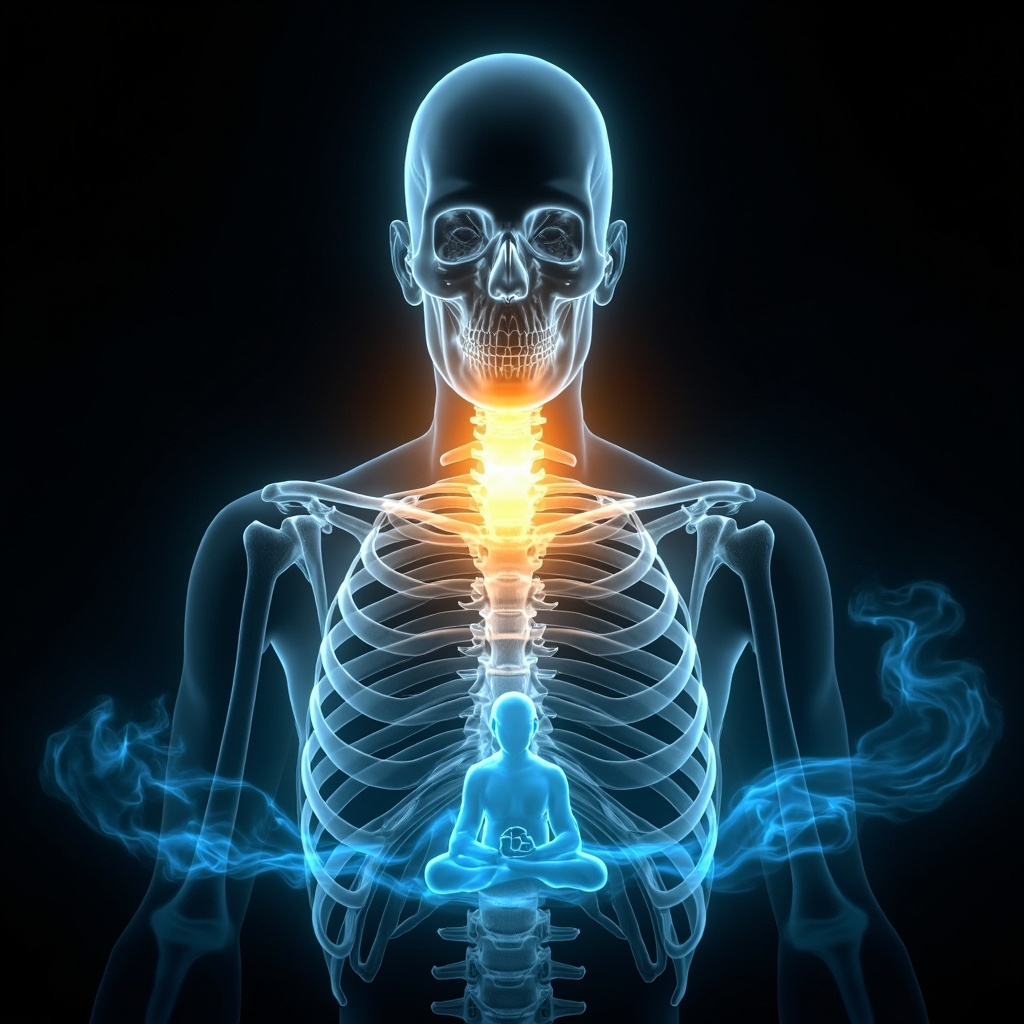
Understanding the T6 Vertebra
The T6 vertebra sits in the middle of your thoracic spine, right in the mid-back area just below your shoulder blades. This small but mighty bone plays a key role in keeping your body strong and flexible. For more details, see the glossary.
It protects the spinal cord, which carries vital signals throughout your body. It also supports the rib cage, helping with breathing and posture. When working well, T6 allows smooth movement and stability in your upper body.
Physical Signs of T6 Imbalance
If T6 is out of alignment, you might notice:
- Pain or tightness in the mid-back
- Reduced ability to twist or bend
- Issues with chest or abdominal organs, like digestion or breathing
- Disruptions in the autonomic nervous system, which controls automatic functions like heart rate
These problems can stem from injury, poor posture, or daily stress. Over time, they affect overall mobility and energy flow.
Emotional Ties to T6
Our bodies hold emotions in specific places. The T6 vertebra connects to feelings of safety and belonging, especially around family and home. An imbalance here often signals:
- Deep insecurity about protection
- Fear of instability in personal relationships
- Unresolved conflicts about home life
When T6 struggles, it mirrors inner worries about support and security. This can heighten stress, lower heart rate variability (HRV-a measure of nervous system flexibility), and increase agitation biomarkers.
T6 as a Resource for Balance
A healthy T6 acts as a foundation. It provides:
- Spinal stability to support other body parts
- Better mobility for daily activities
- Clear communication in the autonomic nervous system
- Emotional grounding, fostering a sense of safety
By strengthening T6, you help your whole body function better. It promotes calm in the nerves, steady HRV, and resilience to stress.
Meditation Practices to Support T6
As a meditation coach, I focus on practices that regulate the nervous system and emotions. These target T6 through mindful awareness, breathwork, and visualization. Start with 10 minutes daily.
Breathwork for Mid-Back Release
- Sit tall with feet flat.
- Place hands on your mid-back over T6.
- Inhale deeply into the back, expanding the ribs.
- Exhale slowly, feeling tension melt away.
- Repeat 10 times, noticing warmth and stability.
This boosts parasympathetic activity, improving HRV and easing autonomic strain.
Guided Imagery for Security
Close your eyes and picture:
- Your mid-back as a strong, glowing anchor.
- A safe home filled with warmth and protection.
- Roots growing from T6 into the earth for unshakeable support.
Hold this image 5 minutes. It calms emotional biomarkers linked to fear.
Mindful Posture Meditation
Stand or sit, aligning your spine. Scan from head to T6, softening tightness. Breathe into any stuck areas. This builds awareness of stress patterns and fosters mental clarity.
Tracking Progress with Biomarkers
Use signs like steady HRV, lower stress levels, and less agitation to gauge improvement. Meditation refines these by activating rest-and-restore responses. Over weeks, you'll feel more centered, with better emotional regulation.
Daily Tips for T6 Harmony
- Move gently: Gentle twists and back stretches daily.
- Posture check: Align shoulders over hips.
- Emotional journal: Note family-related fears and release them.
- Consistent practice: Combine breath and imagery for best results.
Supporting T6 brings physical ease and deep inner peace. It reminds us that stability starts from within, nurturing safety in body and mind.
- 1. facebook.com
- 2. innerpeaceyogatherapy.com
- 3. unisciencepub.com
- 4. wholeyouinstitute.com
- 5. maxhealthcare.in
- 6. emotionsandbody.com
- 7. int.livhospital.com
- 8. sagechiro.co.uk
- 9. cureus.com
- 10. macmillan.org.uk
- 11. youtube.com
- 12. pacificcoastmh.com
- 13. wewillcure.com
- 14. researchgate.net
- 15. physio-pedia.com
- 16. insightcla.com
- 17. sciencedirect.com
- 18. wakespine.com
- 19. facebook.com
- 20. scribd.com
- 21. pmc.ncbi.nlm.nih.gov
- 22. goholistiq.com
- 23. meetreflect.com
- 24. biosoulintegration.com
- 25. pinkbike.com
- 26. instagram.com
- 27. stories.prf.org
- 28. pmc.ncbi.nlm.nih.gov
- 29. healthandwellnesscentres.com
- 30. pmc.ncbi.nlm.nih.gov
- 31. ncbi.nlm.nih.gov
- 32. healthline.com
- 33. researchgate.net
- 34. sinicropispine.com
- 35. physio-pedia.com
- 36. instagram.com
- 37. nebraskaspinehospital.com
- 38. clinicalpainadvisor.com
Related posts
Glossary
- Energy and mind Structures > Focused Coherence; Focus
- Energy and mind Structures > Regulation
- Energy and mind Structures > Communication
- Energy and mind Structures > Mental
- Energy and mind Structures > Earth
- Energy and mind Structures > Security
- Energy and mind Structures > Peace
- Body zones > head
- Body zones > nerves
- Body zones > parasympathetic
- Body zones > T6
- Body zones > chest
- Body zones > eyes
- Energy and mind Structures > Organs
- TCM Recipes > Heart Health: Remedies for Anxiety and Palpitations
- Energy and mind Structures > movement
- Energy and mind Structures > Digestion
- Energy and mind Structures > Theta; 4.31-6.97 Hz. Light sleep, meditation.
- Energy and mind Structures > Stress
- Stimuli > Moon - Nasal Passage, Breathing, Taste
- Stimuli > Pain
- Binaural beats > Spinal Cord Support: Enhance Wellness and Emotional Balance
- Binaural beats > Nervous System: A Program for Emotional Balance and Relaxation
- Stimuli > Bone
see also...
- Energy and mind Structures > HRV
- Energy and mind Structures > Body zones > eyes
- Energy and mind Structures > TCM Recipes > Tension Headache Relief: A Natural Approach to Ease Stress
- Testimonials > 61% Drop in Nausea and 58% in Headaches from Sound Therapy
- Binaural beats > Stimuli > Bone
- Binaural beats > Transmutation: A Sound Journey for Personal Change