


Vyana: Circulation, Tissues, and Qi Flow
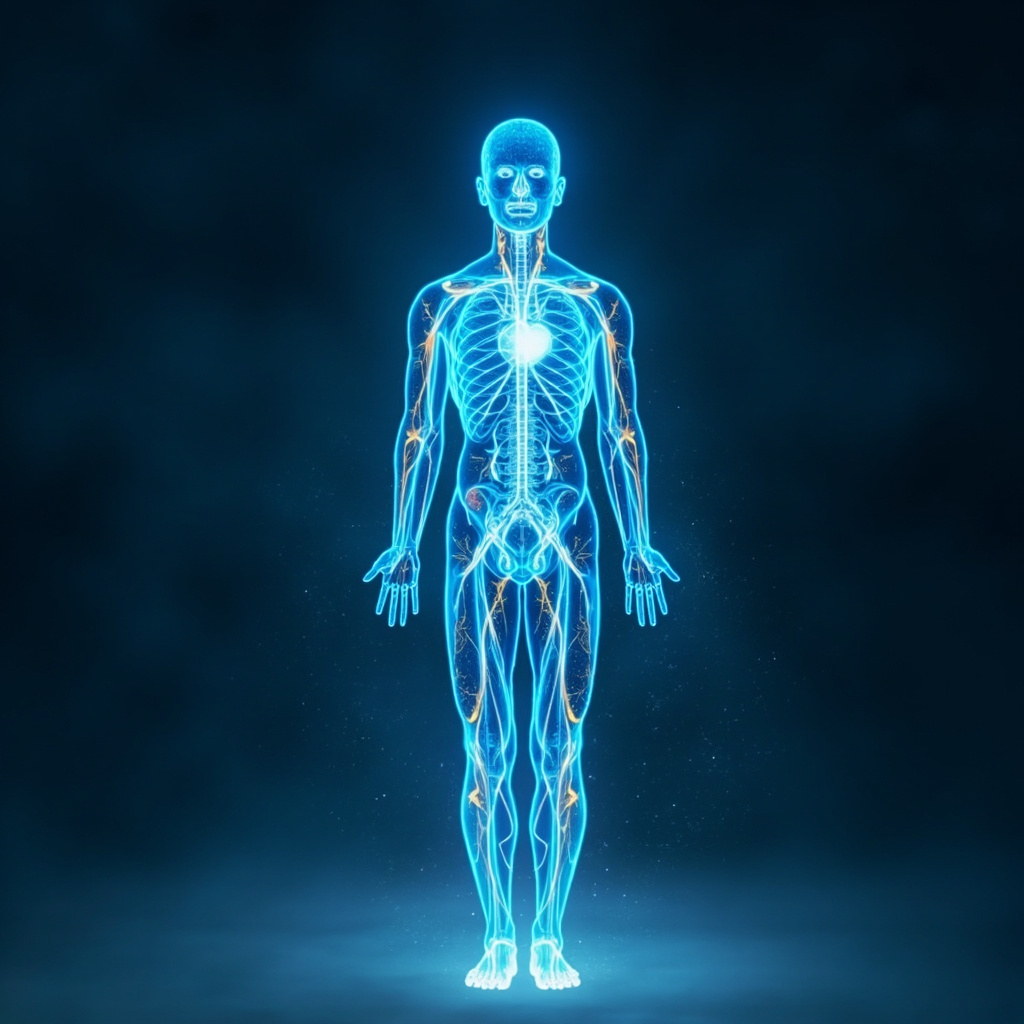
Vyana: The Pervasive Force of Movement and Flow
In ancient healing traditions, Vyana – known as Vyana Vata or Viana subdosha – acts as the body's master coordinator. Rooted in the heart, it spreads outward, ensuring energy, nutrients, and blood reach every corner. This vital force maintains the strength of ligaments, connective tissues, and the circulatory system, much like rivers nourishing the land. When in harmony, Vyana promotes graceful movement and robust health. For more details, see the Vyana glossary.
Key Functions of Vyana
Vyana's influence touches many aspects of daily life:
- Circulation: It propels blood and plasma (rasa and rakta in Ayurveda) from the heart to all tissues, delivering oxygen and removing waste. This mirrors the smooth flow of qi in Traditional Chinese Medicine (TCM), vital for organ nourishment.
- Ligaments and Connective Tissues: These structures hold the body together, allowing flexibility. Vyana keeps them supple, preventing rigidity or weakness.
- Muscle Coordination: It supports voluntary movements, from walking to breathing, ensuring fluid action without strain.
- Expansion and Contraction: Vyana handles the body's natural rhythms, like heartbeat and breathing, balancing outward expansion with inward gathering.
In TCM terms, this aligns with blood vessels (mai) governed by the heart and tendons (jin) linked to the liver, channeling qi through meridians for overall vitality.
Signs of Imbalance
When Vyana falters, the body signals distress:
- Poor circulation: Cold hands and feet, fatigue, or varicose veins.
- Joint and tissue issues: Stiffness in ligaments, tendon pain, or weak connective tissues leading to sprains.
- Emotional echoes: Restlessness or disconnection, as energy flow affects mood – similar to heart qi deficiency in TCM.
- Other clues: Excessive sweating, muscle spasms, or uneven blood pressure.
Causes often include stress, irregular diet, overexertion, or cold exposure, disrupting the yin-yang balance or vata equilibrium.
Bridging Ayurveda and TCM
Ayurveda's Vyana shares deep parallels with TCM's qi circulation. Both systems view the heart as the origin of this flow, distributing life force via channels – prana vayus in one, meridians in the other. Modern views link Vyana to the circulatory and nervous systems, coordinating autonomic functions like heart rate and somatic movements.
Biomarker insights from body electrical activity reveal Vyana's energy, agitation, and connections. High agitation might show as tense tissues; low energy as sluggish flow. In TCM practice, we assess organ qi, blood stasis, or meridian blockages to restore harmony.
Vyana as a Healing Resource
A balanced Vyana enhances whole-body health:
- Boosts vitality by optimizing nutrient delivery.
- Strengthens musculoskeletal support for better mobility.
- Supports cardiovascular function, easing heart burden.
- Fosters emotional steadiness through steady energy.
In practice, gentle movements like tai chi mimic Vyana's flow, opening meridians. Warming foods nourish blood, while rest calms excess motion. Tailored approaches, drawing from five elements or doshas, address root causes.
For example, if liver qi stagnates (TCM) or vata rises (Ayurveda), herbs like arjuna or routines promoting flow can help. Recent reviews highlight Vyana's role in cardiac health and coordination, underscoring its timeless wisdom.
Cultivating Vyana Harmony
Daily steps build resilience:
- Warm, nourishing meals to support blood.
- Gentle stretches for ligaments.
- Mindful breathing to regulate flow.
- Avoid extremes: too much cold or rush.
By honoring Vyana, you align body, energy, and emotions – a path to lasting wellness rooted in ancient insight and modern understanding.
- 1. instagram.com
- 2. herbalreality.com
- 3. kottakkal.shop
- 4. ijhsr.org
- 5. kottakkal.shop
- 6. discovery.researcher.life
- 7. sreedhareeyam.com
- 8. news18.com
- 9. activeherb.com
- 10. pmc.ncbi.nlm.nih.gov
- 11. artoflivingretreatcenter.org
- 12. ijapr.in
- 13. researchgate.net
- 14. easyayurveda.com
- 15. sequencewiz.org
- 16. academyhealingnutrition.uk
- 17. vyanayoga.com
- 18. ayurvedacollege.com
- 19. jasminehemsley.com
- 20. jogayogatraining.com
- 21. scmp.com
- 22. amitray.com
- 23. srisriayurvedahospital.org
- 24. vyanayoga.com
- 25. youtube.com
- 26. pmc.ncbi.nlm.nih.gov
- 27. instagram.com
- 28. digitalcommons.calpoly.edu
- 29. researchgate.net
- 30. pmc.ncbi.nlm.nih.gov
- 31. wisdomlib.org
- 32. facebook.com
- 33. hotelcaesiusterme.com
- 34. facebook.com
- 35. vedanet.com
- 36. wjpmr.com
- 37. ijhsr.org
- 38. youtube.com
- 39. healthfullivingsd.com
Related posts
Glossary
- Energy and mind Structures > oxygen
- Energy and mind Structures > Wellness
- Energy and mind Structures > Rigidity
- Energy and mind Structures > Meridians
- Body zones > tissues
- Body zones > veins
- TCM Recipes > Circulation: Boost Energy and Warm Your Extremities
- TCM Recipes > Liver Health: A TCM Recipe for Balance and Calm
- TCM Recipes > Heart Health: Remedies for Anxiety and Palpitations
- TCM Recipes > Varicose Veins: Relief for Leg Swelling and Pain
- TCM Recipes > Boost Your Energy: A TCM Recipe for Fatigue Relief
- TCM Recipes > Sweat Relief: Natural Solutions for Night Sweats
- Energy and mind Structures > vitality
- Energy and mind Structures > blood pressure
- Energy and mind Structures > equilibrium
- Energy and mind Structures > movement
- Energy and mind Structures > Prana; Nerves, vital force
- Energy and mind Structures > Viana; Ligaments, connective tissue, circulatory system
- Energy and mind Structures > Vata
- Energy and mind Structures > Stress
- Stimuli > Moon - Nasal Passage, Breathing, Taste
- Stimuli > Pain
- Binaural beats > Ligament Health: Enhancing Flexibility and Joint Wellness
- Stimuli > Harmony
- Stimuli > Blood
see also...
- Energy and mind Structures > HRV
- Energy and mind Structures > Body zones > ribs
- Energy and mind Structures > TCM Recipes > Sweat Relief: Natural Solutions for Night Sweats
- Testimonials > 61% Drop in Nausea and 58% in Headaches from Sound Therapy
- Binaural beats > Stimuli > Variolinum
- Binaural beats > Ligament Health: Enhancing Flexibility and Joint Wellness