


Thymus: TCM's Shield of Immunity and Identity
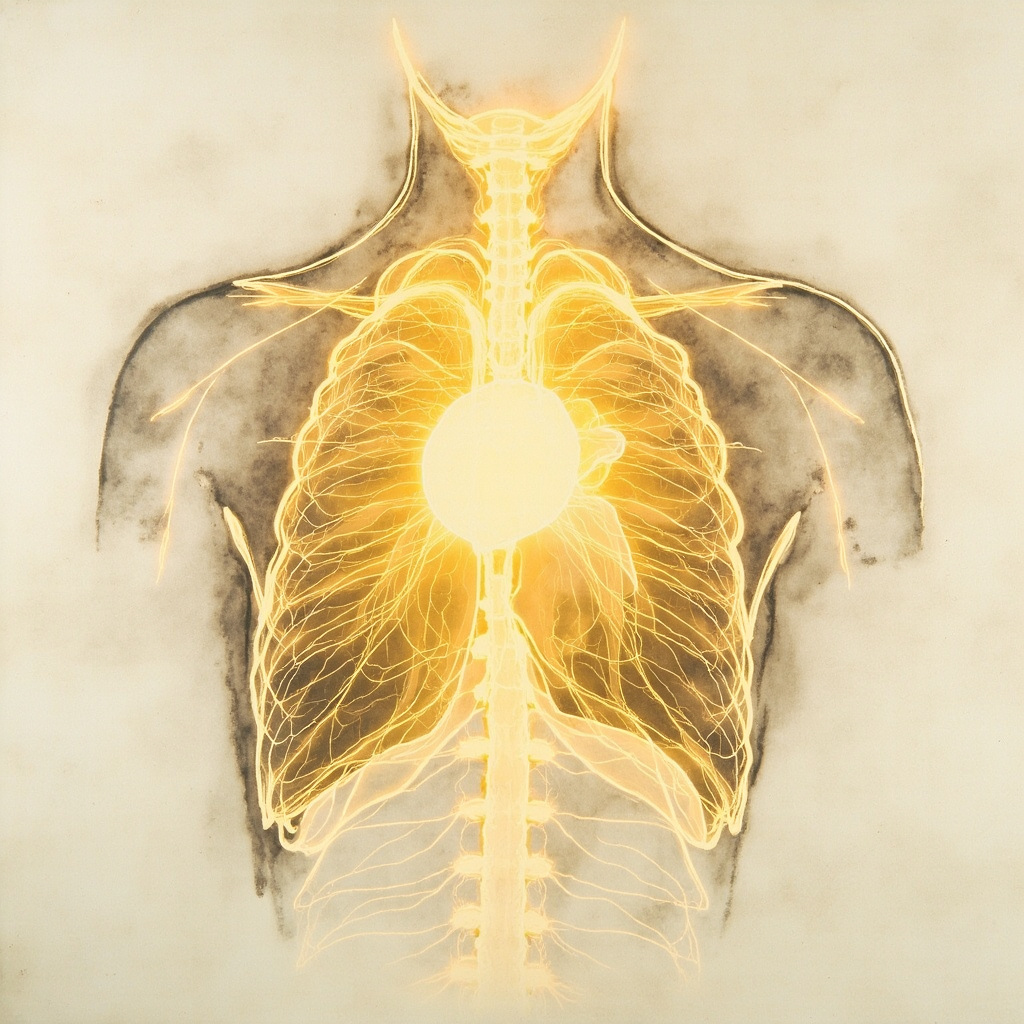
The thymus gland rests in the upper chest, right behind the breastbone and between the lungs. It trains T-cells, a type of white blood cell that helps the body battle infections and diseases. When working well, it builds a strong defense. But if it falters, the immune system weakens, opening the door to frequent illnesses or even attacks on the body's own tissues.
Thymus in Traditional Chinese Medicine
Traditional Chinese Medicine views the thymus as part of the body's protective energy, known as Wei Qi. This energy forms a shield around us, warding off external harms like wind, cold, or germs. It flows through the skin, muscles, and meridians, powered by the lungs and nourished by the spleen and liver.
The thymus shares space with the heart, making it sensitive to strong feelings. Grief or anger can suppress it quickly, while love and self-care strengthen its flow. In TCM, phlegm stagnation in the thymus often signals allergies or weak defenses, treated by clearing blockages and toning the spleen.
Emotional Connections
Beyond physical protection, the thymus ties to our sense of self-identity and safety. Feelings of vulnerability or threats to who we are can burden it. When out of balance, you might feel exposed, struggle with boundaries, or face ongoing infections. This mirrors TCM's belief that unresolved emotions disrupt energy flow, weakening immunity.
As a resource, a strong thymus supports other organs. It boosts T-cell production for better defenses, fosters emotional security, and promotes harmony. It helps the lungs spread protective Qi and the heart maintain joy, reducing risks from invaders or inner conflicts.
Signs of Imbalance and Support
Imbalance shows as repeated infections, allergies, fatigue, or autoimmune issues. In TCM terms, look for a slippery or weak spleen pulse, signaling phlegm or deficiency. Modern biomarkers reveal its energy, agitation, and links, guiding restoration.
To nurture it:
- Thymus thump: Gently tap the center of your chest with loose fists while breathing deeply. This stimulates Wei Qi, a simple Qigong practice.
- Clear diet: Avoid heavy, sweet foods that build phlegm; favor light, warming meals.
- Emotional work: Process grief through gentle movement or breath, building inner protection.
- Acupuncture: Points like Ren 17 drain stagnation; Lung and Spleen meridians tonify.
Fresh Insights from Research
Recent studies challenge old ideas that the thymus fades after youth. Using CT scans and AI on thousands of adults, Harvard researchers found a healthy thymus links to:
- 50% lower risk of early death.
- 63% less chance of heart disease death.
- 36% reduced lung cancer risk.
- Better cancer treatment success, especially immunotherapy.
A strong thymus signals low inflammation and resilience, even in older age. Factors like smoking or excess weight harm it, but lifestyle shifts may help. This aligns with TCM: nurture Wei Qi for lasting vitality.
The thymus reminds us protection starts within-body, energy, and spirit in harmony.
- 1. pubmed.ncbi.nlm.nih.gov
- 2. nature.com
- 3. sciencedirect.com
- 4. journals.sfu.ca
- 5. medicalxpress.com
- 6. youtube.com
- 7. hsri.ucmerced.edu
- 8. papers.ssrn.com
- 9. phyto5.us
- 10. open.spotify.com
- 11. youtube.com
- 12. nationaltoday.com
- 13. youtube.com
- 14. youtube.com
- 15. infinityflexibility.com
- 16. sciencedirect.com
- 17. inc.com
- 18. academic.oup.com
- 19. insighttimer.com
- 20. facebook.com
- 21. scitechdaily.com
- 22. powershealth.org
- 23. researchgate.net
- 24. youtube.com
- 25. cambridge.org
- 26. chinaherb.net
- 27. onlinelibrary.wiley.com
- 28. instagram.com
- 29. pubmed.ncbi.nlm.nih.gov
- 30. scientificamerican.com
- 31. jiosaavn.com
- 32. gemskinesiologycollege.com
- 33. instagram.com
- 34. youtube.com
- 35. uppitysciencechick.com
- 36. youtube.com
- 37. infinityflexibility.com
- 38. nature.com
- 39. pmc.ncbi.nlm.nih.gov
- 40. instagram.com
- 41. caringsunshine.com
- 42. music.apple.com
- 43. acupuncturetoday.com
- 44. pmc.ncbi.nlm.nih.gov
- 45. cadieselah.com
- 46. news.harvard.edu
Related posts
Glossary
- Energy and mind Structures > Security
- Energy and mind Structures > Love
- Energy and mind Structures > Grief
- Energy and mind Structures > Stagnation
- Energy and mind Structures > Immunity
- Energy and mind Structures > Meridians
- Body zones > thymus
- Body zones > lungs
- Body zones > muscles
- Body zones > tissues
- Body zones > chest
- Body zones > face
- Energy and mind Structures > Organs
- TCM Recipes > Skin Health: Remedies for Acne and Eczema
- TCM Recipes > Liver Health: A TCM Recipe for Balance and Calm
- TCM Recipes > Spleen Health: Boost Digestion, Appetite, and Energy
- TCM Recipes > Heart Health: Remedies for Anxiety and Palpitations
- TCM Recipes > Lung Support: A TCM Recipe for Respiratory Health
- TCM Recipes > Boost Your Energy: A TCM Recipe for Fatigue Relief
- Energy and mind Structures > vitality
- Energy and mind Structures > movement
- Stimuli > Cancer
- Stimuli > Moon - Nasal Passage, Breathing, Taste
- Binaural beats > Inflammation Relief: Heal Faster with Binaural Beats
- Binaural beats > Immune System Support: Enhancing Health with Sound Frequencies
- Stimuli > Heart Disease
- Stimuli > Harmony
- Stimuli > Blood
see also...
- Energy and mind Structures > movement
- Energy and mind Structures > Body zones > thoracic
- Energy and mind Structures > TCM Recipes > Tension Headache Relief: A Natural Approach to Ease Stress
- Testimonials > 61% Drop in Nausea and 58% in Headaches from Sound Therapy
- Binaural beats > Stimuli > Variolinum
- Binaural beats > Immune System Support: Enhancing Health with Sound Frequencies