


Why Does Stress Cause My Brain Fog?
Do You Feel Scattered, Forgetful, and Emotionally Drained?
You start your day with good intentions, but by noon, your mind feels like a foggy mess. Simple tasks take forever, names slip away, and a wave of anxiety or irritability hits without warning. You feel overwhelmed by decisions, even small ones, and evenings bring exhaustion that sleep barely touches. If this sounds familiar, you are not alone-millions experience brain fog tied to chronic stress. This is your brain signaling distress, and it's more physical than you think.
You've Tried the Usual Fixes, But They Don't Last
Maybe you've downloaded meditation apps, forced yourself to exercise, cut caffeine, or even seen a therapist. For a while, it helps-a clearer head, better mood. But soon, the fog returns thicker than before. Why? These approaches treat symptoms, not the underlying imbalance in your nervous system. They build trust that something deeper is at play, positioning us to explore real causes.
Here's new information: Heart rate variability (HRV), the natural beat-to-beat changes in your heart, reflects your brain's ability to regulate stress and emotions. Low HRV means your brain struggles to shift from fight-or-flight mode. What sparks curiosity? Stress doesn't just tire you mentally-it reshapes your brain structure.
The Hidden Mechanism: How Stress Physically Changes Your Brain
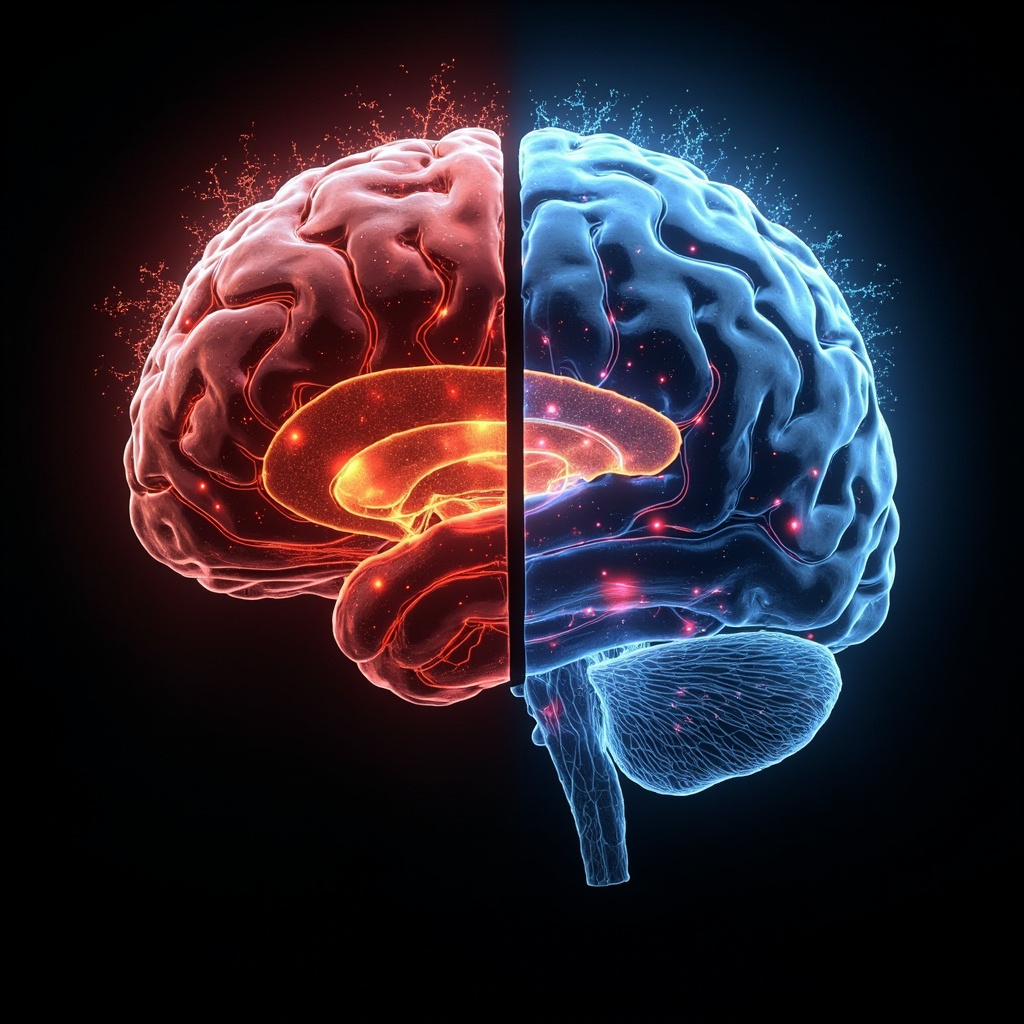
Chronic stress floods your body with cortisol, shrinking key brain areas like the hippocampus (memory and learning) and prefrontal cortex (focus, decisions, emotional control). Studies show even short-term stress (one week) reduces gray matter volume, leading to brain fog and poor emotional regulation.Yale study on stress and brain
Low HRV links directly: people with reduced HRV show weaker brain connectivity for emotion control, heightening anxiety and impulsivity.Meta-analysis on HRV and stress Why did past efforts fail? They couldn't reach the brain's electrical and energetic imbalances-meditation alone often lacks precision to reverse structural changes.
Evidence builds credibility: A review of 24 studies found HRV training cuts stress and anxiety effectively.HRV emotion regulation networks Urgency? Untreated, it worsens: higher depression risk, memory loss, even cardiovascular issues.
A New Category of Solutions: Frequency-Based Brain Training
Enter targeted frequency therapies and microcurrent stimulation-non-invasive ways to entrain brain waves and restore balance. Unlike generic apps, these use specific sound frequencies (like binaural beats) to match brain rhythms, boosting cognition and relaxation.Binaural beats review
Expensive alternatives? Neurofeedback machines cost $5,000+, or clinical tDCS sessions at $200/hour. These work by modulating brain electricity but demand experts and time. Simpler options build anticipation: home devices delivering personalized frequencies and gentle currents directly influence brain health.
Science-Backed Implementation: Precision for Your Brain
This isn't gimmicky-it's rooted in neuromodulation research. Binaural beats at 6Hz enhance cognition after daily 10-minute use.6Hz binaural study Transcranial electrical stimulation (microcurrents) improves focus, mood in anxiety and depression.Harvard on tES
Experts endorse: Psychologists use HRV and brain biomarkers to track progress. Price objection? At a fraction of clinic costs, with home use. Risk-free: Many offer guarantees, as results show in weeks.
Real Stories: Progress That Feels Authentic
"I had constant brain fog from work stress. After focusing on HRV, my focus sharpened in two weeks-not perfect, but noticeable." – Busy parent, 42.
"Therapy helped emotions, but fog lingered. Frequency sessions cleared it; I remember details again after months of struggle." – Executive, 38.
"Low energy, scattered thoughts-tied to low HRV. Simple daily practice restored clarity without meds." – Teacher, 50.
These relatable wins reinforce value: measurable shifts in fog, mood, decisions.
Introducing BioCoherence: Your Path to Brain Balance
BioCoherence software analyzes your body's electrical activity via a simple ECG sensor recording. It computes 1500+ biomarkers, including brain energy, agitation, and emotional links. New to this? It's like a full-body scan revealing hidden stress on your brain-the control center for thoughts, emotions, and body regulation.
If brain shows as a priority (low energy, high agitation), it signals unresolved stress or overwhelm. As a resource, it coordinates healing across your system.
Harmonic Boost: Frequencies to Resonate Your Brain
Personalized audio tracks use the brain's main resonance frequencies to calm agitation and boost clarity. Built from your scan or basic programs-stimuli guide it toward focus and emotional stability. Listen daily for balance.
Personal Guide: Daily Meditations with Targeted Words
A 21-day program evolves with your biomarkers. For brain priorities, guided words direct attention: "Feel your brain coordinating calm, processing emotions smoothly." Builds resilience through inner journeys.
Harmonizer: Microcurrents Driven by Your Data
Wearable applies real-time microcurrents tuned to brain needs-from 10,000+ programs or scans. Like gentle tES at home, it restores function without side effects.
Explore tutorials for setup. Psychologists like me use it to track HRV, agitation, and progress-objective proof of emotional gains.
Voices from Users
"Less brain fog and body aches after weeks." – Mike N.
"Detected my emotional state accurately; positive shift." – Laura K.
"Deep emotional release from frequencies, crying unexpectedly-healing without effort." – Leon.
"Synchronicity in emotions; unlocked repressed feelings." – AB.
Start with a recording to see your brain's story. Balance follows naturally.
- 1. nature.com
- 2. pmc.ncbi.nlm.nih.gov
- 3. nature.com
- 4. pmc.ncbi.nlm.nih.gov
- 5. journals.sagepub.com
- 6. sciencedirect.com
- 7. frontiersin.org
- 8. pubmed.ncbi.nlm.nih.gov
- 9. news.utdallas.edu
- 10. brieflands.com
- 11. earth.com
- 12. linkedin.com
- 13. pmc.ncbi.nlm.nih.gov
- 14. instagram.com
- 15. nature.com
- 16. frontiersin.org
- 17. huffpost.com
- 18. sciencedirect.com
- 19. gero.usc.edu
- 20. webmd.com
- 21. sciencedirect.com
- 22. elifesciences.org
- 23. instagram.com
- 24. tandfonline.com
- 25. nature.com
- 26. pmc.ncbi.nlm.nih.gov
- 27. pnas.org
- 28. facebook.com
- 29. linkedin.com
- 30. sciencedirect.com
- 31. journals.lww.com
- 32. pmc.ncbi.nlm.nih.gov
- 33. psychologytoday.com
- 34. biocoherence.net
- 35. facebook.com
- 36. nature.com
- 37. onlinelibrary.wiley.com
- 38. academic.oup.com
- 39. pmc.ncbi.nlm.nih.gov
- 40. verywellmind.com
- 41. pmc.ncbi.nlm.nih.gov
- 42. pmc.ncbi.nlm.nih.gov
- 43. frontiersin.org
- 44. health.harvard.edu
- 45. lonestarneurology.net
- 46. psychiatryonline.org
- 47. biocoherence.net
- 48. lakeforest.edu
- 49. biocoherence.net
Related posts
Glossary
- Energy and mind Structures > Focused Coherence; Focus
- Energy and mind Structures > Regulation
- Energy and mind Structures > Structure
- Energy and mind Structures > Exhaustion
- Energy and mind Structures > Memory
- Body zones > head
- Body zones > brain
- TCM Recipes > Heart Health: Remedies for Anxiety and Palpitations
- TCM Recipes > Brain Boost: Clear Fog, Improve Focus & Memory
- Energy and mind Structures > sleep
- Energy and mind Structures > Theta; 4.31-6.97 Hz. Light sleep, meditation.
- Energy and mind Structures > Stress
- Stimuli > Cortisol