


Why Does My Chest Feel Tight and My Breathing Shallow?
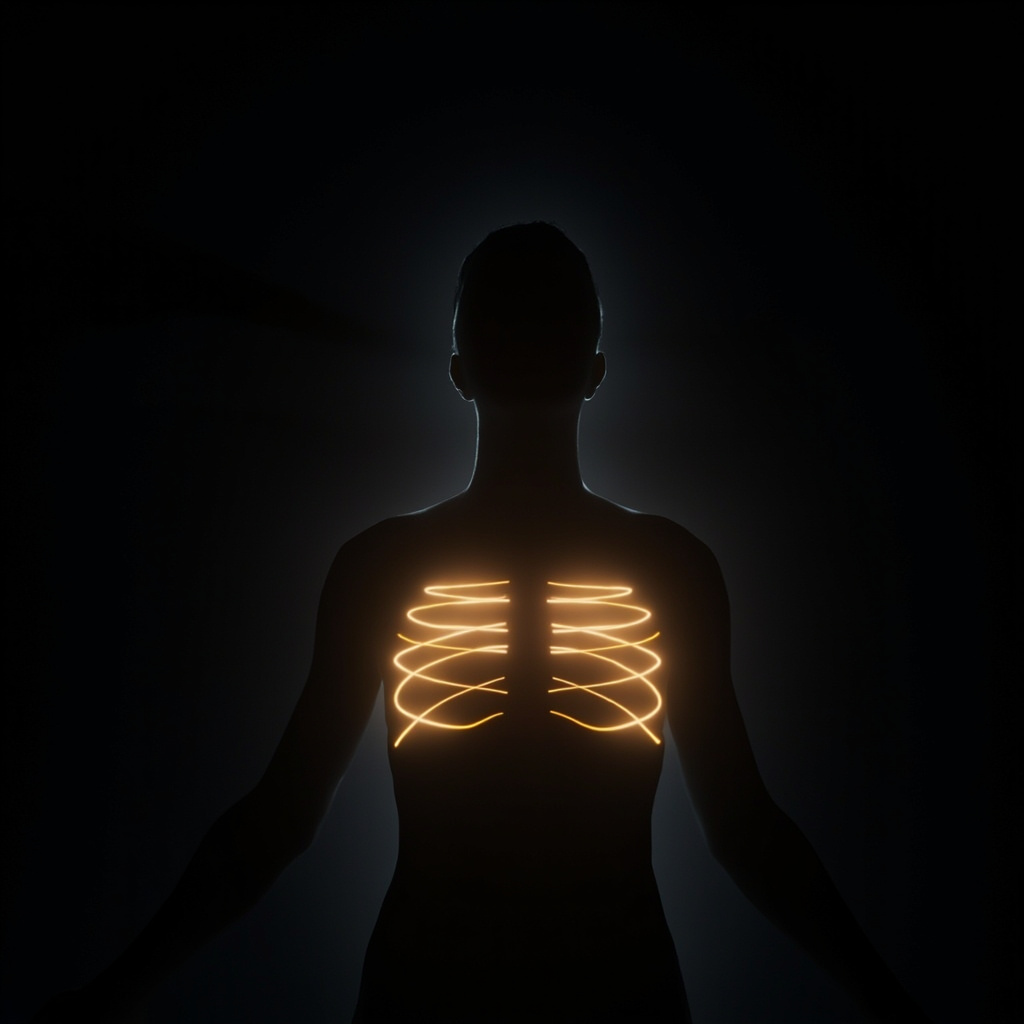
Understanding Chest Tension and Breath
Do you often feel like you cannot take a full, satisfying breath? Many people live with a persistent sense of tightness in their ribcage, a feeling that something is physically holding them back from relaxing. You might have tried deep breathing exercises, stretching, or even massage, only to find that the heaviness returns as soon as the stress of the day resumes. You are not alone in this, and it is not a sign of weakness.
The Hidden Role of Your Rib Muscles
Between your ribs lie the intercostal muscles. While we often focus on our lungs when we think about breathing, these small but powerful muscles are the mechanism that allows your chest cavity to expand and contract. When you are under chronic stress or emotional pressure, these muscles can become rigid. This is a common physiological response to feelings of being trapped, overwhelmed, or burdened by responsibility.
When these muscles stay tight, your body remains in a state of shallow breathing. This limits your oxygen intake, which in turn forces your nervous system to stay on high alert. It creates a cycle: stress causes tension, and tension prevents the deep, restorative breathing that should be calming your system down.
Why Traditional Methods Often Fall Short
Many conventional approaches focus on the lungs or the mind separately. You might be told to simply breathe more or to see a therapist for your stress. While these are valuable, they often overlook the electrical and structural communication happening within your body. If the muscles themselves are locked in a pattern of tension, mental effort alone is rarely enough to release them. Science shows that our tissues respond to specific rhythmic signals, and when that internal rhythm is disrupted by prolonged tension, the body needs a more precise way to reset.
Restoring Balance with BioCoherence
BioCoherence offers a way to communicate directly with these structures. By analyzing the body's electrical activity, we can identify if your intercostal muscles are a priority for your current well-being. This process does not just guess; it measures the specific biomarkers associated with your body's current state of tension and energy.
How We Facilitate Release
Once we understand the specific needs of your system, we use three primary tools to encourage harmony:
- Harmonic Boosts: These are targeted frequencies designed to help your intercostal muscles resonate at their natural, relaxed state. By providing the body with the right stimulus, we encourage the release of physical rigidity.
- Personal Guide: This is an inner journey designed for your specific priorities. Through 21 days of guided audio, you learn to direct your attention to these areas, helping to re-establish the mind-body connection that stress has severed.
- Harmonizer: This device uses gentle micro-currents to provide real-time support. It is like giving your muscles a rhythmic reminder of how to function without the constant guard of stress.
By addressing the intercostal structure directly, you are not just treating a symptom; you are helping your body rediscover its innate capacity for deep, effortless breathing. This shift can lead to profound changes in your energy levels, your ability to handle stress, and your overall sense of presence in your own life.
Related posts
Glossary
- Energy and mind Structures > oxygen
- Energy and mind Structures > Focused Coherence; Focus
- Energy and mind Structures > Structure
- Energy and mind Structures > Mental
- Energy and mind Structures > Rigidity
- Body zones > lungs
- Body zones > muscles
- Body zones > intercostal
- Body zones > tissues
- Body zones > chest
- Energy and mind Structures > Stress
- Stimuli > Hepatitis G virus, Primary
- Stimuli > Moon - Nasal Passage, Breathing, Taste
- Binaural beats > Nervous System: A Program for Emotional Balance and Relaxation
- Stimuli > Lead
- Stimuli > Harmony