


Why Anxiety Tightens My Diaphragm?
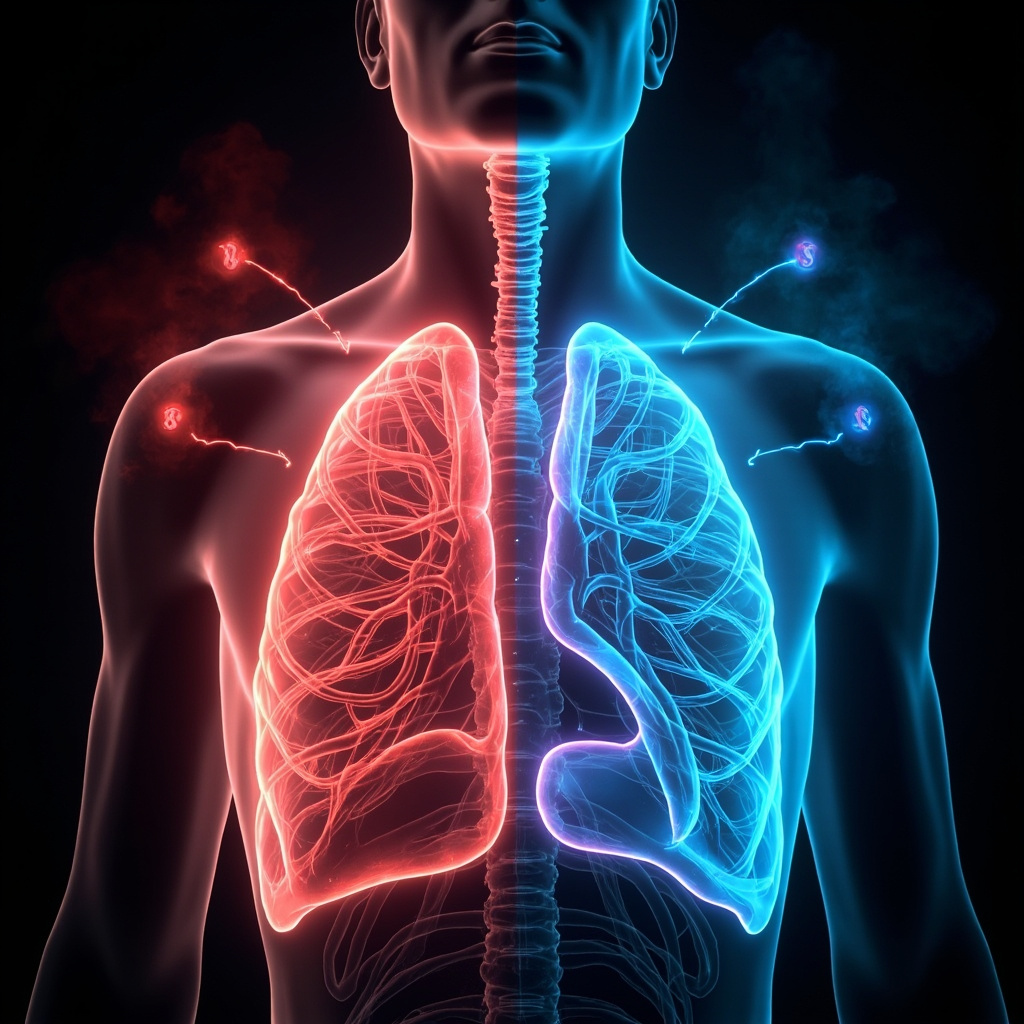
Feeling Trapped by Shallow Breaths and Lingering Anxiety?
You know the feeling. Your chest tightens unexpectedly. Breathing feels shallow, like you can't get enough air, even when there's no real danger. Maybe it hits during meetings, arguments, or quiet nights alone. Fatigue follows, as if your body runs on empty. You've noticed your anxiety spikes faster, moods swing, and sleep evades you. These aren't random. They point to a hidden issue: your diaphragm holding tension.
This dome-shaped muscle sits under your lungs, powering deep breaths by flattening to pull in air. When tense, it stays pulled up, blocking full expansion. Oxygen drops, your heart races more, and stress builds. Many dismiss it as 'just anxiety,' but it creates a loop where poor breathing fuels more worry.
You've Tried Deep Breathing and Yoga – Why Didn't It Stick?
You've downloaded apps for guided breaths. Joined yoga classes promising calm. Popped magnesium supplements. They help a bit at first – a deeper inhale, momentary relief. But days later, tightness returns. Stress triggers it again. Why?
Standard fixes target symptoms, not the root. Quick exercises relax muscles briefly but ignore why tension grips in the first place. You feel frustrated, wondering if it's you failing. It's not. Deeper forces at play demand a closer look.
The Emotional Root: Fear and Stress Locking Your Diaphragm
Imagine your diaphragm as a gate between calm and chaos. Emotions like fear or anxiety signal it to brace. In survival mode, your body shifts to chest breathing – fast, shallow, ready for flight. Over time, the muscle shortens and stiffens.
Studies link this directly. Research in Frontiers in Psychology shows diaphragmatic breathing cuts negative emotions and stress responses by boosting attention and lowering cortisol. Yet emotional triggers keep recreating tension. Feel trapped in life? Unable to speak up? Your body mirrors it physically. A tight diaphragm whispers unresolved stress, craving release.
Curious what's really happening inside? This isn't weakness – it's your system's signal for balance.
The Vicious Cycle: How Tension Snowballs
Stress hits: nerves fire, diaphragm clenches. Lungs get less air, blood oxygen dips. Brain senses danger, ramps anxiety. Muscles fatigue faster, pain creeps in – headaches, back aches from overworked helpers. Sleep suffers; you wake gasping.
Why past attempts failed? They skipped the emotional wiring. Shallow breaths from tension lower heart rate variability (HRV), a key stress marker. A review in Complementary Therapies in Clinical Practice confirms diaphragmatic work rebuilds this, but only if sustained.
Ignore it? Problems worsen: chronic fatigue, weakened immunity, deepened anxiety. One study found tight diaphragms link to higher perceived pain and emotional distress. Time ticks – your breath, your calm, hangs in balance.
Real Solutions Beyond Band-Aids
Forget generic apps. Effective paths use body feedback – scanning electrical signals for tension spots. Costly options like physical therapy run $200+ per session, months long. Surgery for severe cases? Thousands, with risks.
Smarter: tools matching your body's natural rhythms. Sound waves tuned to relax specific muscles. Gentle currents mimicking healthy flow. They target the diaphragm directly, breaking cycles where exercises can't.
Anticipation builds: what if one scan revealed your exact needs?
How BioCoherence Unlocks Diaphragm Balance
BioCoherence changes this. It starts with a simple ECG sensor – like a wearable band – recording your full-body electrical activity. In minutes, it computes 1500+ biomarkers, spotlighting your diaphragm's energy, agitation, and emotional ties. See the diaphragm details in our glossary.
New to frequencies? Think tuning forks for your body. Harmonic Boosts play personalized audio tones resonating with your diaphragm's main frequencies. Structures relax, stimuli guide it toward calm goals. Built from your scan or basic programs.
Personal Guide offers daily 21-day meditations. Each evolves, using your diaphragm as priority or resource. Guiding words invite: 'Feel your diaphragm expand, releasing trapped fear, welcoming free breath.' Paired with targeted tones for inner journeys.
Harmonizer device applies real-time micro-currents – safe, tiny pulses matching your biomarkers. Choose from 10,000+ programs or scan-built ones. It eases tension on demand.
Tutorials at biocoherence.net/tutorials explain setups. As a meditation coach, I refine these with HRV and stress markers for your practice.
Proof from Users
"The meditations unlocked repressed emotions from 20 years ago." – AB, Croatia.
"Playing frequencies led to deep emotional release – crying unexpectedly, healing passively." – Leon, UK.
"After weeks, better sleep, more energy, less brain fog." – Mike N., USA.
See more at biocoherence.net/testimonials.
Your diaphragm supports vitality: boosts oxygen, eases stress, aids emotional flow. Scans reveal if it's priority (tight, anxious) or resource (expansive, calm). Balance it – breathe freer, live lighter.
- 1. neuropathresetmethod.com
- 2. biocoherence.net
- 3. va.gov
- 4. rupahealth.com
- 5. cityosteopathy.com.hk
- 6. my.clevelandclinic.org
- 7. columbiasurgery.org
- 8. hopkinsmedicine.org
- 9. balticsportscience.com
- 10. layahealthcare.ie
- 11. mdpi.com
- 12. pmc.ncbi.nlm.nih.gov
- 13. emedicine.medscape.com
- 14. my.clevelandclinic.org
- 15. veincenterofflorida.com
- 16. frontiersin.org
- 17. instagram.com
- 18. pmc.ncbi.nlm.nih.gov
- 19. publications.ersnet.org
- 20. hackensackmeridianhealth.org
- 21. sciencedirect.com
- 22. myofascialmississauga.com
- 23. ncbi.nlm.nih.gov
- 24. mdpi.com
- 25. wholisticosteopathy.ca
- 26. ilovegoodsugar.com
- 27. biocoherence.net
- 28. hgi.org.uk
- 29. freyabaskeyfield.co.uk
- 30. kaihealth.com.au
- 31. healthline.com
- 32. pmc.ncbi.nlm.nih.gov
- 33. pmc.ncbi.nlm.nih.gov
- 34. globalwellnessinstitute.org
- 35. nature.com
- 36. instagram.com
- 37. pubmed.ncbi.nlm.nih.gov
- 38. sciencedirect.com
- 39. iaom-us.com
- 40. pmc.ncbi.nlm.nih.gov
- 41. biocoherence.net
- 42. abundanceandhealth.com
- 43. police1.com
- 44. facebook.com
- 45. templehealth.org
- 46. coherence.today
- 47. massageblisschicago.com
- 48. pubmed.ncbi.nlm.nih.gov
- 49. webmd.com
Related posts
Glossary
- Energy and mind Structures > magnesium
- Energy and mind Structures > oxygen
- Energy and mind Structures > Fire
- Energy and mind Structures > Immunity
- Energy and mind Structures > Relax
- Body zones > lungs
- Body zones > diaphragm
- Body zones > muscles
- Body zones > nerves
- Body zones > senses
- Body zones > chest
- TCM Recipes > Chronic Fatigue Relief: Natural Remedies for Energy
- TCM Recipes > Heart Health: Remedies for Anxiety and Palpitations
- TCM Recipes > Brain Boost: Clear Fog, Improve Focus & Memory
- TCM Recipes > Boost Your Energy: A TCM Recipe for Fatigue Relief
- Energy and mind Structures > sleep
- Energy and mind Structures > vitality
- Energy and mind Structures > Theta; 4.31-6.97 Hz. Light sleep, meditation.
- Energy and mind Structures > Stress
- Stimuli > Cortisol
- Stimuli > Moon - Nasal Passage, Breathing, Taste
- Stimuli > AIDS
- Stimuli > Pain
- Stimuli > Blood
see also...
- Energy and mind Structures > HRV
- Energy and mind Structures > Body zones > substantia nigra
- Energy and mind Structures > TCM Recipes > Tension Headache Relief: A Natural Approach to Ease Stress
- Testimonials > 61% Drop in Nausea and 58% in Headaches from Sound Therapy
- Binaural beats > Stimuli > Variolinum