


Körperzonen
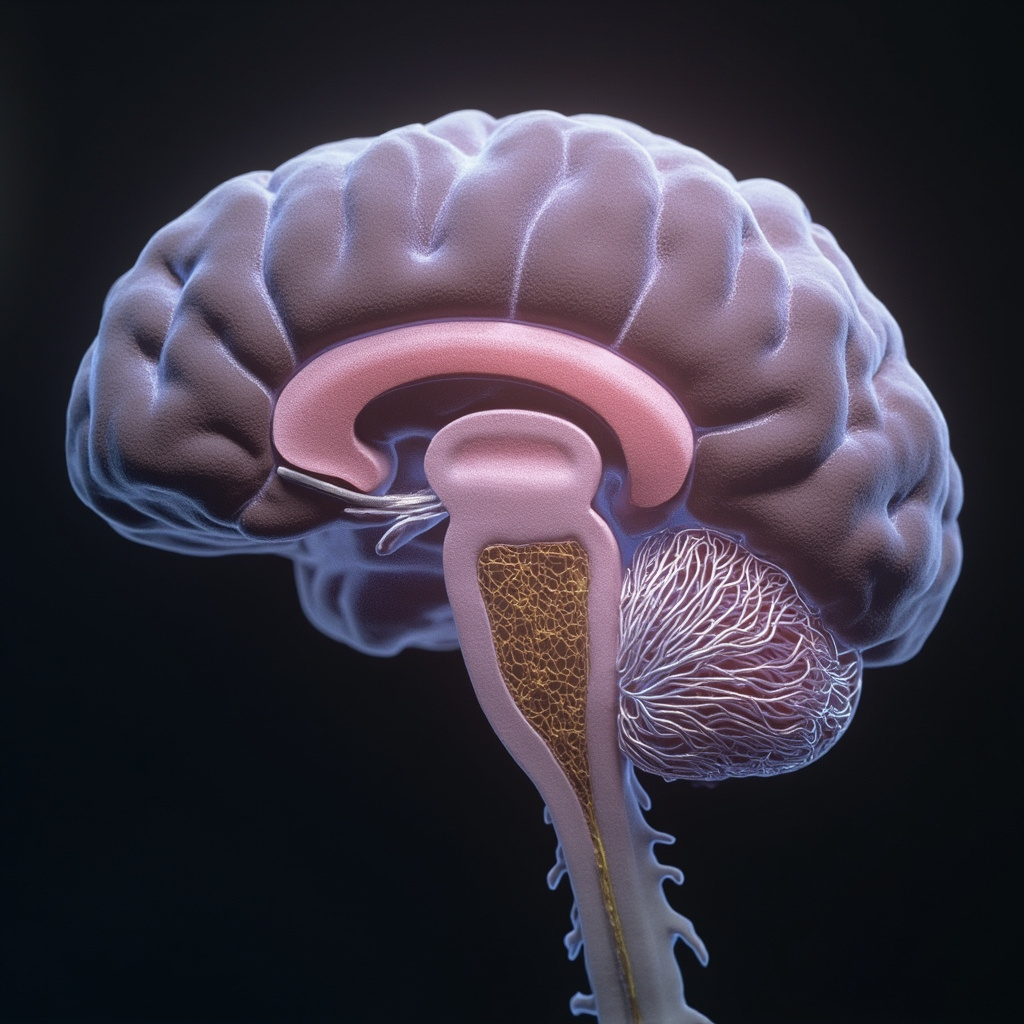
Pons: Teil des Hirnstamms, der Informationen weiterleitet
(brain.stem.pons)Die Pons befindet sich im Hirnstamm, oberhalb der Medulla oblongata und unterhalb des Mittelhirns. Es spielt eine entscheidende Rolle bei der Weiterleitung von Signalen zwischen dem Gehirn und dem Rückenmark und reguliert Schlaf, Atmung, Schlucken, Blasenkontrolle, Gehör, Gleichgewicht, Geschmack, Augenbewegungen, Gesichtsausdruck und Körperhaltung. Eine Fehlfunktion der Pons kann zu schwerwiegenden Problemen wie Schlafstörungen, Atemproblemen, Schluckbeschwerden, Koordinationsstörungen, Gesichtslähmung und anderen neurologischen Ausfällen führen.
(Der Pons kann anderen Organen helfen, indem er die Kommunikation und Koordination zwischen Gehirn und Körper erleichtert und eine ordnungsgemäße Regulierung von wesentlichen Funktionen wie Atmung und Schlaf sicherstellt, wodurch ein allgemeines physiologisches Gleichgewicht und emotionale Stabilität gefördert werden.)
Die Pons, ein Teil des Hirnstamms, ist mit Emotionen und Gefühlen für grundlegende Überlebens- und Grundbedürfnisse wie Atmung, Schlaf und Mimik verbunden. Eine Fehlfunktion kann mit tief sitzenden Ängsten, ungelösten Überlebenskonflikten oder Stress im Zusammenhang mit physiologischen Grundbedürfnissen verbunden sein. Emotionaler Stress oder ein Trauma, das das Gefühl der Sicherheit und die primären biologischen Funktionen beeinträchtigt, kann möglicherweise zu Problemen in diesem Bereich führen.
Der Brücke ist eine wichtige Struktur im Hirnstamm, die als Kommunikationszentrale fungiert und die Übertragung von Signalen zwischen Gehirn und Rückenmark erleichtert. Sie spielt eine wesentliche Rolle bei der Regulierung kritischer Funktionen wie Schlaf, Atmung und Motorik, die sowohl die körperliche als auch die geistige Gesundheit beeinflussen. Durch die Koordination mit der verlängerten Mark und dem Mittelhirn sorgt die Brücke für eine reibungslose Integration von sensorischen und motorischen Bahnen, was entscheidend für die Aufrechterhaltung von Gleichgewicht und Haltung ist. Darüber hinaus unterstreicht ihre Beteiligung an der Regulierung von Gesichtsausdrücken und auditiven Funktionen ihre Bedeutung für soziale Interaktionen und emotionale Gesundheit. Die Brücke ist eng mit dem limbischen System verbunden und beeinflusst emotionale Reaktionen und Stressbewältigung. Bei optimaler Funktion unterstützt sie Energie, Vitalität und Resilienz und fördert das allgemeine Wohlbefinden. Umgekehrt können Dysfunktionen in der Brücke sich als Schlafstörungen oder emotionale Instabilität äußern, was ihre Rolle sowohl im physiologischen Gleichgewicht als auch in der psychologischen Sicherheit hervorhebt. Durch das Verständnis der vielfältigen Beiträge der Brücke können Individuen ihre Bedeutung für die Erreichung von ganzheitlicher Gesundheit und energetischer Kohärenz schätzen.
In BioCoherence, find the organ biomarkers and structures in Analyze > Body > Organs maps.
To comment, subscribe to the newsletter and get exclusive BioCoherence offers, please create a free account
Legal page
Website (c) 2026 Coherence Labs; contents (c) their respective authors.
Haftungsausschluss BioCoherence bietet sowohl eine akademische Analyse als auch eine energetische und experimentelle Analyse. Die angezeigten Informationen können mit dem physischen Zustand der Systeme korreliert sein oder auch nicht. Berechnungen basieren auf individuellen Messungen und experimentellen Algorithmen. Alle berechneten Ergebnisse wie Energieniveaus, Entropieniveaus und kohärente Systeme sind darauf ausgelegt, nützliche Informationen für die persönliche Entwicklung bereitzustellen, nicht für medizinische Zwecke. Die Nutzung aller Ergebnisse liegt in der alleinigen Verantwortung des Nutzers. Im Zweifelsfall ist es wichtig, einen Arzt zu konsultieren. Bitte überprüfen Sie unsere EULA, bevor Sie sich für die Nutzung der Software entscheiden.